I’ve recently become wary of the phrase “the secret to a long and healthy life.” These words were uttered every time something unusual appeared on the table in front of me in Okinawa, like pork sashimi or squid in its own ink sauce. Even though it’s a different kind of Japan, etiquette had to be observed. And even though raw pork fat got stuck in my teeth and the sauce threatened to come back up, I ate and said to the hosts with blue-black lips, “Oishii desu!” – meaning, “It’s so delicious!”
Transitioning to the Edge of the Archipelago: From Tokyo to the Ryukyu Islands
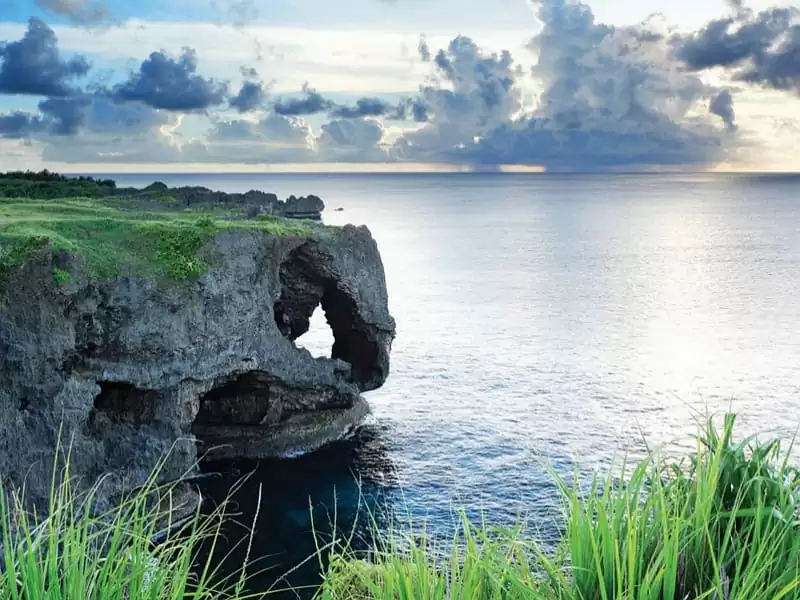
Getting from cold, futuristic Tokyo to Ishigaki Island in a three-hour flight is like traveling from today’s Moscow to Batumi 20 years ago. There are no corporate octopuses, neon lights, or high-speed trains here. Instead, there are palm trees overhead, and instead of an army of middle managers, there are smiling people in colorful shirts.
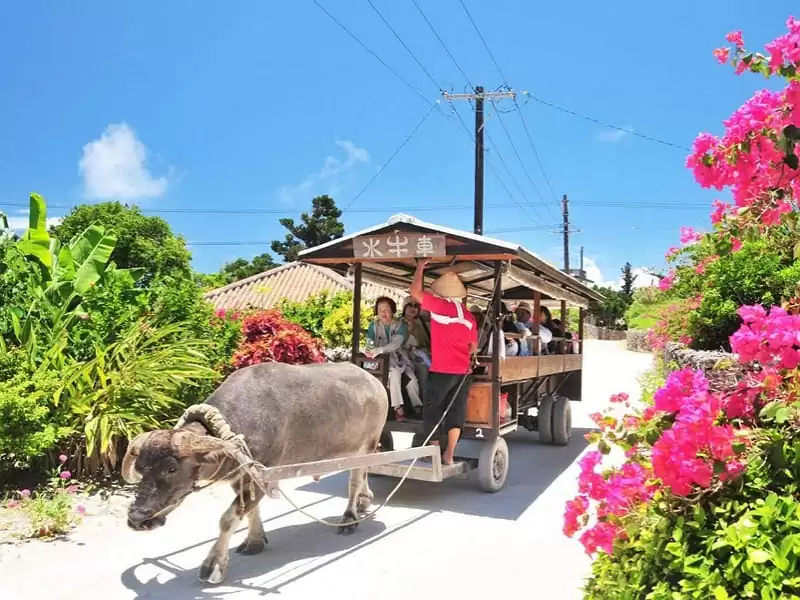
On the tiny island of Taketomi, rush hour is when two oxcarts can’t pass each other on a bougainvillea-drenched street, and one of the drivers just keeps singing something mournful, playing a three-stringed domra-sanshin covered in snake skin.
On neighboring Iriomote, 90% covered in jungles and mangrove thickets, the 3,000 residents of the island are more concerned about the fate of the local wildcat, the Yamaneko (of which there are only about 100 left), than the consequences of the Fukushima nuclear accident. They stand guard with radars along the island’s only paved road, fearlessly throwing themselves in front of my car because I was driving faster than the prescribed 25 km/h.
Okinawa as “Another Japan”: Kokuto Sugar, Fruit, Awamori, and Cosmopolitan Kokusai-dori
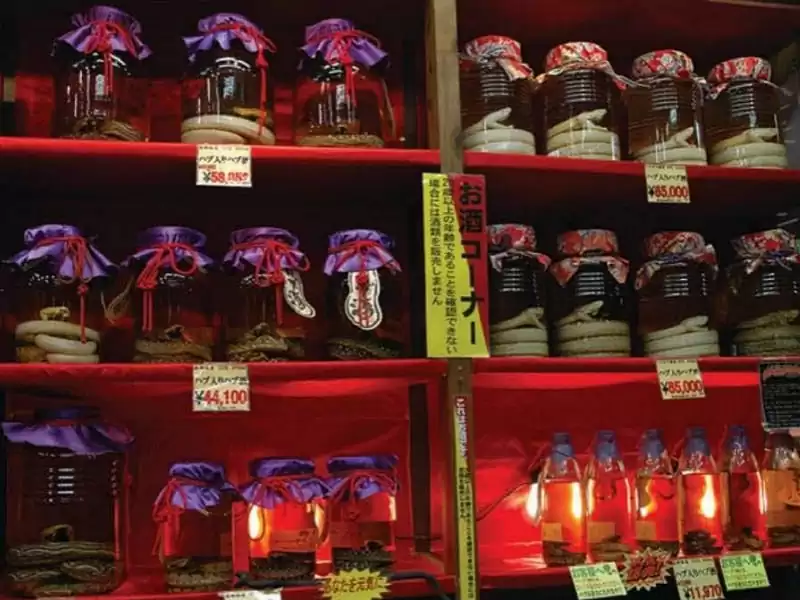
If high-tech 21st-century Japan has lost some of its exotic Asian features, Okinawa is more like it in this sense: here they make brown sugar “kokuto” from sugar cane juice and chop off the amount you need with an axe at the market, here they grow mangoes and pineapples that are still terribly expensive, here, like in Vietnam, they infuse rice shochu “awamori” with fanged poisonous snakes.
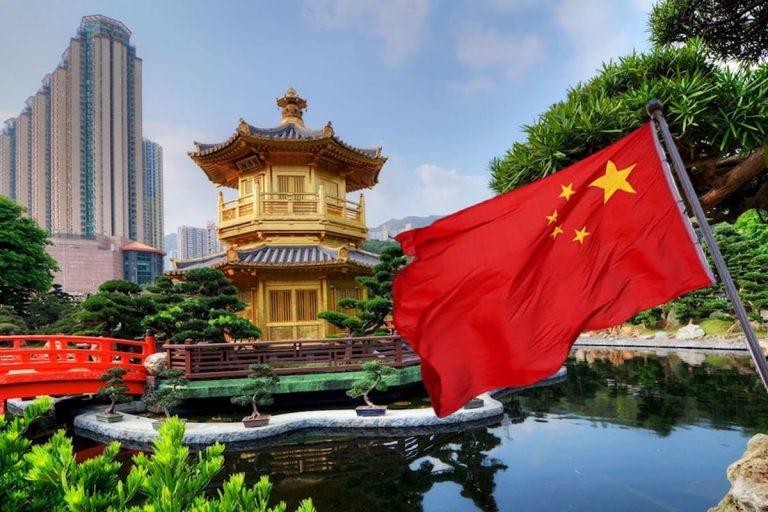
In the evenings, Kokusai-dori, the main street of the prefectural capital Naha, is like one big karaoke bar somewhere in Bangkok: there are American soldiers on leave, Taiwanese people drinking with communist Chinese people, and Filipinos, whose capital is closer here than Tokyo. Finally, there are tourists from Nagasaki, who came on vacation not with their families, but with their work colleagues, as is customary in Japanese corporate life.
From Ryukyu to Okinawa: History and Chinese Influence
Okinawa was only annexed by Japan in 1879, and before that, for 500 years, it was known as the Ryukyu Kingdom and was under strong Chinese influence. Which is not surprising, because it’s only 250 km to Taiwan, and two thousand to Tokyo. Actually, Ryukyu is the Chinese name for the archipelago, and Okinawa is the Japanese.
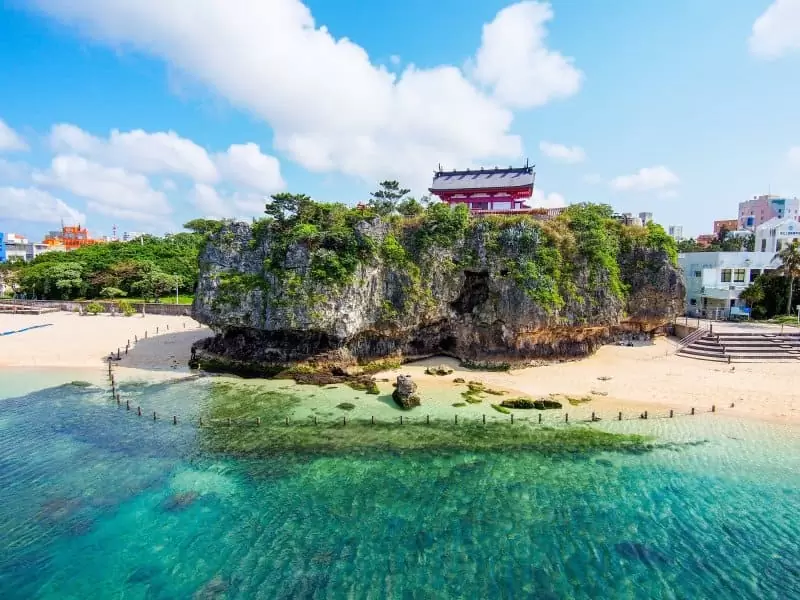
While Japan was isolating itself from the rest of the world, the kingdom successfully traded with Korea, China, the Philippines, and, judging by the luxurious Shuri Castle of the 14th century towering over the city of Naha, it prospered. However, everything in today’s castle, from the bright red facade to the richly inlaid throne, was recreated in the eighties: the original was swept away by the infamous “Steel Typhoon,” as the storming of the island by American troops at the end of World War II was called in Okinawa, when more than 200,000 people died.
American Presence: From Post-War Bases to Fish Markets, SPAM, and Taco Rice
After World War II, Okinawa was under American control until 1972. And even now, under an agreement between the United States and Japan, 50,000 American soldiers are stationed here, overjoyed that they haven’t been sent to “hot spots.” “Because here there is surfing and diving, and there they shoot,” Corporal Stevens, who was sucking on a lobster in an eatery above the central market in Naha, succinctly explained to me.
After the war, American contraband liquor and cigarettes were traded here, and now – marine life and everything else, equally outlandish. It’s very convenient, by the way: you choose some wriggling critter downstairs, and they bake it for you upstairs. The gastronomic tastes of the Okinawans, like their culture, have been shaped by the influence of neighbors and conquerors.
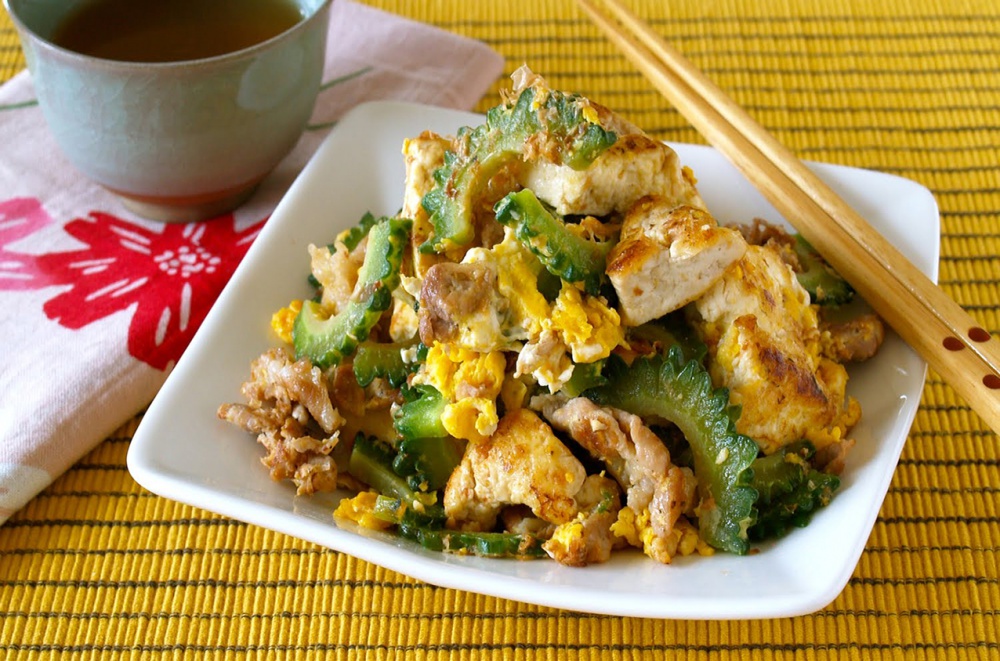
It suffices to say that the most popular dish on the island is “goya champuru” – a local bitter and pimply cucumber-like vegetable gaya, cooked with tofu, egg and… pieces of canned ham “SPAM”.
Legacy of Ryukyu Royal Cuisine: Rare Delicacies and Restaurants
Or another thank you to America for taco rice instead of the familiar corn tortillas in this dish. But long before the Americans and Tex-Mex restaurants that cluster near the gates of military bases, the royal cuisine of Ryukyu flourished, borrowing much from Chinese cuisine. Perhaps that’s why the Chinese ambassador, having arrived with his cook, sent him back when he was presented with a bento with traditional Okinawan snacks “tundabun”.
Today, izakayas and sokudos are more likely to serve you “goya champuru”, and such delicacies of Ryukyu royal cuisine as burdock roots stuffed with pork and shiitake mushrooms are not easy to find, but they are available at the traditional restaurant “Mie”. “We are a calm, optimistic people, and others often take advantage of this quality of ours,” Mie’s owner, Tokuko-san, told me, “but we don’t change.” And they are right to do so: Okinawa holds first place in the world in terms of life expectancy.
Long Life in Practice: Not Just Years, But Quality
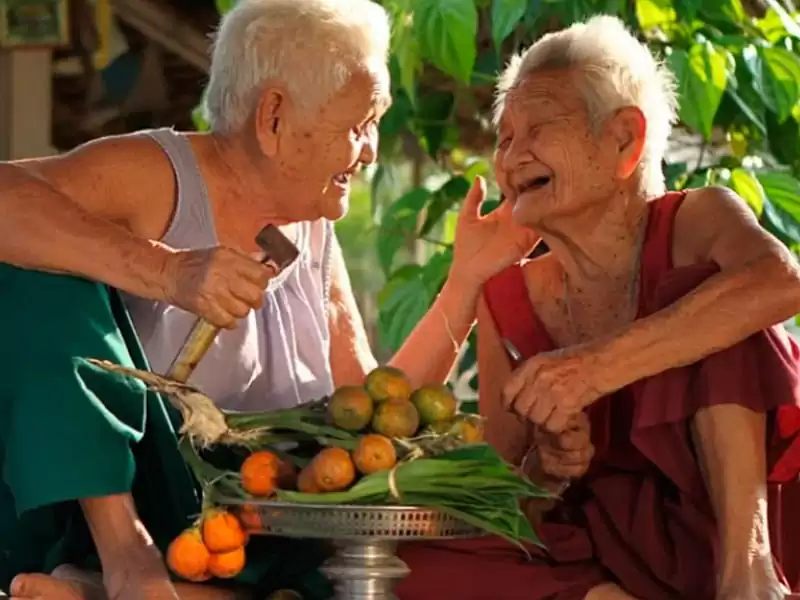
The population here has the highest percentage of people over 100. And it’s not just the number of years, but how those years are lived. Okinawan centenarians suffer less from diseases such as cardiovascular disease, cancer, and stroke than other elderly residents of the planet. At the entrance to many village administrations, there is a roll of honor “Those over 90”, and all the long-livers are filmed doing something, not in a wheelchair. Apparently, they don’t live on squid ink alone.
Life expectancy depends on two factors: heredity and habitat. It has been established that as soon as Okinawans moved to other countries, they stopped living long. So it’s about the environment and lifestyle. This is the conclusion reached by brothers Bradley and Craig Willcox, together with Makoto Suzuki, who published the results of a 25-year study in the book The Okinawa Program. Instead of reading this popular book, on the main island of Okinawa I asked to have lunch with 84-year-old Misako Miyagi in the village of Shioya.
Visiting Misako: Three Sisters and 90 Grandchildren
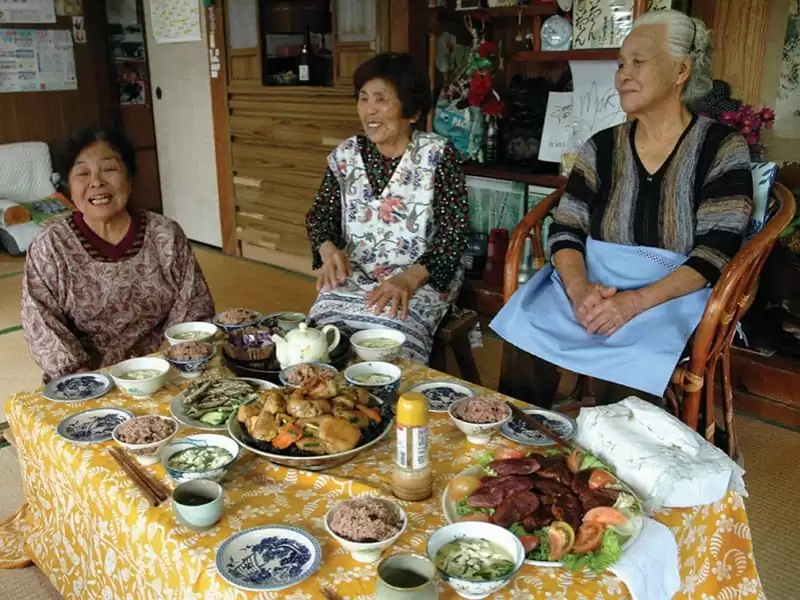
I specifically arrived early to see how and what she would cook. Her cousin Hana (89 years old) was working in the garden, and another cousin, Michiko (85 years old), came to help in the kitchen. Together they have 27 children and nearly 90 grandchildren, but all three women live separately and independently. More than half of their children have moved “to the mainland,” as Okinawans call the islands of Kyushu, Shikoku, Honshu and Hokkaido, and only come for the holidays.
“Back then, there was no TV in the village, and there was no electricity either. As soon as it got dark, we went to bed,” explained Michiko, who worked in a weaving factory in her youth, explaining why they had so many children. When the American bombings began, the three sisters and their parents moved to caves and sat there for almost six months, hiding first from the Japanese soldiers, who treated the Okinawans as second-class citizens and forced them to build fortifications, and then from the Americans, about whom the Japanese told them all sorts of horrors.
Three Pillars of Longevity: Diet, Mobility, Spirituality
Many Okinawans never came out of the caves: several dozen families killed themselves so as not to fall into the hands of the devils. Mothers exchanged children, because it was easier to kill strangers than their own… Hana’s husband was a doctor, but she never heard anything from him about the high life expectancy on the islands: “they lived as they lived: someone died earlier, someone later.” After asking about how they lived, I realized that longevity rests on three pillars: diet, mobility and spirituality.
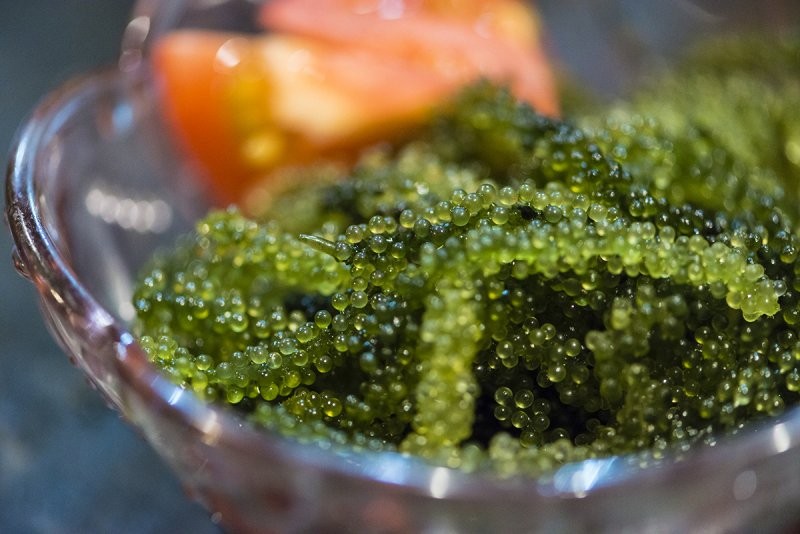
First of all, it turned out that Okinawans do not overeat, they even have an expression “eat eighty percent full”, and secondly, long before the achievements of modern pharmacology, they had a word “kusuimun” in their language, translated as “medical food”. Unlike the Japanese, Okinawans don’t really like fish, but they eat much more tofu (that is, soy) and seaweed than the Japanese, including umibudo, a unique Okinawan sea grape that looks more like frog eggs on a branch to me, and slippery “mozuku”.
Vegetables and Superfruits: Purple Potatoes, Papaya, and Shikuwasa
They eat a lot of vegetables, from which they get the necessary antioxidants, including purple potatoes, from which Michiko made plump oil-fried pancakes, and local daikon. The mentioned gaya, which manages to retain all its vitamins even after cooking, is very popular. Of the fruits, Okinawa grows its own variety of papaya, which is cooked here as a vegetable, and the lemon “shikuwasa”, rich in nobiletin, which prevents the growth of cancer cells. Turmeric is often used, which is also considered a panacea for hangovers.
Okinawans love pork and eat almost no chicken or beef, although herds of cows grazed on Ishigaki Island, which, when they get to the table, will become the famous “Kobe beef.”
“We use the whole pig, except for its squeal,” Misako joked. Soup is cooked from the head, the ears are finely chopped and lightly marinated. The “aguu” breed is bred in Okinawa, the meat of which has less cholesterol and 3.5 times more glutamic acid than regular pork. My hosts treated me to pork knuckles “tebichi”, which gave a lot of gelatin after a long boil. “It’s very useful to keep the skin from aging,” Misako said about it.
Movement as the Norm: Gardens, Karate, and “Okinawan Croquet”
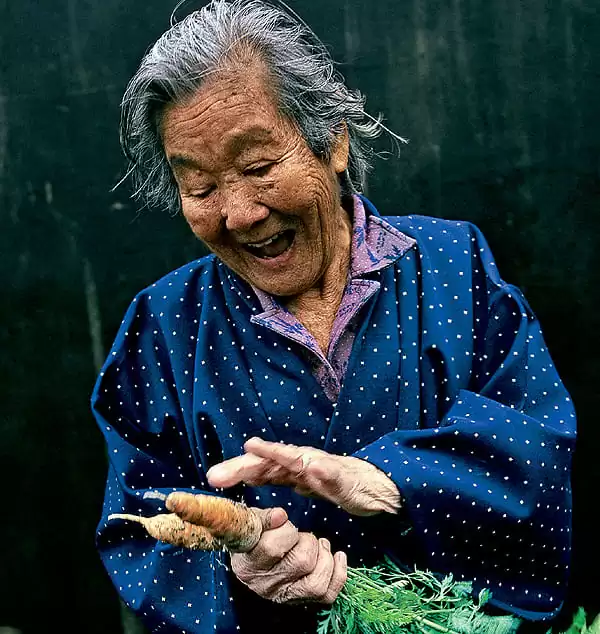
Elderly Okinawans don’t sit still; they have a basket weaving club, karate (its birthplace is Okinawa), or work in the garden. Men play a local version of croquet; there are courts for it in every village. The subtropical climate means that there is no time of year when older people are forced to stay indoors, afraid of slipping on ice and breaking something. There are also those who run marathons at 80 and earn their lunch by spearfishing.
But most elderly Okinawans stay in shape by walking and gardening.
Unlike Japan, where everything works strictly according to schedule, Okinawa is known for its “Okinawan time” and stress-free lifestyle, which positively affects the immune system. Many Japanese pensioners move to Okinawa in the hope of prolonging their lives. Here they are pleasantly surprised, because elderly Okinawans are not isolated in nursing homes, but thanks to the organization of society, they are involved in all the same social events as young people.
Community Instead of Isolation: Clubs, Holidays, and Mutual Assistance
“Each villager pays a small fee to our municipality for their organization – I go to ikebana and calligraphy classes, Michiko specializes in Okinawan dances, and Misako specializes in photography. Old age allows you to try a lot of interesting things,” said Hana, and I remembered that the majority of those present at exhibitions and competitions were elderly.
And when Okinawans finally die, they are buried in an unusual way as well. Never in my life have I seen cemeteries like the ones on Yonaguni Island. Three-meter-high stone sarcophagi, resembling impressive-sized stone houses dug into the ground, were shaped like a turtle shell. In the shade of one of these, a family sheltered from the wind at a picnic; children chased after a puppy, the father of the family played the shamisen and sang something soulful and even lively, the women sang along.
Awamori and “Hanazake”: A Ritual of Returning to Ancestors
I was immediately poured a glass of awamori. My throat constricted from the fiery liquid. Even a pun “memento awamori” was born in my head. Later I learned that manufacturers on Yonaguni, as the southernmost Japanese island (it’s less than a hundred kilometers from it to Taiwan), are allowed to produce 60-degree awamori, called “hanazake”. When a person dies, the body is buried for a couple of years, and then the bones are taken out, washed with hanazake, and laid to rest in the sarcophagus.
“It’s so big because it’s designed for several generations of relatives,” Tamashiro-san explained in broken English. “But the shape of the grave does not resemble a shell to Okinawans, but a mother’s womb, from which we all came and to which we return. We are always happy for our ancestors when we come here. Commemorating is not sad. It is an occasion for relatives to gather, and for young people to feel that they did not originate on this earth out of nowhere. After all, ancestors teach us how important it is to be a responsible member of family and society.”
A Lesson for the World: Living Longer is More Than Following a Diet
Standing in this remote cemetery in the middle of the Pacific Ocean, I thought that the world could learn a lot from the Okinawans, who have seen many different typhoons in their lives, despite them, living longer than anyone else in the world is certainly not just about diet.