The Bolivarian Republic of Venezuela is a rather large country with a population of about 28 million people and a territory of 916,000 km2. In the press, Venezuela has recently been written about mainly in connection with fluctuations in oil prices and the extravagant policies, in the recent past – the rhetoric of the late President Chavez, the organizer of the “Bolivarian revolution,” an admirer of the late Che Guevara and the living Fidel Castro, a friend of Lukashenko and Ahmadinejad, and more recently – the political crises after the dictator’s death.
However, politics aside, it is also a country with amazing nature, mountains and beaches, jungles, waterfalls, and the ubiquitous smell of exoticism. To see Venezuela in its entirety, it certainly takes more than a month. In two weeks, we managed to visit Margarita Island, the Orinoco River Delta, and Canaima National Park.
A Non-Glamorous Pearl of the Caribbean Sea
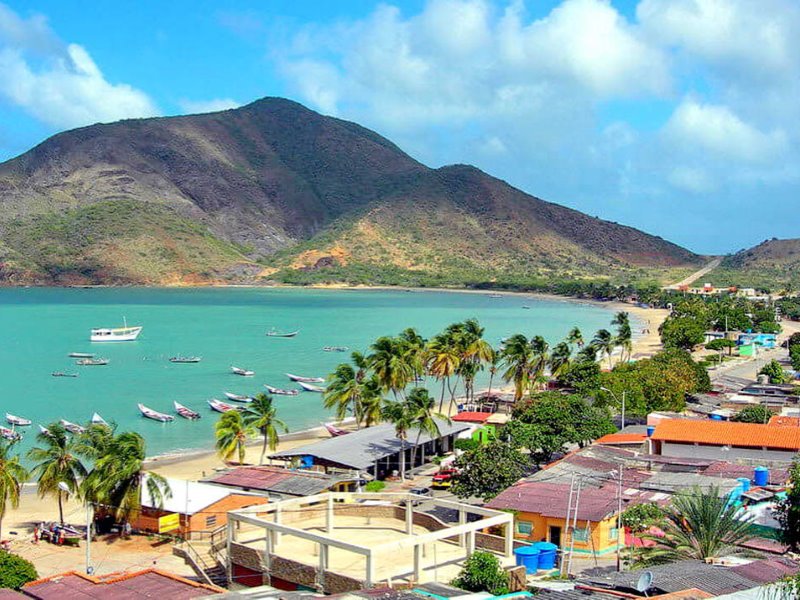
Margarita is an island with an area of 1076 km2, 30 kilometers from the coast of Venezuela in the southern part of the Caribbean Sea, with a population of about half a million people. It was discovered in 1498 by Christopher Columbus and named, according to one version, after Princess Margaret of Austria, according to another – after pearls (“margarita” is one of the Latin names for pearl).
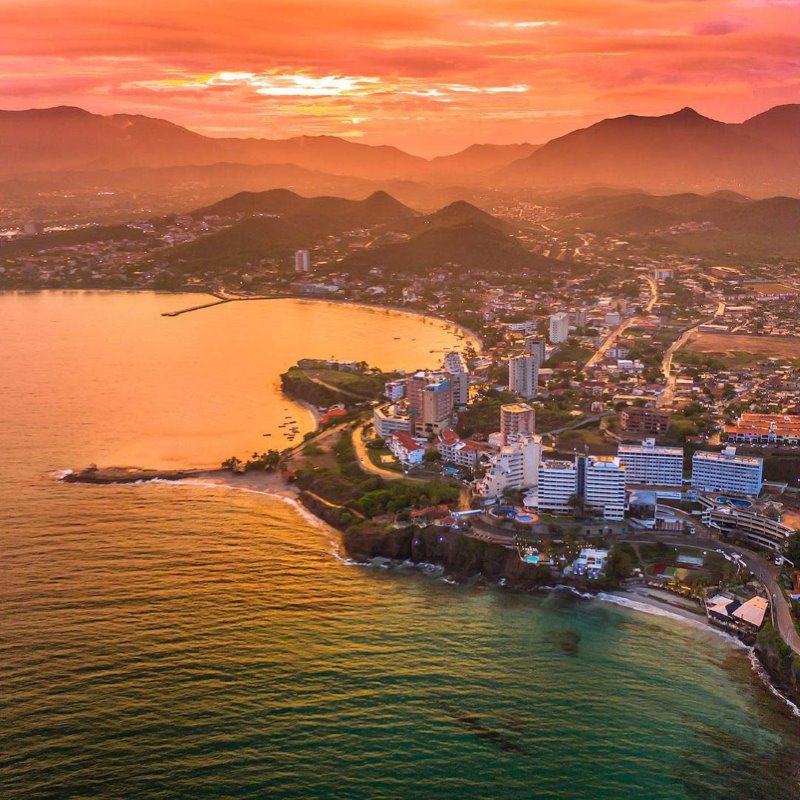
In the past, large-scale pearl mining flourished here, but now it has practically ceased, and the island exists due to the free trade zone (Venezuelans come here for duty-free imported alcohol and electronics) and tourism, which, however, can hardly be called truly mass. Charters arrive from Europe, Americans are encountered, but the majority of hotel guests are wealthy Venezuelans for whom this is “their own” resort.
Margarita is traditionally called the “pearl of the Caribbean Sea” in tourist brochures. How true is this? The answer is ambiguous and depends on what you expect from it. It’s always hot in Margarita; it’s the eleventh degree of north latitude, more than a thousand kilometers south of Cuba. Even in winter, it’s plus 28-30 degrees Celsius in the shade during the day, 23-25 at night, and the air is humid.
The first impression after leaving the plane is a sauna. The sun is extremely harsh. It’s not easy for a blonde or redhead to tan here; you either have to constantly use sunscreen with a protection factor of 50-70 and remain white, or risk getting a sunburn, or sit in the shade.
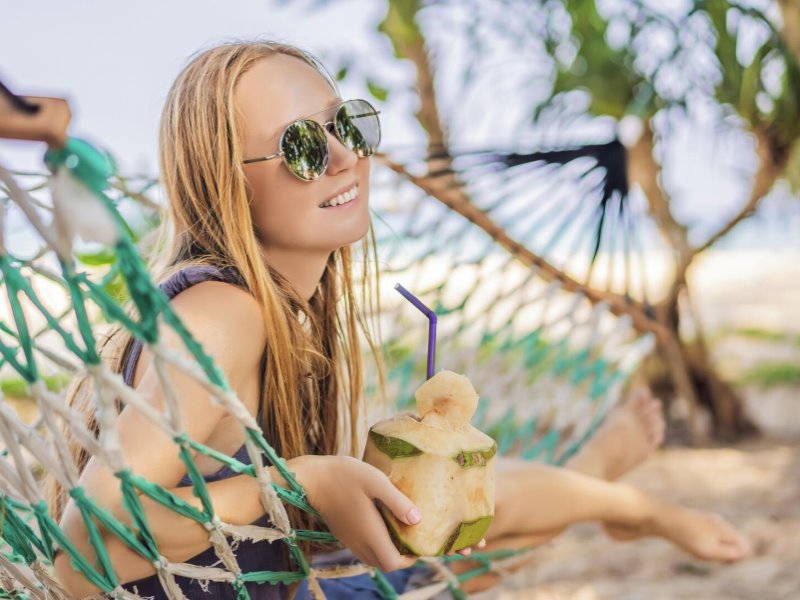
In hotels, and almost all of them operate on an “all-inclusive” system, you are generously poured exotic cocktails, daiquiris, coco-loco, caipirinhas, and for lovers of classics – cuba libre. However, you should be careful; they don’t skimp on rum here, and in the Venezuelan version of cuba libre, there is usually more rum than Coca-Cola.
Short but torrential tropical rains are not uncommon. Lush green mountains rise above the sea, creating a unique romantic landscape. And leaving the hotel, just take a few steps, and you find yourself in the atmosphere of an old film or the novels of Marquez and Hemingway.
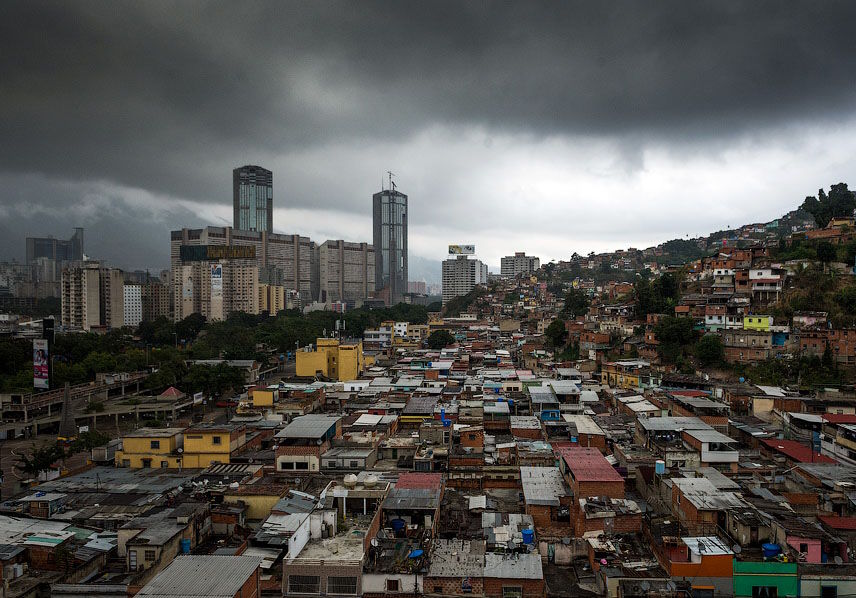
One-story slums, huts, elderly Venezuelans sit in front of them smoking, children are scurrying around, corpulent mulatto women ride mopeds, naturally without helmets, small shops and simple bars (a canopy with a refrigerator, but without walls and doors) sell ice-cold beer, piles of garbage at every corner, the car fleet is mainly represented by American cars from the 70s and 80s – giant sedans like Chevrolet Caprice and old Blaizer or Vagoner jeeps, often without windows, with rust holes in the doors…
But all this runs, fuel consumption is not a concern, gasoline in Venezuela costs about 3 US cents per liter. There are also newer cars, mostly Chinese and Japanese. Occasionally – Mercedes from the late 80s – early 90s, which look like real luxury here. There is no free market for new cars in Venezuela, as it once was in the USSR; you have to stand in line or overpay.
Tropics, Pelicans, Flies…
Flocks of pelicans fly over the sea. You can sit for hours and watch the birds with huge beaks circling in a strange carousel and suddenly plunging vertically down from 30-40 meters after another fish. By the way, about fish. The local fish market is not a sight for the faint of heart, and most importantly, not for people with an overdeveloped sense of smell. The catch is cut and sold directly in the sun, under an endless swarm of flies. However, no outbreaks of infectious diseases are observed among the local population.
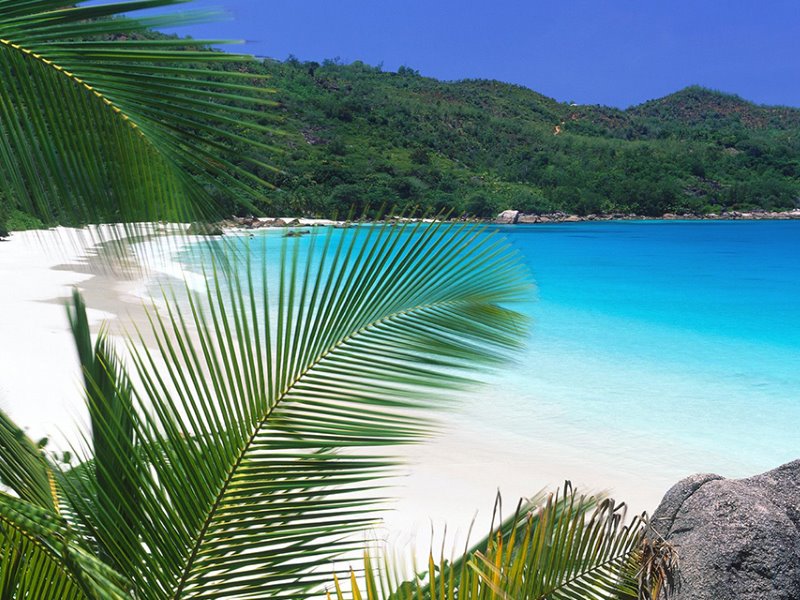
The sea on Margarita is clean and warm, there are beaches with white sand, but the coast is far from the “Caribbean” commercials. A trip here is a journey to the real tropics, far from sterility and not yet too modernized.
You can recommend an excursion around the island in a jeep, which will take you to the noisy and crowded Porlamar and to the quiet colonial Asunción, the official capital of the island and the state of Nueva Esparta, make a stop at the reserve and take you on a boat ride through the mangrove thickets, where starfish swim near the shell-covered roots of trees growing out of the water, and take you to the semi-desert and practically uninhabited Macanao Peninsula with its amazing landscapes and sunsets.
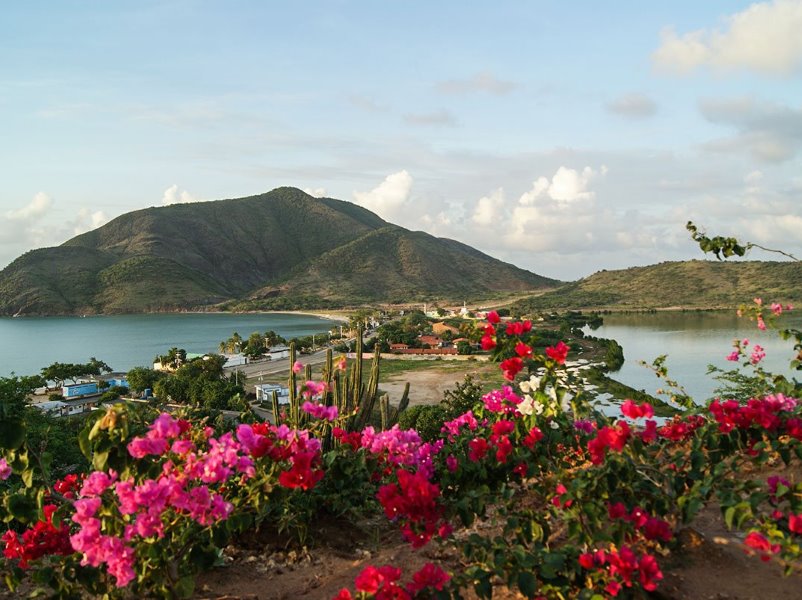
The hotels here are very luxurious, but even in them, the electricity is turned off for an hour or two almost every day, and hot water stops flowing in the shower. It’s interesting outside, but unsafe. As almost everyone assures, banditry flourishes, armed robberies are commonplace. However, the author walked not only during the day, but also, against all recommendations, in the dark, visited a local bar and remained safe and sound…
There are no difficulties with supplying the population, which is much written about in the press. The rural “supermarket” had practically everything, from salt to washing machines, although the store’s drabness and shabbiness were very reminiscent of the Soviet 80s.
In addition to all the above, Margarita is also a good starting point for visiting mainland Venezuela. For $500, you can, for example, take a two-day trip to the Orinoco River Delta and Canaima National Park.
Swimming with Piranhas
On a small plane, you fly to Puerto Ordaz, a large industrial center of mainland Venezuela, with countless skyscrapers and office centers. The sidewalks here are cleaner, the cars are newer, and ruins on wheels are rare. A bus takes you across the new bridge over the Orinoco towards the delta. This impressive engineering structure, completed quite recently in 2006, is more than 3 km long and spans the mighty and surprisingly dark (due to its bottom) river.
The route then runs along a new highway through the pampa, the South American savanna, overgrown in places with shrubs and in places with low coniferous trees. On the road, every 5-6 kilometers, “speed bumps” force you to slow down before the National Guard checkpoints. Tourists are not touched, but the locals are checked thoroughly.
The highway turns into an ordinary road, and finally, you reach the “end of the world,” a village of the Warao Indians near one of the tributaries of the Orinoco. The Indians, apparently accustomed to tourists and indifferent to Chavez, live along the shore in huts on stilts driven directly into the water, without windows or doors. Children splash in the river, adults relax in hammocks.
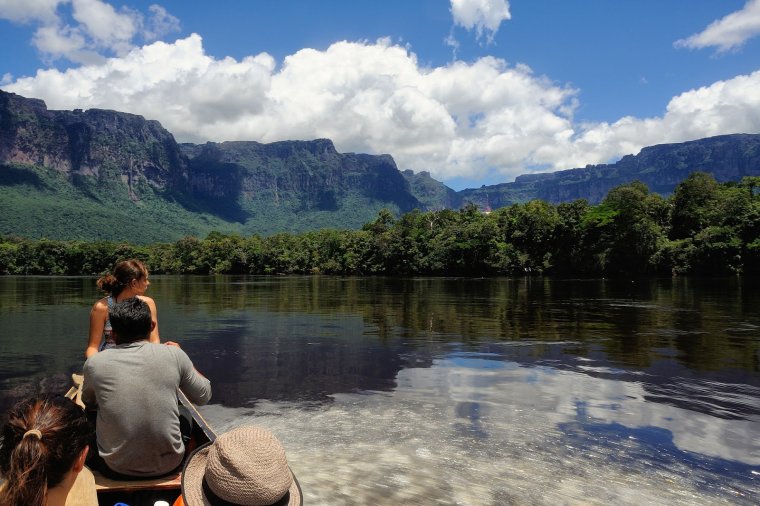
Further on, you can only travel by water, and after covering about sixty kilometers on a boat with an engine that regularly breaks down and is repaired on the go, you find yourself at a mini-tourist base. The incessant cries of birds fill the air, sunset is approaching, and, leaving our backpacks in the rooms under the canopy, right behind which is the dark forest, we continue our journey.
The Indian teaches us how to catch piranhas, and they really bite surprisingly quickly on the simplest fishing rod, or rather, a branch with a line and a hook. You can also swim with piranhas; they don’t bother people just like that.
Tropical night falls, monkeys hoot hollowly in the forest, and you go further into the delta itself, which resembles a giant dark lake. On its shore, an Indian catches a small caiman with a net, then snakes crawling in the branches of trees hanging over the water. How he manages to spot them in complete darkness with just a small flashlight is a mystery. Then – an overnight stay to the music of the jungle.
An interesting detail – European safety standards have not yet reached here; there are no life jackets on the boat, and the threat of it capsizing with tourists overwhelmed by an abundance of impressions in the middle of the lagoon, a kilometer from the shore, is quite real…
A Walk Under a Waterfall
Early in the morning, you return to Puerto Ordaz along the same route – boat and bus – from where you fly to Canaima National Park, a UNESCO World Heritage Site. This is perhaps one of the most amazing places on the planet. Only 60-70 years ago, practically no white man set foot in these places; tens of thousands of kilometers were inhabited only by a few Indian tribes. And now there are no roads here; you can only get here by plane – to a small airfield located literally in the middle of the wilderness, surrounded by “tepuis” – table mountains with flat tops (if geologists are to be believed, the oldest on the planet).
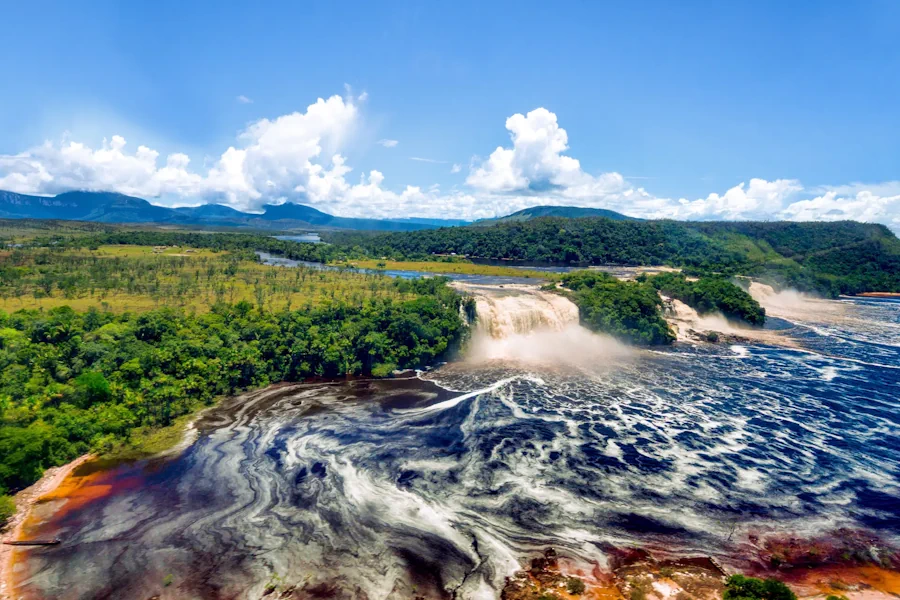
Everything around is red – both the earth and the water of the lake, a warm, surprisingly pleasant lagoon for swimming. Here is the world’s highest waterfall, Angel Falls, or Salto Angel, named not in honor of angels, but in memory of the American pilot James Angel, who flew over it in an airplane in 1935. A land geographical expedition first reached here only in 1949.
Hugo Chavez renamed the waterfall Kerepakupai-Meru in 2009. The point, however, is not in the name, but in the 979-meter stream of water that falls vertically from the top of Mount Auyantepui (the mountain of the devil, as the Indians called it). Moreover, there is no river on the mountain; the waterfall is formed as a result of fog condensation. If you are not a climber, you can only see Angel Falls itself from the plane. But under another waterfall, Salto el Sapo, one of the three classic, river waterfalls falling into the warm Canaima lagoon, you can walk in the most literal sense of the word.
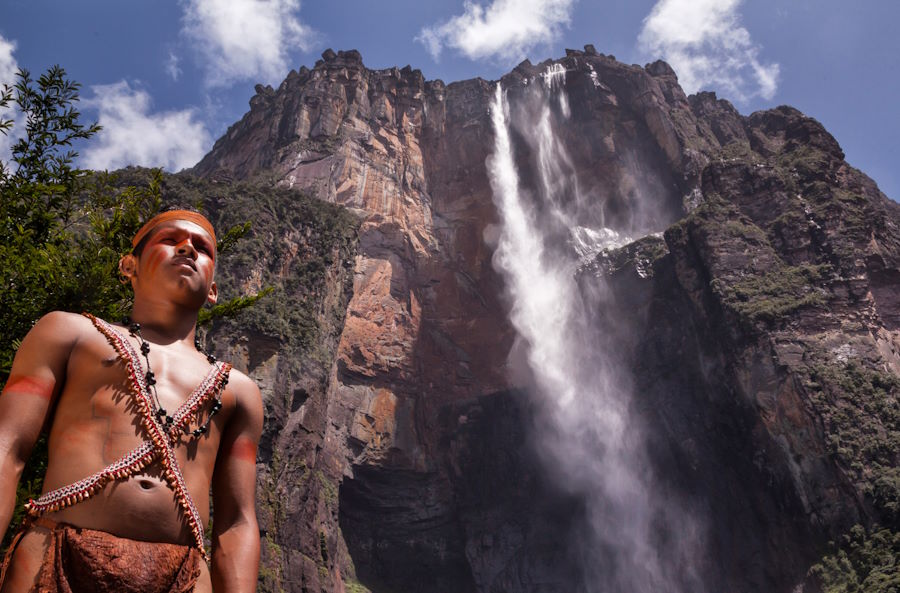
In the rocks on the slope, approximately halfway up, twenty meters from the water level and from the top, there is a kind of rocky ledge. You go there, and a wall of eternally rushing water separates you from the rest of the world. You look through its shroud at the surroundings, take pictures in clouds of spray, think about how everything here was exactly the same long before you, long before Chavez, and forget about the troubles and worries of the mundane world…
Useful information
- How to get to Venezuela from Ukraine. The easiest way is to buy a tour from one of the European companies, such as the Czech EXIM Tours or the German Neckermann Reisen, and fly to Prague, Munich, or Frankfurt and then by charter.
- The price of the question. A two-week trip to a four-star hotel operating on an “all-inclusive” system will cost 1000-1500 euros plus travel expenses to Europe. Another option: fly independently, with inevitable transfers, look for hotels on the spot or book through the Internet.
- Visa. Unlike Russians and Belarusians, citizens of Ukraine still need a visa to visit Venezuela. The nearest embassy of the Bolivarian Republic to Kyiv is in Warsaw.
- Money. The official exchange rate is 100 bolivars per dollar. This is the rate used to recalculate the money you withdraw from a card at the few working ATMs. You can get 110-120 bolivars from money changers on the street – or a “doll” with cut paper. Hotel porters and tour company guides exchange at 105.
Interesting
- Prices. 0.3 l of beer in a bar on the beach – 90-130 bolivars, 0.7 l of rum in a store – 700-900, half a kilo of coffee – 300-4000. You can have lunch in a simple restaurant in the city for 400-500 bolivars. In a good one – for 1000.
- Transport. You can rent a car for a day for $60-70. However, it is not recommended to do this. Local traffic is extremely chaotic, Venezuelans usually drive with a bottle of beer in hand, and in the event of an accident, a foreigner is likely to be found guilty.
- Note to law-breaking citizens. Buying cocaine in Venezuela is not a problem. But even for one gram, you can end up in prison for years, compared to which the Ukrainian one will seem like paradise. Baggage is checked not selectively, but totally when departing from Venezuela. In addition to X-rays and dogs, national guards open and thoroughly inspect every suitcase. This is not an exaggeration – every one!
- What to bring. A truly interesting souvenir is a piranha. A large, 25 cm long, dried and lacquered fish on a wooden stand sells for 1000-1200 bolivars. Women will like very cute and cheap (550-800 bolivars) coral necklaces and bracelets. You can buy a real Indian hammock for 12,000 bolivars.