You know, I’ve always been fascinated by castles. There’s just something about them that’s breathtaking: the grandeur, the stories they hold within their ancient walls, and that incomparable atmosphere, as if time has stood still. When I think of castles, the first thing that comes to mind, of course, are European fortresses: Chambord, Neuschwanstein, Westminster Abbey. But recently I came across an article, and it reminded me that the world is much wider than we’re used to thinking, and that castles exist where you least expect them. I’m talking about Chapultepec.
It’s not just a castle. It’s some kind of chameleon castle, which in its long life has managed to be a sacred place, a summer residence for emperors, a presidential palace, and even a heroic battlefield. And now it’s the National Museum of History, and this is perhaps its most important role. Let’s walk through its corridors, peek into the past, and find out why this castle on the “hill of grasshoppers” is so special.
How did a castle appear on the hill of grasshoppers? (the history of Chapultepec)
The name “Chapultepec” sounds like a spell, doesn’t it? In fact, it comes from the Nahuatl language (which, by the way, is still used in some parts of Mexico!) and means “hill of grasshoppers” or “hill of crickets”. And this is no accident: the hill on which the castle stands was an important place long before the Spanish even knew about the existence of America.
Pre-Hispanic era
Imagine: before any Spaniards, the Aztecs, or, as they called themselves, the Mexica, lived in this place. Chapultepec Hill was sacred to them. There were groves and springs here – and for such an arid region as central Mexico, this was simply a treasure! Mexica rulers, tlatoani, built their summer residences, baths, and even aqueducts here to deliver clean water to their capital, Tenochtitlan (present-day Mexico City). Even then, it was a place of power, rest, and grandeur.
Colonial era
Then came the Spaniards, well, how could we do without them. And they, of course, quickly realized that this was a strategically important and very beautiful place. Attempts to build something serious here began in the late 18th century, under the viceroys. They even wanted to make a military academy here, but something went wrong, and the construction was abandoned. The castle stood unfinished, forgotten, almost in ruins. For a while.
Imperial dream
But the castle truly took on its “star” role only after Mexico gained independence. In 1864, an… emperor appeared in Mexico. Yes, yes, Ferdinand Maximilian of Habsburg, brother of the Austrian Emperor Franz Joseph I, arrived in Mexico with his wife Carlota to lead the so-called Second Mexican Empire. And they fell in love with this abandoned castle!
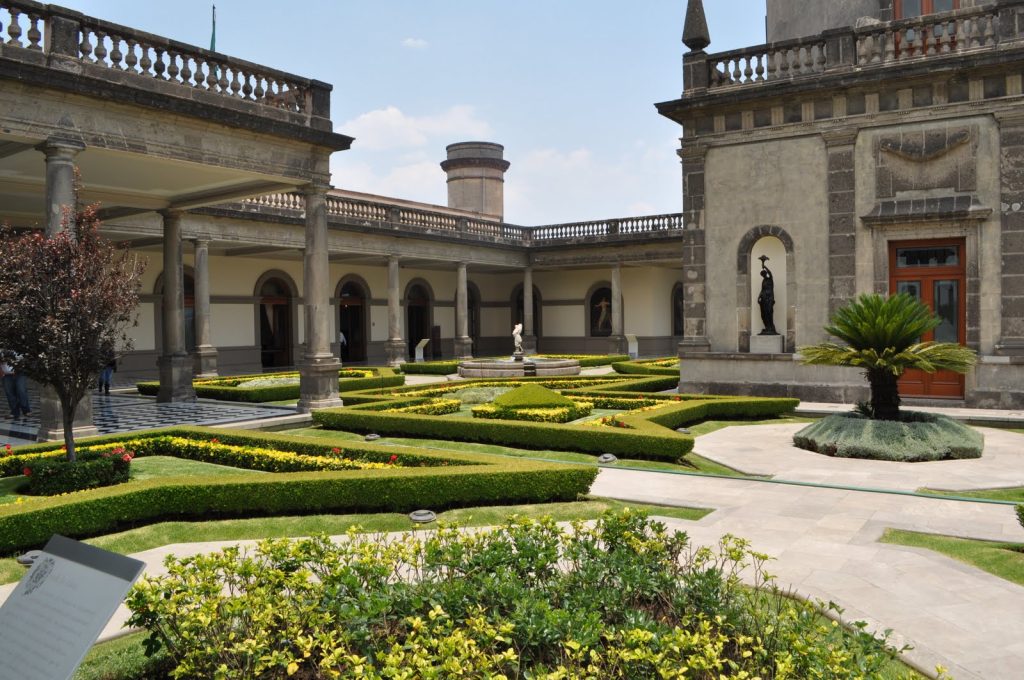
Maximilian, being a man of art and a lover of European chic, decided to turn Chapultepec into his luxurious residence. He rebuilt it in the style of European castles, laid out gardens, and arranged magnificent chambers. A kind of Mexican Versailles, only on a hill and with a view of Mexico City. It was under Maximilian that the castle acquired the appearance we see now.
Presidential Palace and Museum
After the empire, well… the emperor was executed, Chapultepec began to be used as the residence of Mexican presidents. One of the most famous “residents” was Porfirio Díaz, who ruled the country for almost 30 years. He also made his contribution to the appearance of the castle, adding luxury and modern amenities of that era. But in 1939, the then-president Lázaro Cárdenas made, in my opinion, a very smart and far-sighted decision: he declared Chapultepec the National Museum of History.
And it was a breakthrough! The castle ceased to be someone’s private residence and became the property of the entire nation, a place where everyone can touch the history of their country.
Wandering through the corridors of history
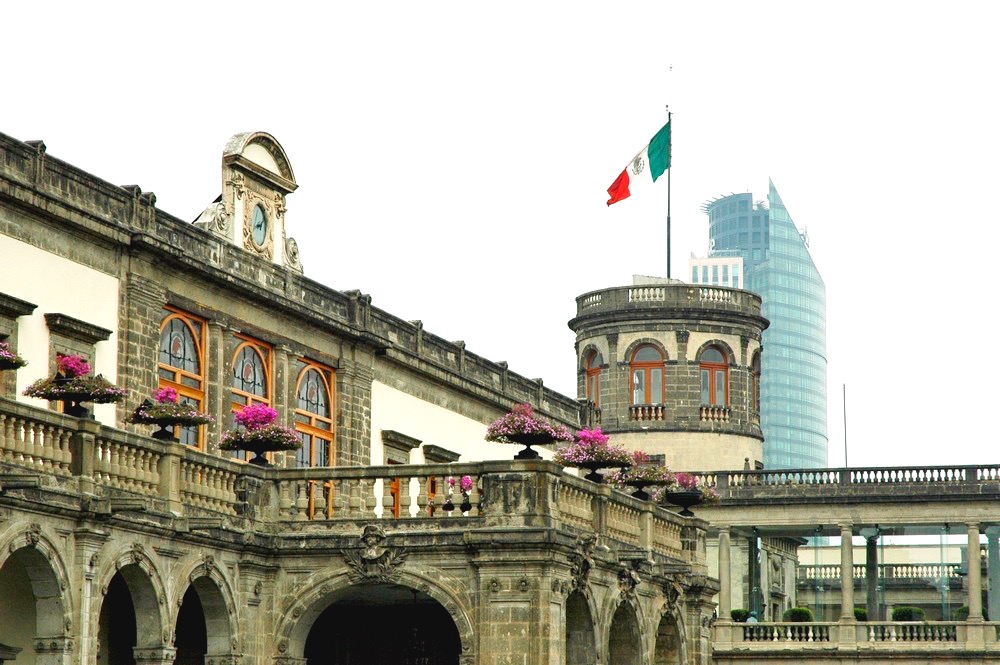
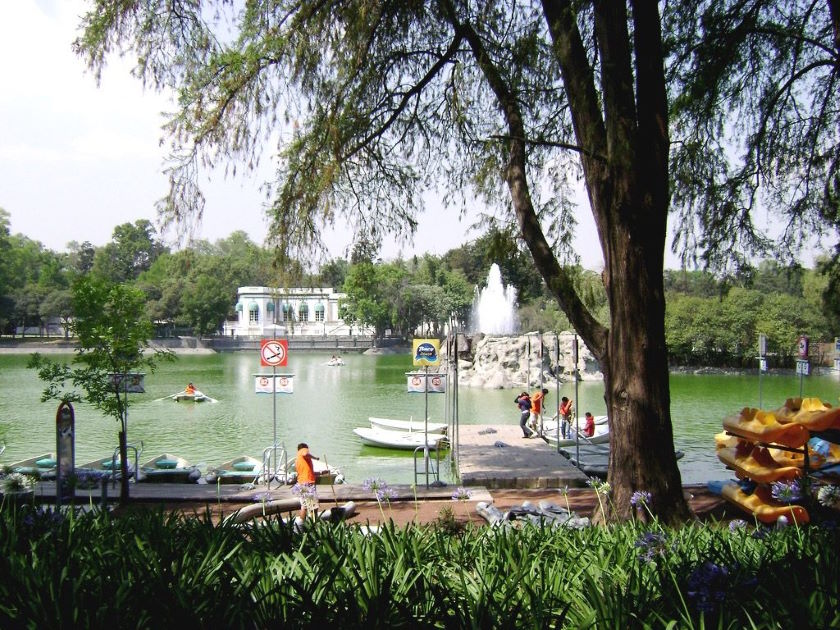
When you approach it, you immediately feel this power and at the same time grace. Chapultepec Castle stands on top of a hill, and from there opens a fantastic view of the entire Mexico City, spread out below like a huge canvas. Around the castle is the Chapultepec Park of the same name, one of the largest urban parks in the world, a kind of “lungs” of Mexico City.
Architecture and landscape
The architecture of the castle is a mixture of European neoclassicism and imperial grandeur. White walls, columns, porticoes – all this creates a sense of formality and solemnity. The terraces offer a panoramic view that is simply mesmerizing. The perfect place for a selfie, by the way! You can spend hours here, just looking at the city, drowning in smog and at the same time so alive and pulsating. The gardens around the castle are a separate song: well-groomed, with fountains, sculptures, and even botanical rarities.
Since 1944, Chapultepec has officially become a public free park. Forests, meadows and gardens on weekends are filled with noisy and multinational companies. The number of visitors per year reaches two million.
Interior and museum exposition
Inside is a whole world, divided into two main parts: the “Alcázar” (this is the residential part) and the National Museum of History itself.
Alcázar
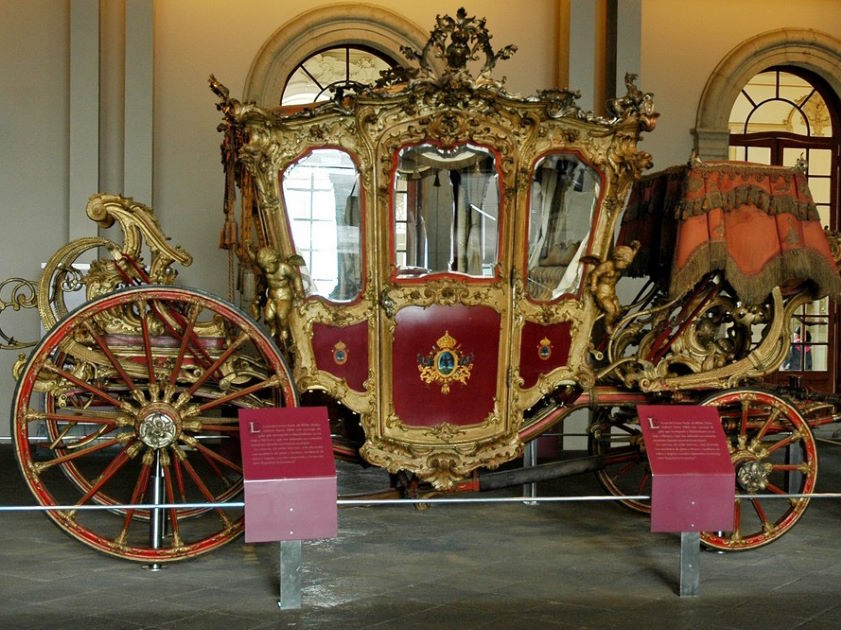
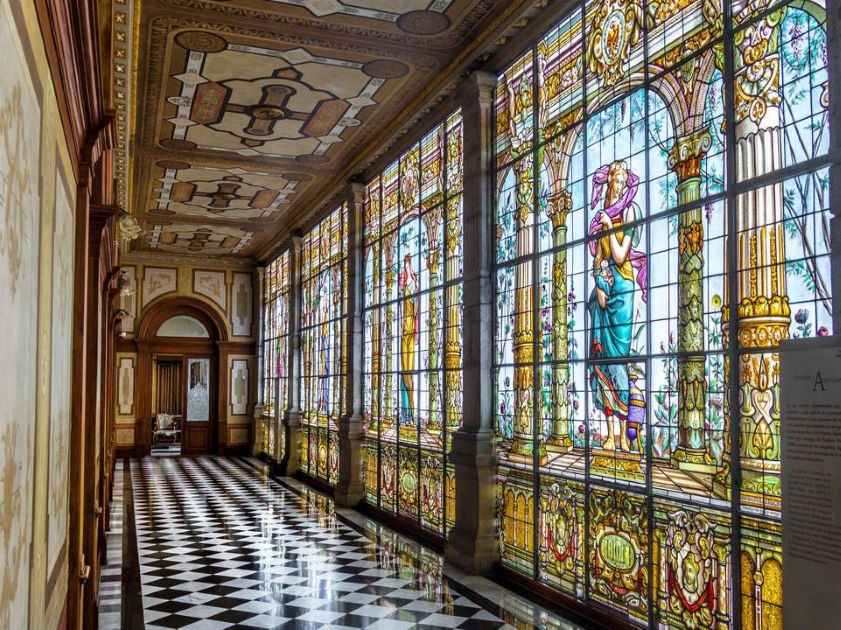
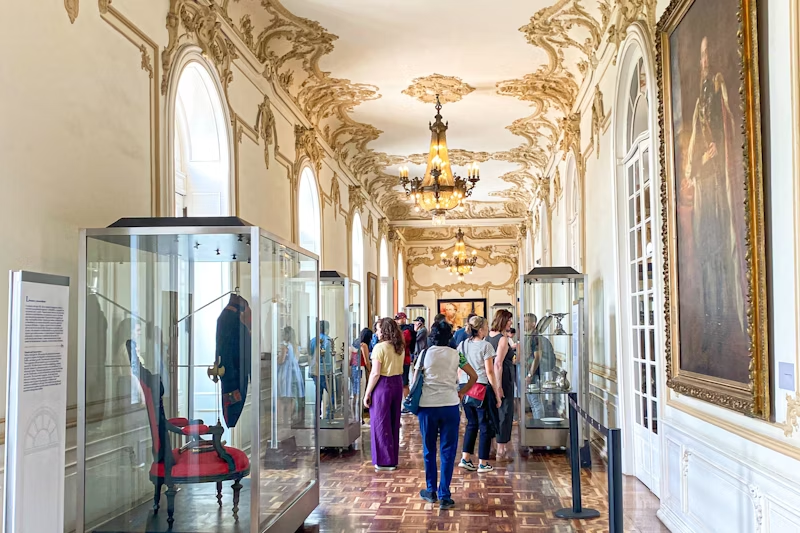
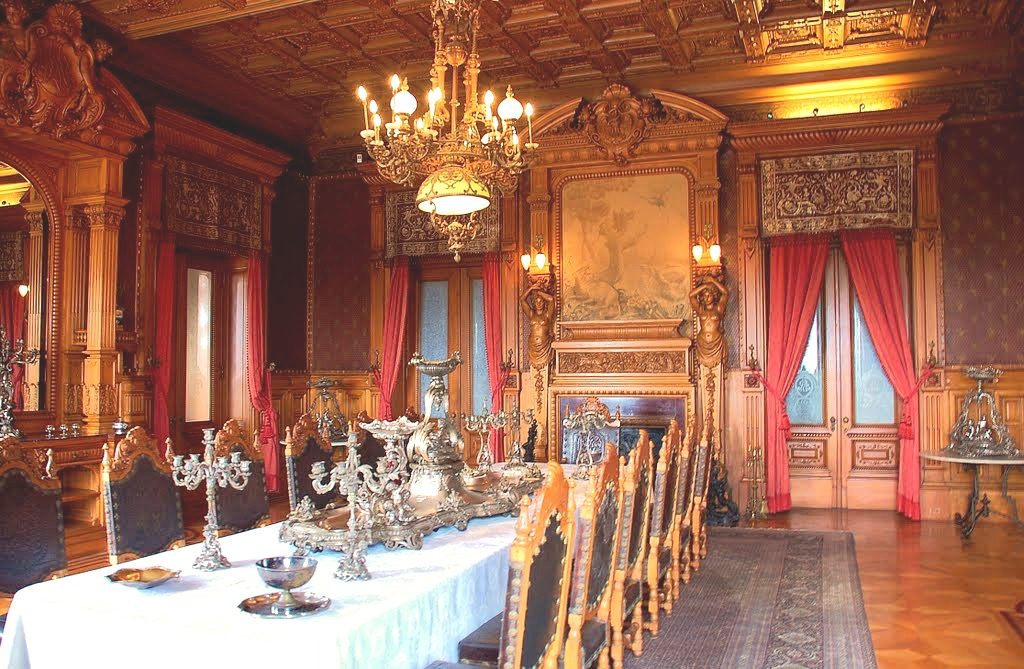
This is, in fact, the restored chambers of Emperor Maximilian and Empress Carlota, as well as President Porfirio Díaz. Here you can immediately see that people with good taste and European manners lived. Furniture of that time, paintings, dishes, personal belongings – all this allows you to plunge into the atmosphere of the 19th century.
You can imagine how Maximilian and Carlota strolled through these rooms, received guests, dreamed of their Mexican empire. Honestly, the chambers of Porfirio Díaz are no less impressive – they are perhaps even richer and grander than those of the emperor. You can feel the scale of the dictator, who did not deny himself anything.
National Museum of History
This is where the most interesting thing begins for those who like to immerse themselves in history. The museum covers the period from the Spanish conquest to the Mexican Revolution of the early 20th century. The exposition is very competently built and tells the history of Mexico not with dry facts, but through artifacts, documents, paintings and personal belongings of historical figures.
- Conquest and Colonial Period: You will see weapons of the conquistadors, religious artifacts, household items of that time.
- War of Independence: Here are presented flags, uniforms, portraits of heroes of independence, such as Miguel Hidalgo and José María Morelos.
- Period of Reforms and French Intervention: Special attention is paid to the era of President Benito Juárez, his struggle against the French invasion and Maximilian. Here you can see personal belongings of Juárez and items related to the Second Mexican Empire.
- Porfiriato and Revolution: The exposition ends with the period of the reign of Porfirio Díaz, his luxurious life, and then the beginning of the Mexican Revolution, which changed the face of the country. Here you will find photographs, weapons and documents related to such figures as Pancho Villa and Emiliano Zapata.
Walking through the halls, you are as if flipping through the pages of a history textbook, but only in 3D, with the ability to touch the past (well, figuratively, of course, you can’t touch anything!). You feel how the castle breathes history, how each exhibit tells its own unique story.
Did you know? Interesting facts about Chapultepec
Well, now the heading “Surprise me!” or just a few curious facts that make Chapultepec even more unique.
The only real royal castle in North America
While Canada and the United States have magnificent mansions and estates built in the style of castles, Chapultepec is the only one that actually served as the residence of a monarch (albeit a short-lived one) and was built as such. This gives it a special status.
The Legend of the “Niños Héroes” (Boy Heroes)
This is one of the most tragic and patriotic stories in Mexico. In 1847, during the American-Mexican War, American troops stormed Chapultepec, which was then a military academy. Six young cadets (aged 13 to 19), instead of surrendering, fought to the last drop of blood.
The most famous of them, Juan Escutia, according to legend, wrapped himself in the Mexican flag and threw himself from the top of the castle so that it would not fall into the hands of the enemy. Their memorial stands at the foot of the hill, and every year on September 13, solemn events are held in their honor. To be honest, when you read about this, you get goosebumps.
Maximilian was a good gardener!
In addition to his imperial duties, Maximilian was very fond of botany. He personally supervised the work on creating and maintaining the gardens of Chapultepec, brought plants from different parts of the world, and even wrote several treatises on gardening. So, walking through the park, remember that this is partly due to the emperor.
Change of roles
As I said, the castle has witnessed and participated in many historical events. It served as a summer residence for Aztec tlatoani, then it was an abandoned construction site, then it became the residence of viceroys (albeit not for long), a military academy, an imperial palace, a presidential residence and, finally, a museum. A castle-multi-tool, no less!
Movie star
If you suddenly rewatched Baz Luhrmann’s film “Romeo + Juliet” (the one with Leonardo DiCaprio and Claire Danes), then know that many scenes were filmed in Chapultepec! In particular, the Capulet Palace is Chapultepec. So the castle is also a world movie star.
In conclusion: why should you see Chapultepec?
In general, if you thought that castles are only about Europe and medieval legends, Chapultepec will destroy these stereotypes. It’s not just a beautiful building on a hill. This is the living history of Mexico, its pains, triumphs, aspirations and dreams, concentrated in one place.
Walking through its halls is like flipping through the pages of a multi-volume book, where each room is a new chapter. From Aztec myths to presidential intrigues and student exploits – all this is intertwined within the walls of Chapultepec.
So, if you ever find yourself in Mexico City, be sure to go to Chapultepec. Climb the hill, breathe in this air, feel yourself part of history. Look at Mexico City from a bird’s eye view, as emperors and presidents once did. It’s worth it, believe me! Chapultepec is not just a collection of stones on a hill. This is a heart that beats to the rhythm of Mexican history, and it is waiting for you to hear it.