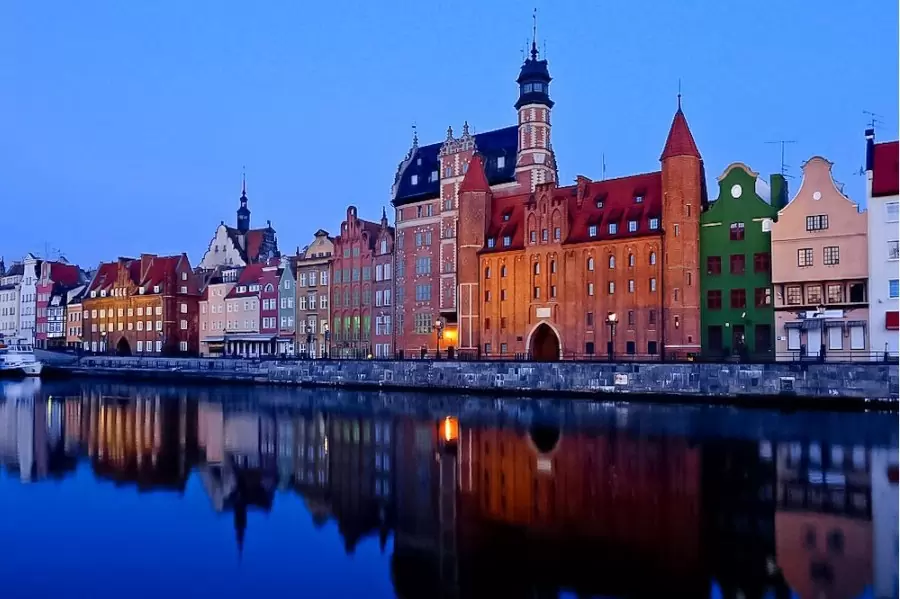
Okay, be honest, when you hear “port” and “Poland,” what’s the first thing that comes to mind? Probably something like gray containers, buzzing cranes, and the smell of fuel oil, right? But what if I told you that you’re not just wrong, but completely missing the mark? Gdańsk, my friends, is not just the main port of Poland. It’s a whole world where history intertwines with modernity, where the spirit of the old Hanseatic League is felt in every brick, and the Baltic whispers its secrets right in your ear.
It’s like your grandmother’s trunk – you open it, and there aren’t just old things inside, but entire eras, memories, laughter, and tears. That’s what Gdańsk is like. Only instead of a trunk, it’s the whole city. And today, we’ll open it up together and see what’s inside.
Greetings from the Depths of Time: Where Was the History of Gdańsk Born?
So, let’s start at the very beginning, shall we? Imagine you’re getting into a time machine and transporting yourself back a thousand years. There it is, Gdańsk. Or, more precisely, the settlement that would later become Gdańsk. And no, it wasn’t initially a huge metropolis crammed with ships. It was more like a cozy, but very important, little place, conveniently located at the crossroads of trade routes. What, do you think all this happened just by chance? Not at all! Geography, my friend, is everything.
Thanks to its location on the Vistula River, which flows directly into the Baltic, Gdańsk quickly became a kind of “transit hub.” Imagine: goods from all over Poland flow here – grain, timber, furs (yes, yes, that was gold back then!), and from here they sail by sea to Scandinavia, to the lands of present-day Germany, further west.
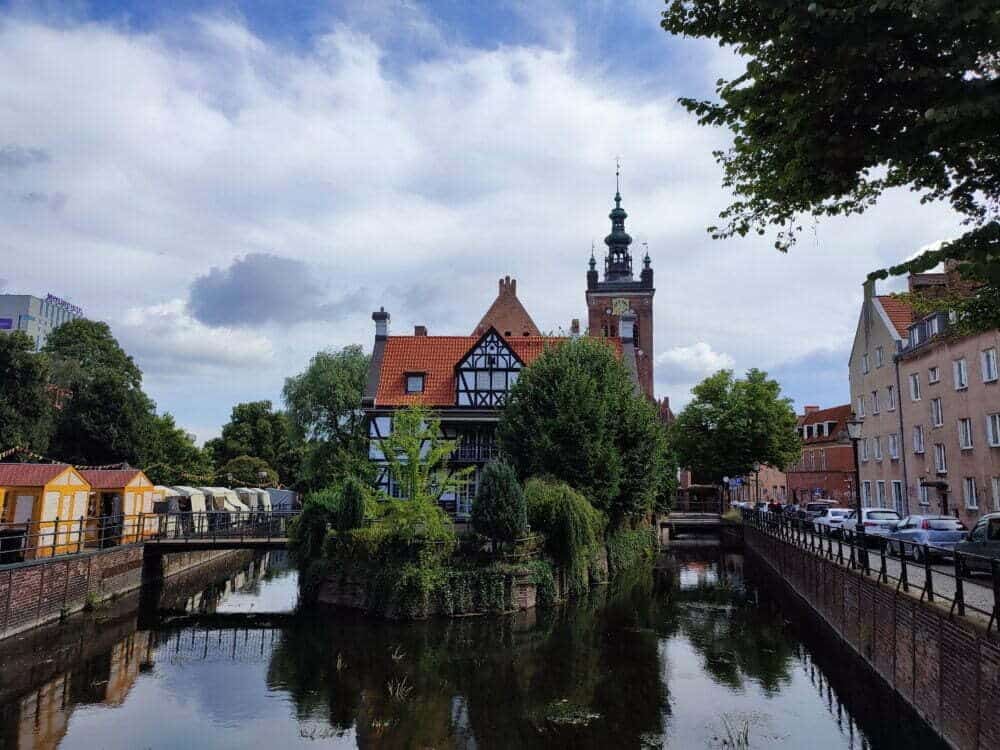
But the most interesting thing, in my opinion, is how Gdańsk became a member of the Hanseatic League. Do you know what that is? It was a kind of medieval “European Union” for merchants. Joining it gave you unreal bonuses: protection, privileges, reduced tariffs. And Gdańsk, being such a lively trading point, simply couldn’t pass it up. Membership in the Hanseatic League is like getting a gold card to an elite club. Immediate status, respect, and, of course, money!
It was during this period that Gdańsk began to acquire those amazing buildings that we see now. Powerful warehouses, beautiful mansions of wealthy merchants, magnificent churches – all of this appeared on the wave of Hanseatic prosperity. It was a time when Gdańsk merchants could compete in wealth with kings, and their ships sailed all the seas known at the time. So, when you walk through the streets of the Old Town, know that every stone there is steeped in the history of great trade and ambitions.
Gdansk – Facts Of the Past
The first people began to settle these places in the Bronze Age. And in the 5th century, the Prussians created a well-fortified settlement here. In 997, the residents of Gdańsk executed the missionary Adalbert of Prague, who tried to convert them to Christianity. The first written mention of Gdańsk is associated with this incident.
But already in the 11th century, written sources appear in which Gdańsk is mentioned as a city of Pomeranian Slavs. It is worth noting that merchants from various European principalities constantly arrived in the city. Therefore, there was actually a mixture of peoples who inhabited Europe at that time. Thanks to merchants, Gdańsk actively developed. In the 12th century, Gdańsk already had a large pier, a bustling embankment, and a huge market square.
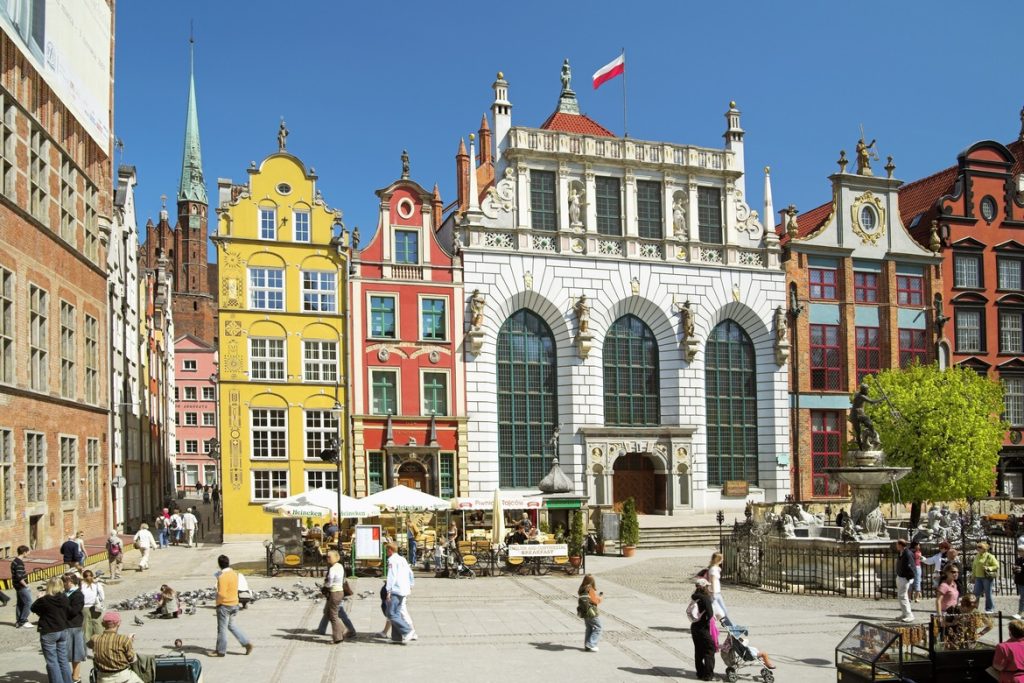
In 1308, the Teutonic Knights managed to capture Gdańsk. They expelled Poles, Prussians and Kashubians from it. In addition, they renamed the city Danzig. In 1361, Danzig becomes an active member of the Hanseatic League. Participation in this union contributed to the economic prosperity of the city. But the power of the Teutonic Knights gradually weakened. And in 1454, Polish troops drove the Teutonic Knights out of the city, and Gdańsk became part of Poland. Moreover, this did not affect the status of the city. Although a crown appeared on its coat of arms, its rights were not curtailed. As part of Poland, Gdańsk even had the right to mint its own coins.
In 1793, Gdańsk was occupied by Prussian troops. And in 1807, they were replaced by Napoleon’s troops. Moreover, the French granted Gdańsk the status of a free city. But with the departure of the French, the city was deprived of this status. The city’s economy fell into depression. This period lasted about 50 years. Only at the end of the century before last did the city “come to life.” New tram lines appeared in Gdańsk. In addition, the city authorities began to update the water supply lines. And in 1919, Gdańsk again acquired the status of a free city.
In 1939, the capture of Gdańsk by Germany actually became the reason for the start of World War II. The city was liberated only in 1945 by Soviet troops. During this war, most of the city buildings were destroyed. Almost all buildings were restored in the last century.
Gdańsk Today: Sea Gates and More
Okay, enough dusting off the ages, let’s get back to our days. What is Gdańsk now? Yes, it is still a huge, powerful port. And not just “huge,” but one of the largest in the Baltic. Imagine: giant container ships, oil tankers, ships carrying everything in the world come here – from cars to spare parts. This is such a huge logistics hub that operates 24/7, and life is in full swing here.
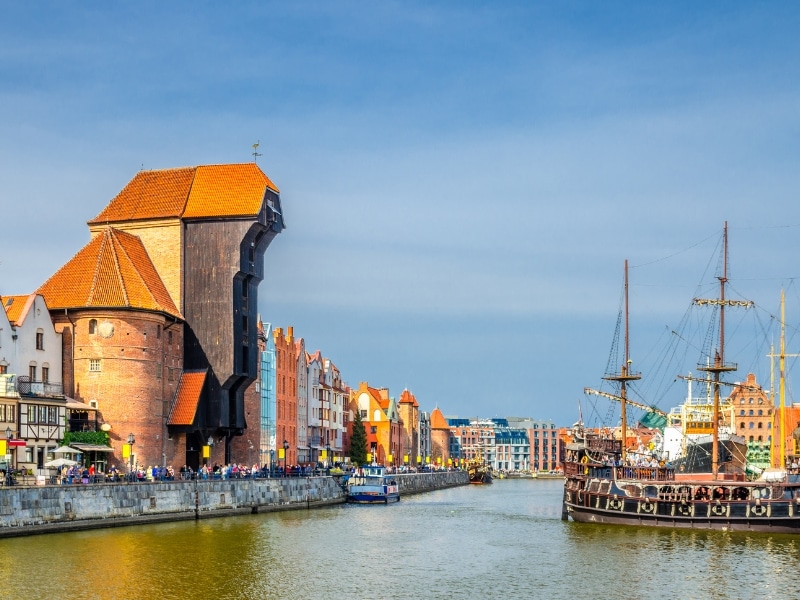
But Gdańsk is not only about economics and cargo. It is also an important passenger port. Ferries depart from here to Scandinavia, and cruise liners from all over the world come in. For many tourists, Gdańsk is generally the first point of contact with Poland. And that’s cool, because the city immediately sets a high bar.
And what about it being a “sea gate”? Well, everything is simple here. Poland is a country with a rather long coastline, but Gdańsk is really the main gate. The main flow of maritime trade goes through it, it connects Poland with the whole world. It’s like the main entrance to a huge house – all the most important guests pass through here. And this gives Gdańsk not only economic weight, but also a special status. It’s not just a city, it’s a symbol of Poland’s maritime power.
More Than Just a Port: What Does Gdańsk Live On?
This is where the most interesting thing begins, because Gdańsk is far from just about ships and containers. This is a city that knows how to work, relax, and inspire.
Historical Center: A Time Machine on the Streets
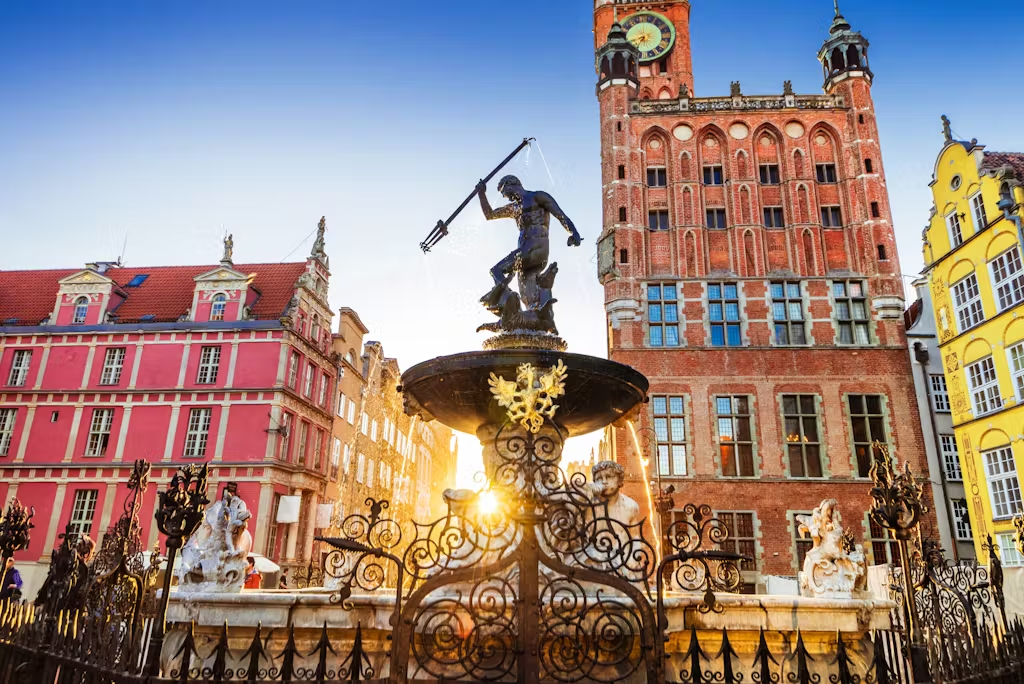
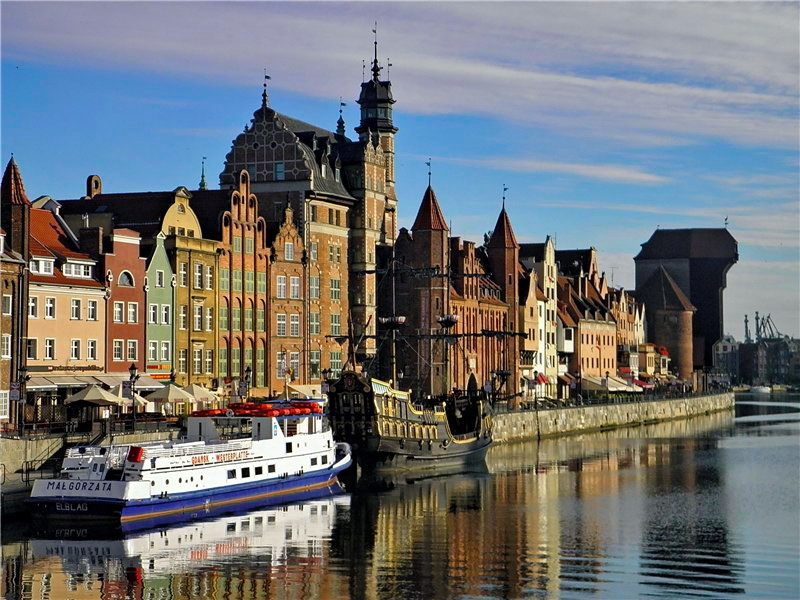
Firstly, its historical center. Oh, this is just a fairy tale! Narrow streets, colorful facades of houses that seem to have come from postcards. You walk and constantly stop to photograph one house or another. And these famous gates – Golden, Green, Upper – they are like portals to the past! You can wander for hours, look into souvenir shops, drink coffee in cozy cafes and just enjoy the atmosphere.
Culture and Art: Where the Spirit of Freedom Hovers in the Air
But Gdańsk is not only about antiquity. This is a city that has experienced a lot, and this is felt in its cultural life. Here is the famous European Solidarity Center – a very important place dedicated to the “Solidarity” movement, which played a huge role in the fall of communism. This is not just a museum, it is a place of power where you can understand how people fought for freedom.
And something is constantly happening in Gdańsk: festivals, concerts, exhibitions. In summer, there are many street musicians and artists on the Długi Targ embankment. This is such a lively, breathing city that is not afraid to experiment and is always open to new things.
Baltic Beaches and Sea Walks: Fresh Breeze for the Soul
Well, of course, what about the sea? It is a stone’s throw from Gdańsk to the beautiful sandy beaches. If you want – sunbathe, if you want – swim, if you want – just walk along the shore, inhaling the fresh sea air. And you can also take a boat trip along the Motława River or even go for a whole day to Sopot or Gdynia – neighboring seaside cities, which together with Gdańsk form the so-called Tricity (Triple City). This is such a Polish Côte d’Azur, only with a Baltic character.
And you know what the most important thing is? There is a special atmosphere in Gdańsk. It is not such a noisy and bustling city as Warsaw, and not as “museum” as Krakow. Gdańsk is such a mixture of history, maritime romance and the spirit of freedom. It seems to whisper: “I have seen a lot, but I always look forward.”
Taste of Gdańsk: What to Try and Where to Feel Like a Local?
Well, have you walked enough, breathed enough history? It’s time to eat! And here Gdańsk also knows how to surprise.
Fish, fish and more fish!
Well, this is a port city, so God himself ordered it! Be sure to try fresh fried flounder or cod in one of the many restaurants on the embankment or in fish pubs. This is just delicious! Especially in the summer, when the fish is just from the sea. And do not forget about Baltic herring – it is prepared here in different ways, and each option is good in its own way.
Amber Tincture and Beer
Gdańsk has long been famous for amber. And, of course, there are amber tinctures here – such liqueurs, where pieces of unworked amber are added. They say they are good for health. I don’t know how true that is, but it’s definitely tasty! And there are many craft breweries in Gdańsk. Try local beer – it’s great here, especially in the heat.
“Gdańsk Bread” and Local Sweets
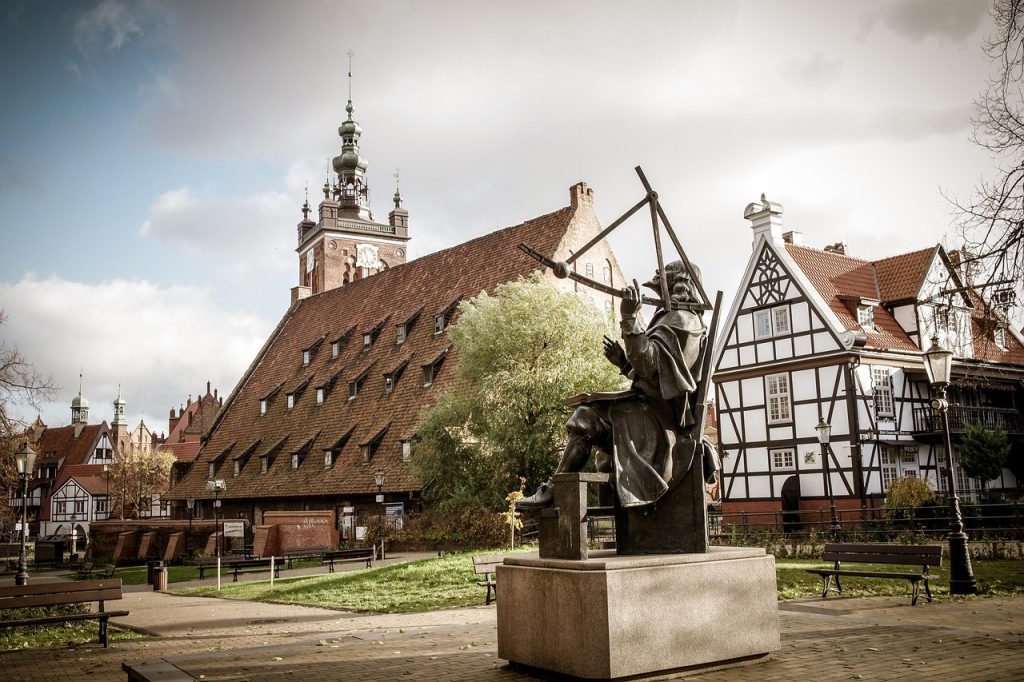
Don’t forget to try local bread – it’s very tasty here, with a crispy crust. And from sweets – gingerbread and marzipan. Gdańsk was once one of the centers of marzipan production, so this is such a local feature.
Where to eat?
If you want something cheaper and truly local – look for “milk bars” (Bar Mleczny). These are such canteens where you can try traditional Polish food for little money. If the soul asks for something more solid, then there are many restaurants on the embankment for every taste and budget. And if you are a fan of street food, then in summer there are often food trucks with different goodies on the squares and embankments.
In general, you won’t go hungry in Gdańsk, that’s for sure. And every time you try something local, you will feel even more a part of this amazing city.
Gdańsk is Waiting: Why Should You Come Here?
Well, I hope I managed to infect you at least a little with love for this city? Because Gdańsk is really something special. This is not just a point on the map, it is a whole universe that is waiting for you to discover it.
Come here to wander through the narrow streets that remember the steps of Hanseatic merchants. Come to breathe the fresh Baltic air and feel how it is saturated with history and salt. Come to see how old and new coexist beautifully, creating a unique atmosphere.
Gdańsk is a city that knows how to surprise. He doesn’t shout about his beauty, he just is. And he is waiting for you to tell his stories, show his treasures and just let you enjoy the moment. So, if you are looking for a place where you can not only relax, but also get food for thought and soul, – Gdańsk is your choice. He will not leave you indifferent, I guarantee you that. And most importantly, you will understand that the port is not just a place for ships. It is the heart of the city, which beats in the rhythm of the sea and history. See you in Gdańsk!