Fiji and I didn’t get off to a good start. I answered “no” to the question on the customs declaration form, “Are you carrying holy water or cremated remains?” and marked that I had no prohibited fruits or vegetables. The customs officer scanned my bag and said, “Are you sure you aren’t?” I told him, “Positive!” He said, “Pay a fine: 200 Fijian dollars for violating the rules, and another 200 for deceiving an officer in the performance of his duties,” and triumphantly pulled an apple out of my bag, which I had honestly forgotten about after 12 hours in the air.
I didn’t want to give him around 300 US dollars and said that I considered the punishment inadequate for the offense. “I’ll make a note in the computer – if you don’t pay, you’ll be summoned to court and won’t be allowed to leave the country,” he said and smiled. I left the airport terminal into the sunshine, saw my favorite plumeria flowers, and thought that Fijian captivity might not be without its pleasantries.
Daily life and beliefs: Local specifics
The prospect of eking out a lonely existence in Fiji didn’t appeal to me, so I inquired about matrimonial opportunities. “Don’t marry a Fijian woman under any circumstances,” a young teacher at an Indian school told me, shushing the children peeking into the classroom. I like visiting schools when I travel – you can tell a lot about a country’s future by looking at its schools. “She’ll go to other men when you’re not home. Even though they’re Christians, they still behave like pagans.”
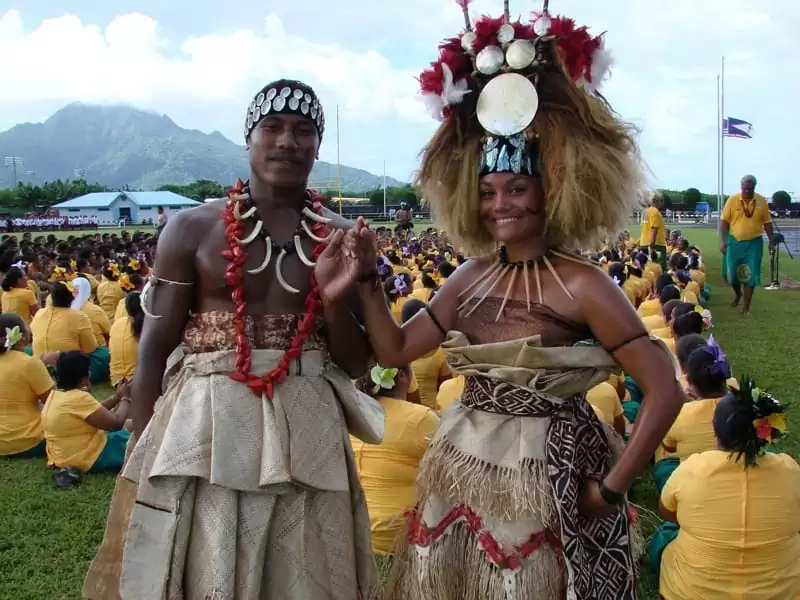
But the Fijians aren’t just Christians, they’re Methodists frozen in the strict rules of the 19th century. This means that on Sundays you can’t sing or dance, but going to church is mandatory, and twice a day. Parishioners can’t take it and fall asleep, but there’s an attendant for those who do, who walks along the aisle and pokes them with a long stick, like, stay awake!
Indigenous Fijians make up half the country’s population (the other half are Indo-Fijians, descendants of Indians brought here in the 1880s to work on sugarcane plantations), and they live at a leisurely pace, “Fiji time,” and on Sundays, the pace of life slows down completely. But along the roadside, Fijian men strolled in parade attire: in gabardine sulus (skirts), white shirts, and with a Bible under their arm.
Suva: The Rainy Capital
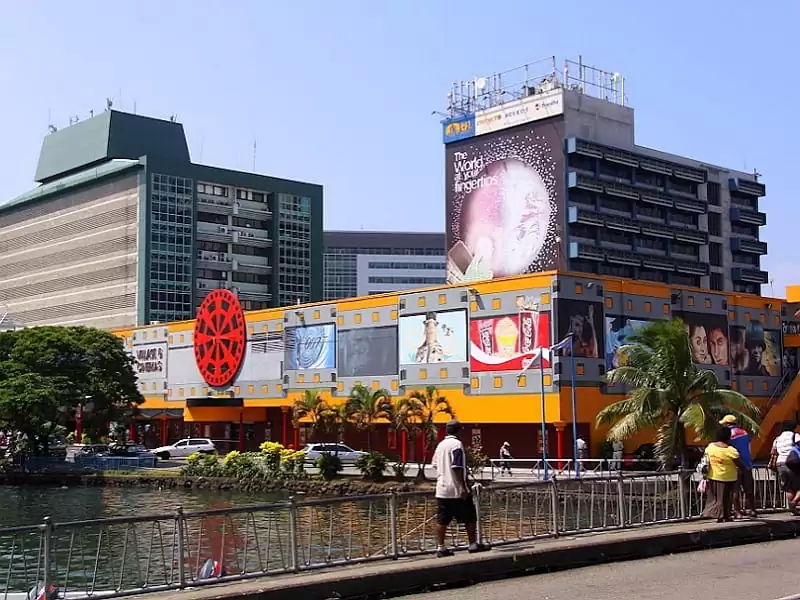
I was driving to Suva, the capital of Fiji, and picked one of these people up. Before the second service, he was heading to his brother’s for yesterday’s prepared lunch: cooking is also forbidden on Sundays. I didn’t even know there were gods who could be offended by the act of cooking! It was raining in Suva. The southeastern part of the main island of the country, Viti Levu, is generally more humid compared to the tourist islands of the Mamanuca and Yasawa archipelagos. Suva was cozy because people had been living there for a long time, and sometimes carelessly.
Suva reminds me of my aunt. She was good-looking, but once she’d been drinking, she would start to stumble, and her slip was always showing, said the Australian who worked at the car rental office—and he could have been a writer!
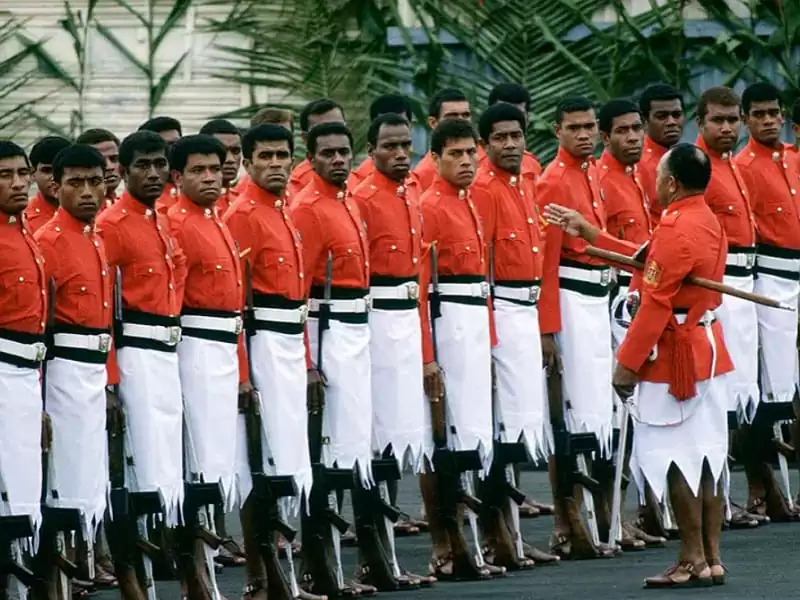
Suva is better suited for living than visiting, and tourists are brought here to see the ethnographic collection in the Fiji Museum, snap photos of the guards in skirts at the presidential palace, appreciate the importance of the University of the South Pacific for the country’s prestige, and sigh over the once grandiose Grand Pacific Hotel, now completely dilapidated, where Charles Kingsford Smith, the first aviator to fly across the Pacific Ocean, was lavishly welcomed in 1928.
I also liked the picturesque cemetery in Suva, where the graves are decorated with garlands, like Christmas trees. Methodists are methodists, but they still see you off on your final journey in their own way, the Fijian way.
Dark Past: Cannibal Islands
As I entered the town, I slowed down near the prison because a group of prisoners in orange robes was crossing the road and, seeing me, shouted “Bula!”. “Bula! (hello),” I replied as friendly as possible, figuring that if the apple situation didn’t turn out well for me, I might end up among these guys. They were returning from the market and happily posed for me.
“Why aren’t they inside, but outside?” I asked the guard accompanying them. “Well, there’s water all around, they won’t get far anyway,” he smiled. “And do you have anyone in for cannibalism?” I asked him bluntly. “No, we quit that a long time ago, but we often get people in for incest,” the guard replied, not at all embarrassed by my question.
For history: “long ago” is a very relative concept. The museum in Suva has one of Reverend Baker’s shoes on display: all that remains of him. The work he carried out among the islanders to bring them into the fold of Christianity proved to be deadly – the missionary was eaten in 1867. “And why was he eaten?”, I asked the caretaker. “Who can figure it out now,” he sighed. “According to one version, the chief apparently borrowed a comb from him, and left it in his hair, and Baker must have forgotten that the chief’s head was sacred, and tried to retrieve his comb.”
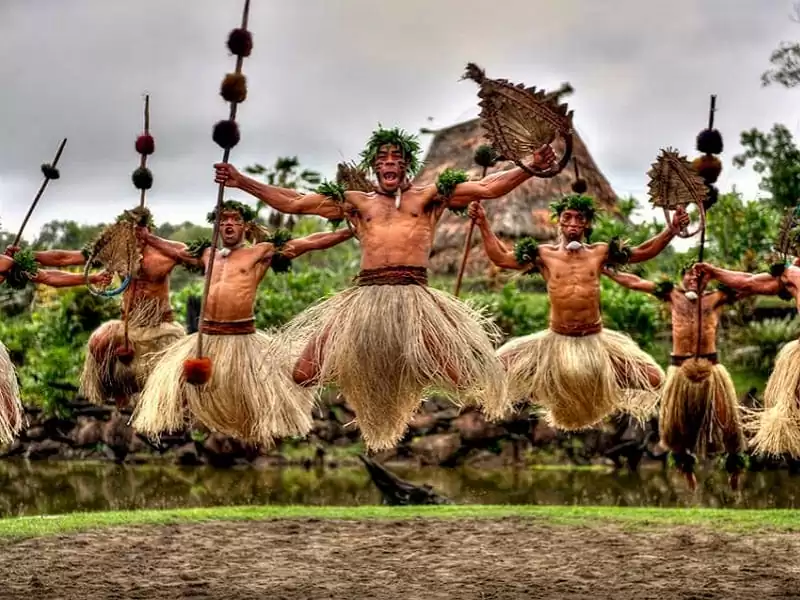
Fijians don’t deny the anthropophagic element in their history, which caused Europeans to avoid these islands and logically call them “Cannibal Isles.” The Fijians themselves euphemistically referred to human flesh as “long pig.” In the town of Rakiraki, I was shown the grave of the most famous cannibal, Chief Udre Udre, who ate 872 people. “He ate everything himself, shared with no one,” the guide thoughtfully concluded.
Social-political situation
But today, Fiji has other problems, well-masked for tourists by crimson sunsets, a gentle ocean, and the “bula!” greeting with which locals tirelessly shower visitors. Few of them realize that the country is ruled by a military junta that came to power as a result of the 4th coup in 20 years and suspended the constitution until the 2014 elections. Because of this, Fiji was excluded from the Commonwealth.
After the second coup in 1987, which overthrew a democratically elected government that included many Indo-Fijians, the coup leader General Sitiveni Rabuka famously said: “Just because we aren’t as clever as the Indians doesn’t mean they should take advantage of it.”
It’s no wonder that the two ethnic groups, indigenous Fijians and Indo-Fijians, live in parallel communities with clear signs of mutual animosity. This is caused by the fact that almost all of the country’s economic activity is concentrated in the hands of Indo-Fijians, while all the land, and even the coastal waters, traditionally belong to Fijian clans, who do not sell it but lease it out and mainly live off of that income.
Tourism: Active Holidays on Islands
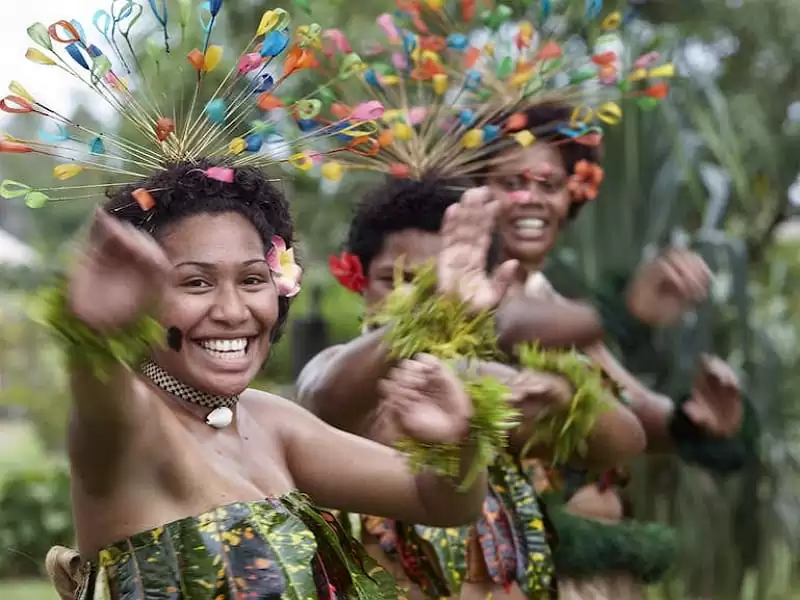
Tourism is the fastest-growing sector of Fiji’s economy. As the largest source of foreign exchange earnings, it provides employment for over 45,000 of the country’s residents, and the tourism sector accounts for more than 25% of GDP. Today, tourism has displaced sugarcane as the primary source of income, and although Fijians often provide service with disarming laziness, their toothy smiles and constant “bula” set a tone of friendliness that often compensates for the shortcomings of poor service.
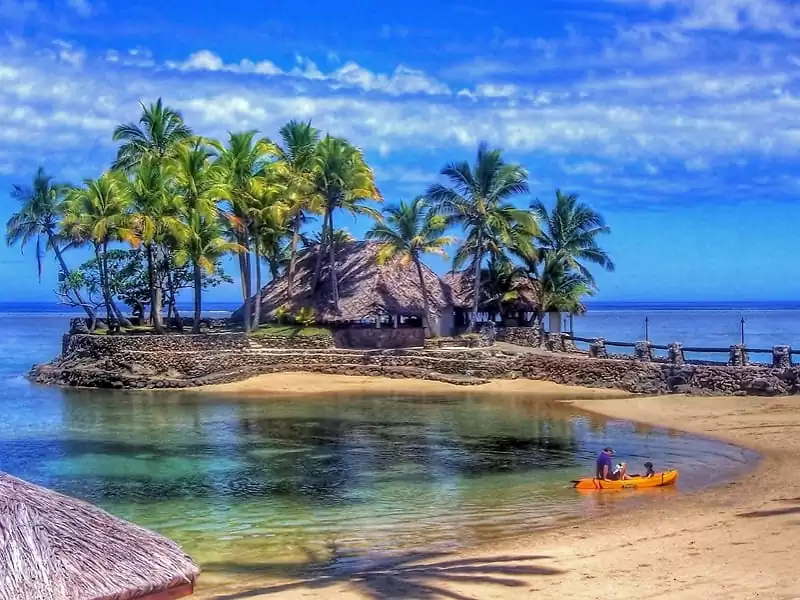
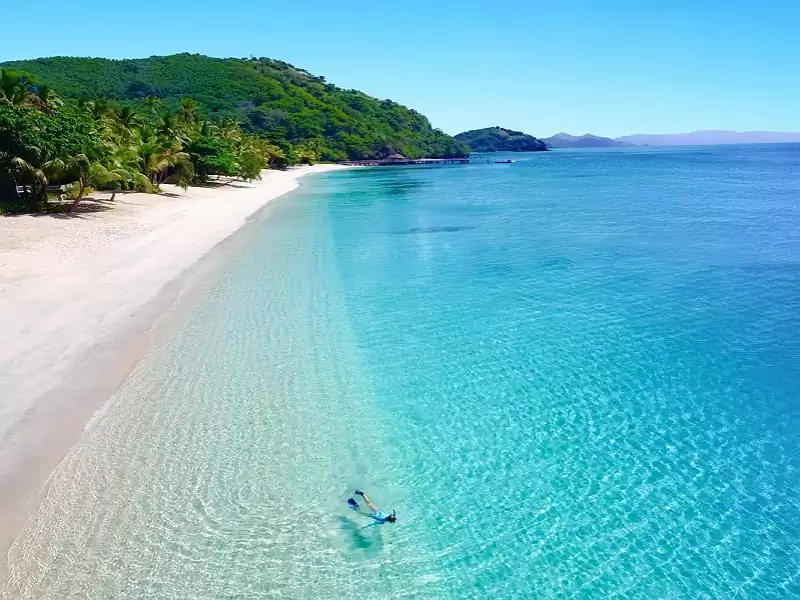
Tourists eagerly flock to tiny islands, often accommodating only one or two resorts, because we live in large cities and countries. A small island, which can be walked around in half an hour or taken in with a glance from its highest point, is alluring with its feeling of control over the surrounding space, and, indirectly, over one’s own life. After spending half a day on the uninhabited island of Modriki, where the film “Cast Away” with Tom Hanks was filmed, I became uncontrollably bored. The thing is, the sand, water, and palm trees there turned out to be exactly the same as on the inhabited Viti Levu, and uninhabitedness starts to smell like boredom after 10 minutes.
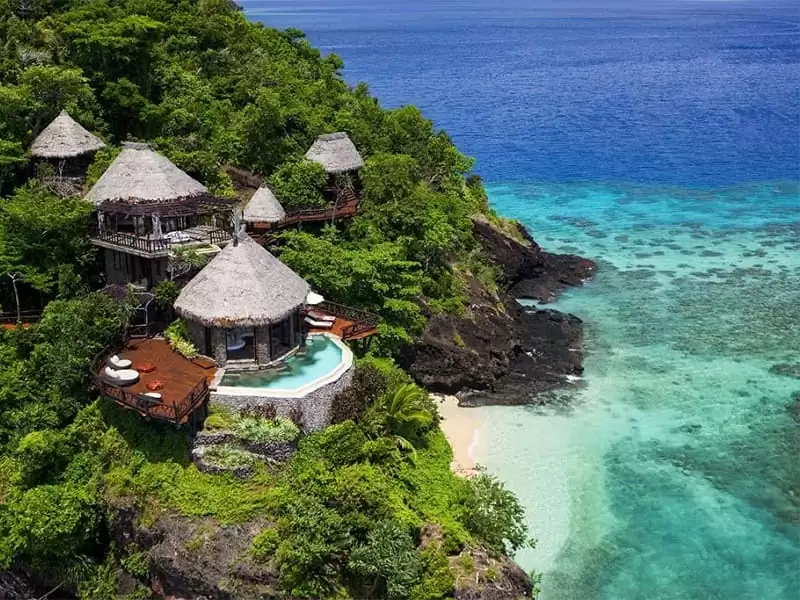
The Robinson Crusoe fantasy sprang a serious leak when it turned out that the cruise company that brought me to the “Deserted” island, along with the Australians (who make up the majority of the foreigners here because it’s only a three-hour flight for them), who are disgustingly keen on free drinks, pays 3 Fijian dollars a month to each resident of the village on the neighboring island that owns Modriki.
But on Viti Levu, you can raft down a canyon where the damp, seeping cliffs of the banks converge to just seven meters, kayak through rapids to an idyllic village, and drink the national beverage “Kava,” which first numbs your tongue and then your brain. You can go to one theater where Fijians walk barefoot on hot stones, or another, 25 meters deep, where they feed sharks. When the ocean gets crowded with five-meter-long bull and tiger sharks, you are protected only by two local divers with sticks.
Fiji Skies: Skydiving and Adventures
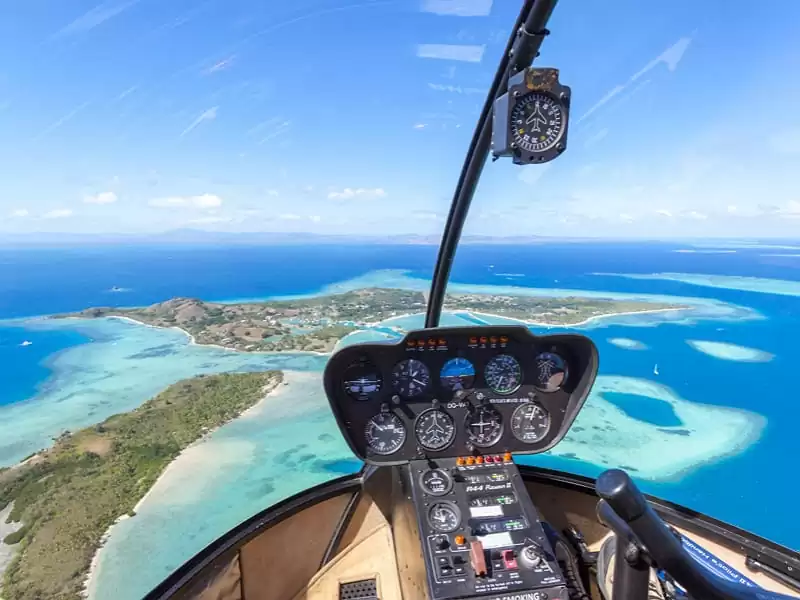
You can go up in a hot air balloon, but after sharks, you want something even more thrilling, and that’s where Tim Joyce and his company “Skydive Fiji” come in. He used to work on Soviet helicopters in Burma and Papua New Guinea, and now, in a small Cessna with everything except the pilot’s seat removed to fit more people, he takes those who want to skydive over the islands in the ocean to a height of four and a half kilometers.
Tim put his partner at the controls while he prepared to jump with me. “The last time I had Russians in the cockpit, it almost ended badly for me,” he said, hearing my name. In 1999, Tim was piloting a sightseeing helicopter over Sydney when a Russian woman, Lyusya Dudko, held a gun to his head and demanded that he land in the yard of a prison where her lover was serving time for bank robbery, and break him out.
Which is what they did, despite the guards shooting. The first escape of its kind in the history of world civilization had taken place. They tied up Tim and left him in a remote location. They were caught a couple of months later. Lyusia has already served her time. “Do you happen to know anyone in a Fijian prison?” Tim asked, just in case. I thought about those I’d met in Suva, but distanced myself from them, just in case.
If you’ve never been skydiving, it’s calmer to do it in tandem the first time. When they opened the door, and the air rushed in furiously, I suddenly realized that I was about to step into nowhere, tethered to a person I’d met an hour ago. “Have there been any who refused at the last minute?” I asked. “Only men. Women squeal, but they jump. Two weeks ago, Paris Hilton was in your place,” Tim said. With a yell of “If Paris could do it, so can I!” I dragged Tim into the sky.
For a couple of seconds we tumbled, and then I assumed the frog position, as I had been taught, and for 60 seconds I fell towards the earth at 160 kilometers per hour, so that the skin on my cheeks was pulled upward. Tim opened the parachute, and now we were already descending in smooth spirals above the ocean and islands. Adrenaline was still boiling in my blood, and I wanted to fall towards the planet again, but unclipping myself from Tim’s belly, where Paris had rested two weeks ago, would be reckless.
Epilogue: Forgiveness and Farewell
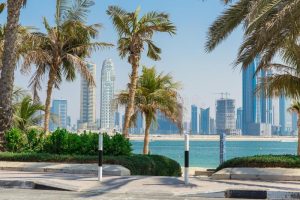
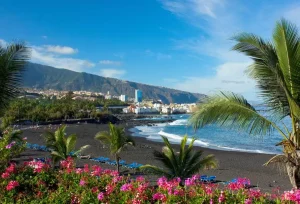
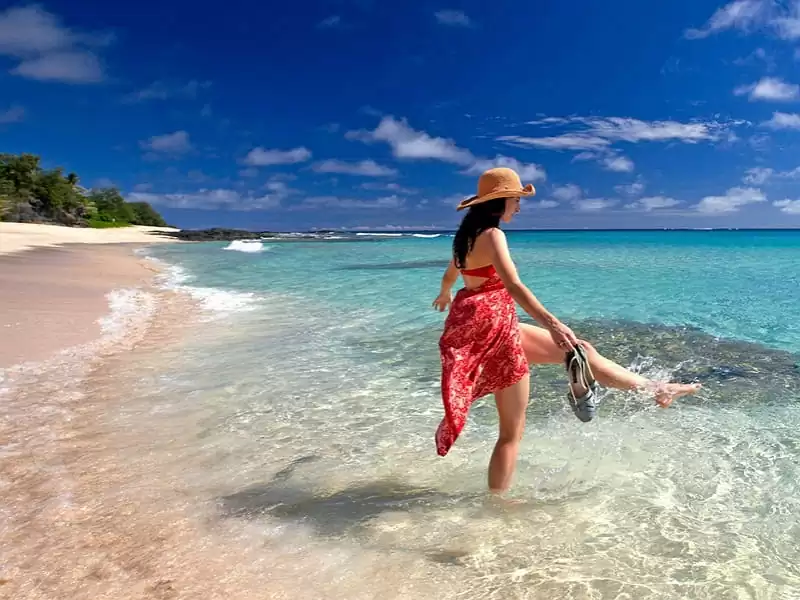
A message awaited me on land that the petition to the chief customs officer of Fiji had worked, and I was decreed to be forgiven for the apple smuggling. I was even upset that I was now free to fly away from these paradise islands, with the white sand, turquoise water, and rustling palm trees, which millions of cold-weather-concerned Americans dream of.