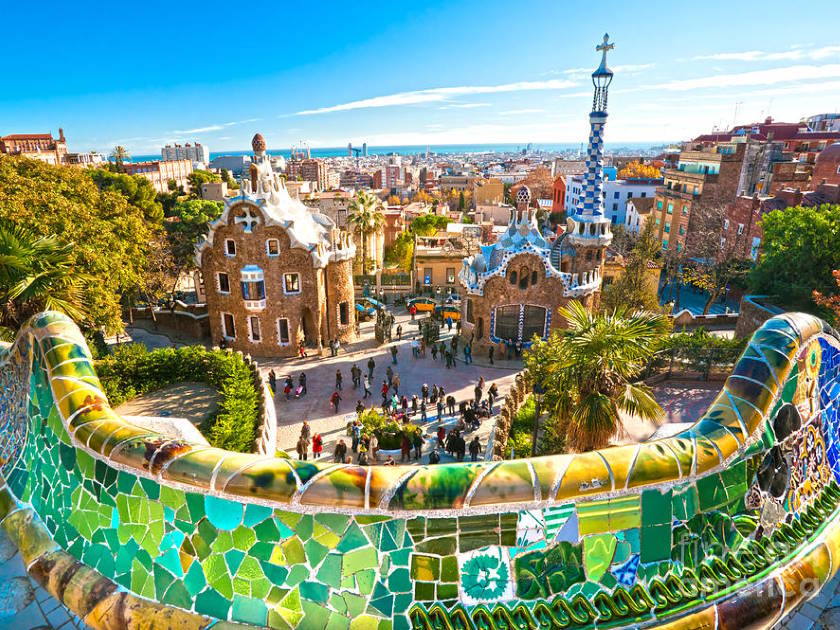
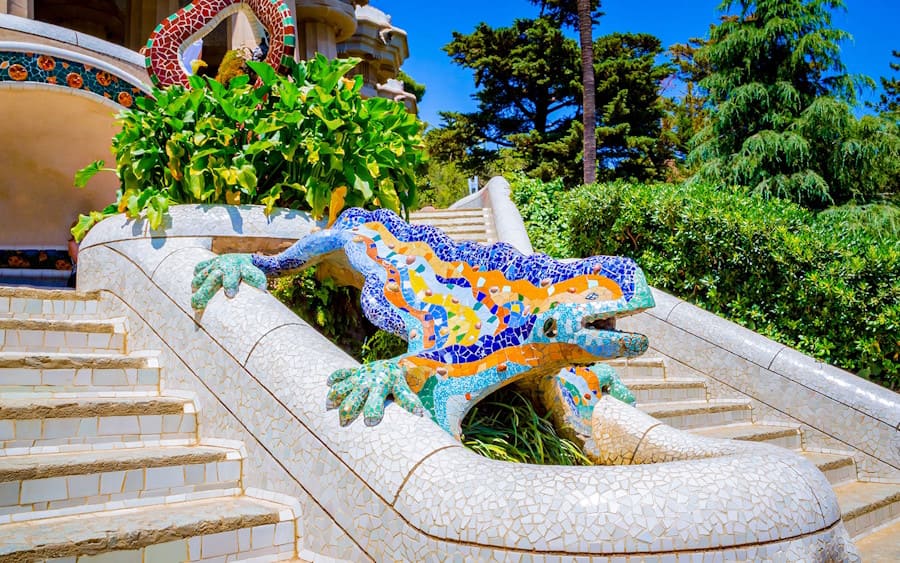
You know how it is: you’re scrolling through your social media feed, your eyes gliding over the same selfies, cups of coffee, and boring cityscapes, and then – bam! Something absolutely incredible catches your eye. Some crazy mosaic, gingerbread houses that look like they’ve been glazed, curved benches, and a huge multicolored lizard. You look at the geolocation and see: Barcelona, Park Güell.
If you’ve ever planned a trip to Europe, this park was probably on your mood board. Today, this place seems like the perfect backdrop for viral videos and glossy photoshoots. But the truth is, the history of this place is much deeper, more dramatic, and, frankly, funnier than any perfect sunset shot. Let’s put aside the guidebooks with their dry facts and walk the paths of Antoni Gaudí’s ingenious madness.
An Elite Village That Failed Spectacularly
To understand Park Güell, you need to rewind to the beginning of the 20th century. Imagine Barcelona at that time: industrialization is striding across Europe, cities are choked with smoke, factories are working at full capacity. Wealthy people are starting to suffocate in this smog and dream of clean air. In Great Britain, the concept of a “garden city” – ecologically clean suburbs for the elite – was becoming fashionable.
Catalan industrialist and patron Eusebi Güell decided: “Why not do something like that here?”. He bought a huge piece of land on Carmel Hill, away from the noisy center, with stunning views of the Mediterranean Sea. Güell planned to build 60 luxurious mansions there, surrounded by greenery. And he commissioned his best friend, architect Antoni Gaudí, to design all the infrastructure – roads, squares, fences.
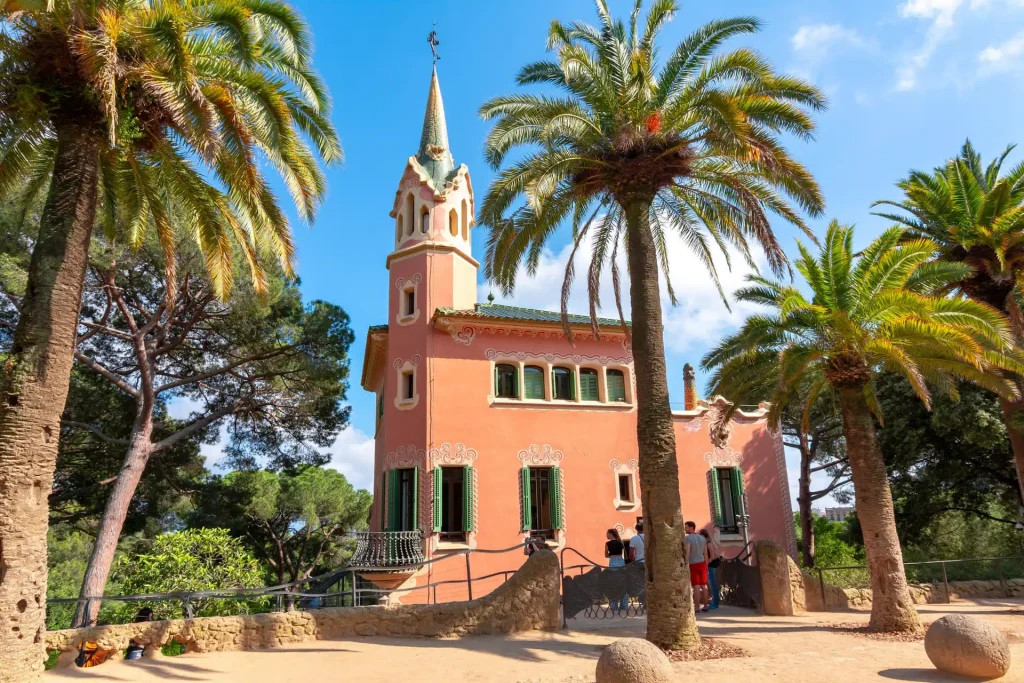
And this is where it gets interesting. The project was a grand fiasco. Out of 60 plots, exactly… two were sold. Why? Because for the Barcelona bourgeoisie of that time, it was too far, too high, and too strange. Gaudí himself, with his father, settled in one of the built demonstration houses, a lawyer lived in the second, and Güell himself occupied the residence of the old mansion on the territory.
The commercial failure became obvious. But, as often happens in the history of world art, financial catastrophe gave humanity a masterpiece. After Güell’s death, the city bought this land and opened it to everyone. Thus, a closed elite club turned into the most beloved public park.
A Mad Tea Party Made of Broken Dishes
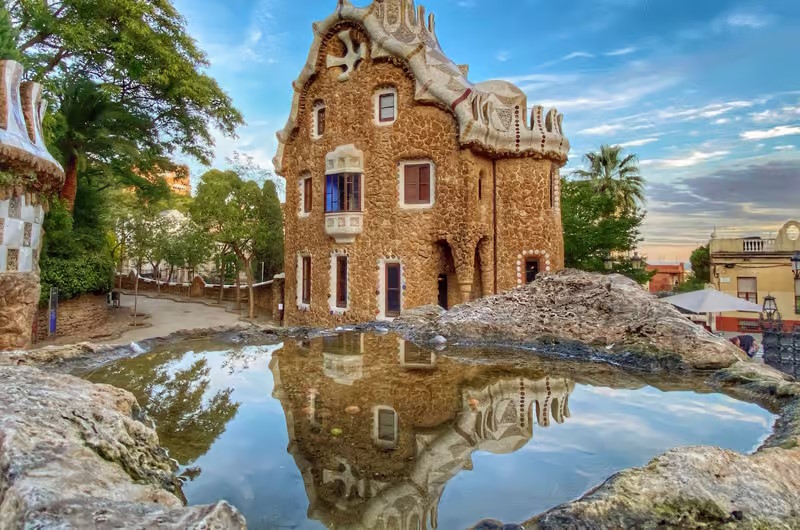
When you approach the main entrance today, you are greeted by two pavilions. They look like they were baked for Christmas: the roofs look like they are covered with white powdered sugar, and the walls resemble melted caramel. Gaudí hated straight angles. He said that the straight line was invented by man, and the circle belongs to God. Therefore, you will not find sharp corners in Park Güell. Everything here flows, bends, breathes.
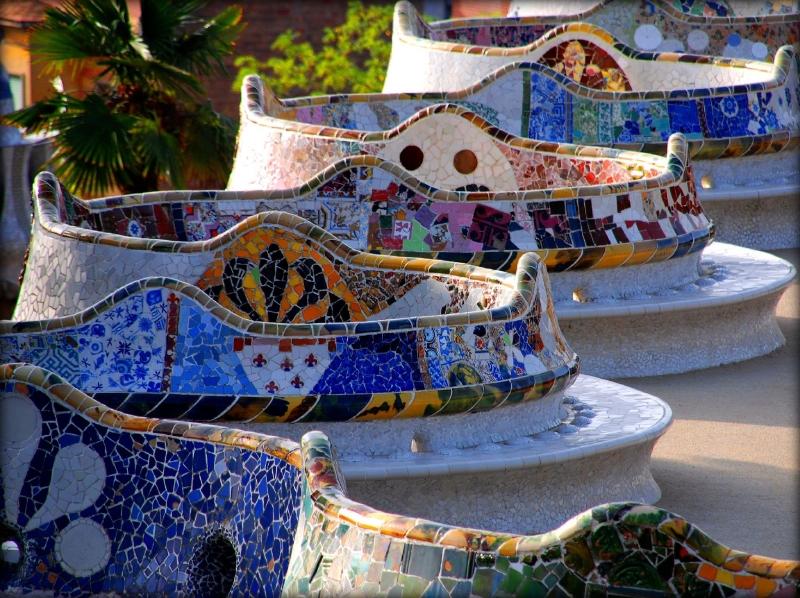
But the main feature of the park is, of course, the “trencadís” technique. Gaudí and his assistants collected broken plates, cups, bottles, and ceramic tiles from all over Barcelona. They say the workers were even ordered to pick up shards of dishes on the streets. From this seemingly garbage, they created stunning mosaics.
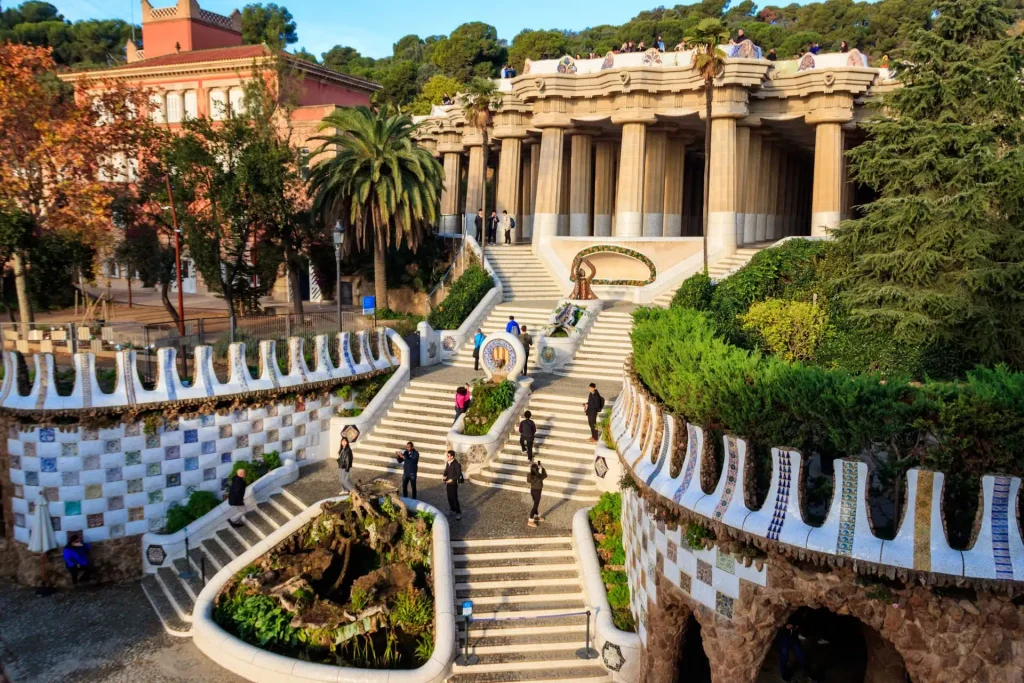
Look at the famous salamander (often called a dragon) guarding the staircase. Or the giant winding bench on the upper terrace. It’s pure surrealism! By the way, this bench is a masterpiece of ergonomics. To make it comfortable, Gaudí forced one of his workers to sit in soft clay, and molded the profile of the seat from the imprint of his back. Today we would call Gaudí a pioneer of upcycling and eco-friendly design. He was doing it before the whole world started caring about recycling waste.
Architecture That Pretends to Be Nature
Walking through the park, you find yourself thinking that the line between nature and architecture is blurred here. Stone columns look like trunks of ancient trees or stalactites in caves. Gaudí did not try to conquer nature, he tried to negotiate with it. Viaducts and galleries are made of rough local stone in such a way that it seems as if they grew out of the ground on their own.
This is all Gaudí. He drew inspiration from the shapes of bones, leaves, waves. While in other capitals of the world, from Paris to New York, architects stretched upwards with strict lines of steel and glass, the Catalan genius created an organic world that pulsates with life.
Park Güell in the Realities of the Era of Overtourism
Now let’s go back to the present day. The world has changed. Travel has become more accessible than ever before. Europe is bursting at the seams from the influx of tourists: Venice is introducing an entrance fee, tickets to the Louvre in Paris are booked months in advance, and Amsterdam is struggling with crowds on narrow streets. Park Güell has not escaped this fate.
The quiet place that Gaudí and Güell conceived as a secluded refuge from the hustle and bustle of the city is now buzzing like a disturbed hive. Millions of people from all over the world come here every year: from the USA, Japan, Australia, and Latin America. Dozens of languages merge into one background noise. Everyone wants to take that very photo on the curved bench with a view of the Sagrada Familia in the distance.
Due to the huge load, Barcelona was forced to take extreme measures: the entrance to the monumental part of the park was made paid, and the number of tickets for each hour is strictly limited. Without a pre-purchase of a ticket online, you simply will not get here – spoiler: plan your visit at least a couple of weeks in advance.
Does this kill the magic of the place? It depends on how you look at it. Yes, it’s hard to be alone with your thoughts here. But at the same time, standing on the terrace under the hot Spanish sun, watching the light play on the mosaic of fragments of old cups, you feel an incredible connection of times.
Park Güell in today’s realities is a reminder that true beauty will survive any crisis, commercial failure, and change of era. It is a symbol of freedom of thought. Gaudí showed the whole world that you can break the rules, you can be strange, you can build houses from “gingerbread” and benches from garbage – and a hundred years later people from other continents will fly across the ocean just to look at it.
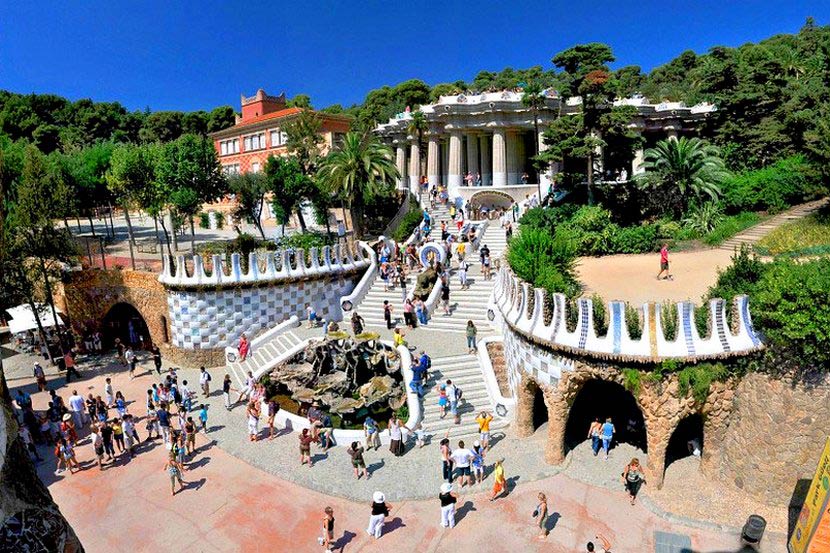
So, if you are in Barcelona, forget for a second about the perfect shots for social networks. Just sit on this cold, colorful ceramic bench, look at the endless Mediterranean Sea and smile at how cool business plans can sometimes fail, turning into immortal art.