You know, there are places you enter and immediately feel — this is the real thing. Not some newfangled novelty or a trendy fad for one season, but century-old classic that has seen it all and still holds its own. One of those wonderful spots is the famous Hofbräuhaus in Munich. Let’s talk about it, because it’s not just a beer hall — it’s an era, and it even has such an interesting name — there’s plenty of room for imagination!
The place where beer flows like a river and stories like a stream
Well, what can I say, Munich is a cozy, welcoming city with a special atmosphere that makes you want to settle down and not rush anywhere. And of course, when you think of Munich, beer immediately comes to mind! And if beer, then which one? Naturally, Hofbräuhaus! You’ve heard of it, right? Even if you’re not a big fan of frothy drinks, that name has probably popped up somewhere. It’s like the Eiffel Tower in Paris or Big Ben in London, only with the aroma of malt and hops.
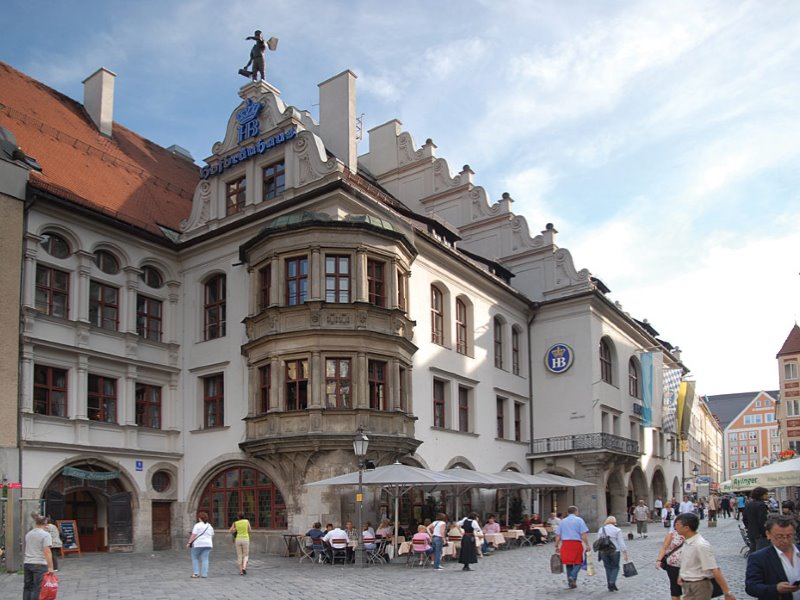
Imagine you’re strolling through Munich, everything so beautiful and old, breathing history. And then—bam—a huge building, kind of monumental. You can tell right away it’s not a kebab stand. From it comes a hum, lively laughter, music, and… a smell! The scent of fresh beer, grilled sausages, sauerkraut… oh, your mouth already waters! That’s the legendary Hofbräuhaus. Or, as I’d call it, “Munich’s oasis of frothy happiness.” Maybe “the heart of Bavarian hospitality”? Or even better, “a time machine to the world of Munich traditions”! Sounds good, doesn’t it?
How it all began: from ducal whims to popular love
Do you know how this brewery came about? It was ages ago, back in 1589. Imagine, almost five hundred years ago! At that time Bavaria was ruled by Duke Wilhelm V, nicknamed “the Pious.” Well, he was pious, but he also loved beer like a true Bavarian. Back then beer was brewed in Munich, but it didn’t always meet the high standards of the duke’s taste. Or, as they say, it just didn’t hit the spot.
So the duke had to order beer from afar, all the way from the town of Einbeck. Think of the cost of transport and the hassle! Frankly, bringing beer from other lands seemed undignified for such a respected duke. “What is this?” Wilhelm probably thought, stroking his noble beard. “I have so many people nearby, and there’s no decent beer!”
So, as a true statesman and, let’s face it, a lover of good beer, he decided, “Why not establish our own court brewery?” He said it — and did it! That’s how Hofbräuhaus — the “court brewery” — appeared. At first it was located right in the Old Court, where Bavarian finances are now managed. Everything for his household, for the ducal table, and for the courtly circle. A kind of elite club for select beer lovers.
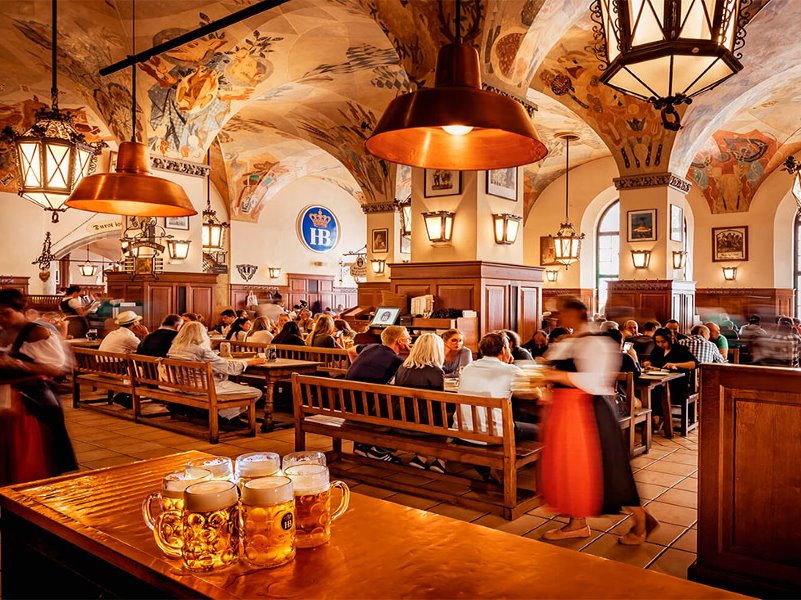
When the brewery went public: from court secrets to open arms
For a long time Hofbräuhaus beer was a privilege of kings and their close circles. Ordinary mortals could only envy and sniff the appetizing aromas coming from behind the palace walls. But then, thankfully, another wise duke, Maximilian I, came along. He decided, “Why not share this golden nectar with everyone? Let the people rejoice too!” In 1607 he approved the construction of a new, large brewery.
And so from 1610, the doors of Hofbräuhaus opened to everyone! Can you imagine the joy of the Munich people? It was like being allowed to sample some ultra-elite thing for free today.
Initially Hofbräuhaus was famous for its dark beer — rich and aromatic. Later, closer to the 18th century, a new trend emerged — pale wheat beer. And again Hofbräuhaus was ahead of the curve! They began brewing this wheat beer, and it became so popular that even dukes couldn’t live without it. They say King Ludwig II himself, the one who built the fairy-tale Neuschwanstein, loved this wheat beer so much he was even willing… yes, to trade an entire castle for the exclusive right to produce it. Well, he didn’t actually give one away, but it’s a nice story, isn’t it?
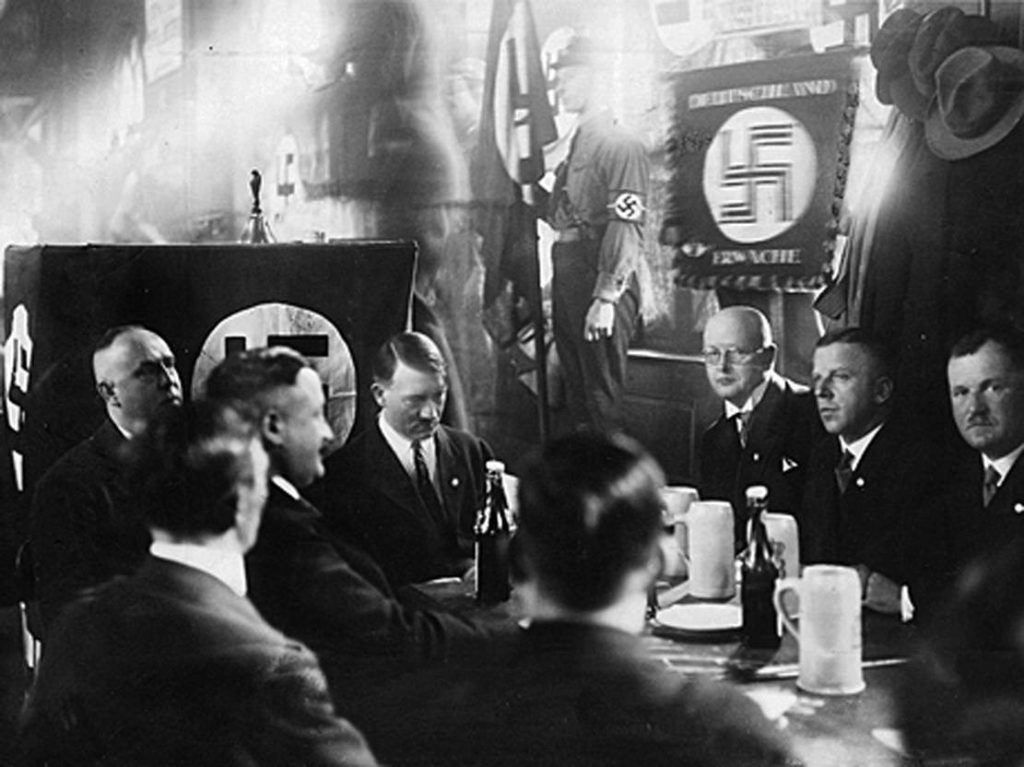
A beer empire on the stage of history: from Mozart to political passions
Hofbräuhaus is not just a brewery — it’s a true witness of history. How much these old walls have seen! Mozart himself, young and full of energy, often dropped by, drawing inspiration from a mug of good beer. They say he even hummed tunes while sitting at a table, maybe jotting down notes on a napkin. Who knows? But picturing Mozart with a beer at Hofbräuhaus is something!
Unfortunately, not only joyful events took place here. In the 20th century, when Europe was boiling and turbulent, Hofbräuhaus found itself in the epicenter of events. It was here, in the 1920s, that a movement began that later led to World War II. Hitler and his supporters gathered at Hofbräuhaus, gave speeches, and, sadly, it was there that the infamous NSDAP program was proclaimed. This is a dark chapter in the brewery’s history, but it is part of its past and cannot be ignored.
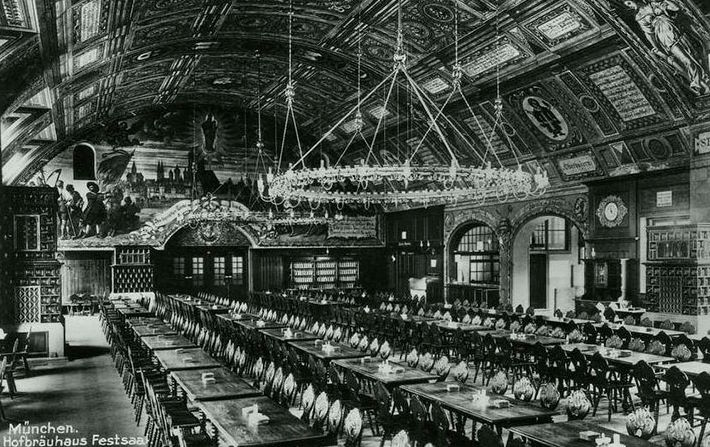
During World War II the Hofbräuhaus building was almost completely destroyed by bombing. Imagine the grief and destruction that war brought! But Munich people are resilient. After the war they got to work, and by 1958, for Munich’s 800th anniversary, Hofbräuhaus was fully restored. It rose from the ashes like a phoenix and opened its doors again to delight people.
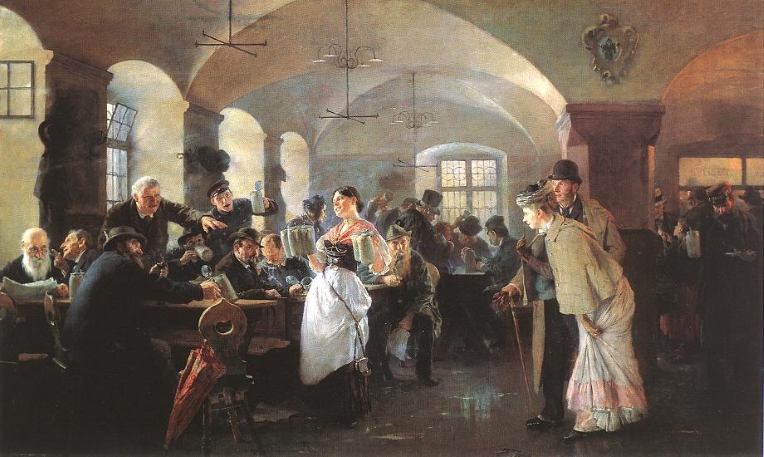
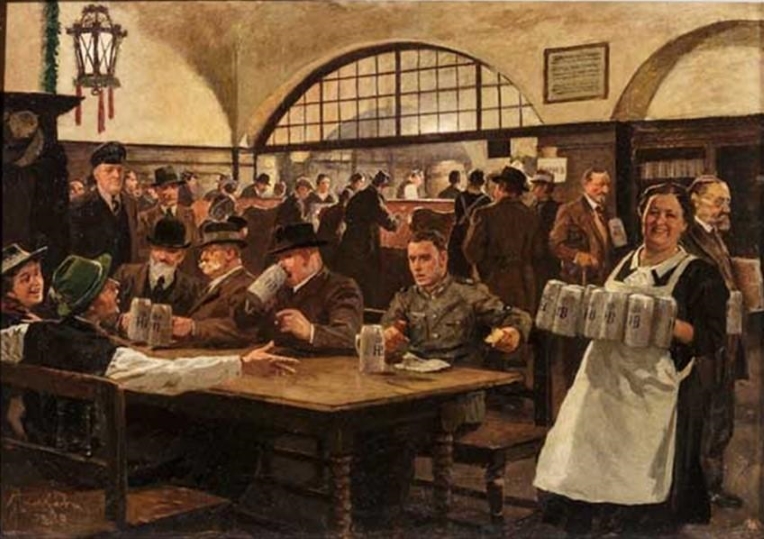
Today: an atmosphere that intoxicates (even without beer!)
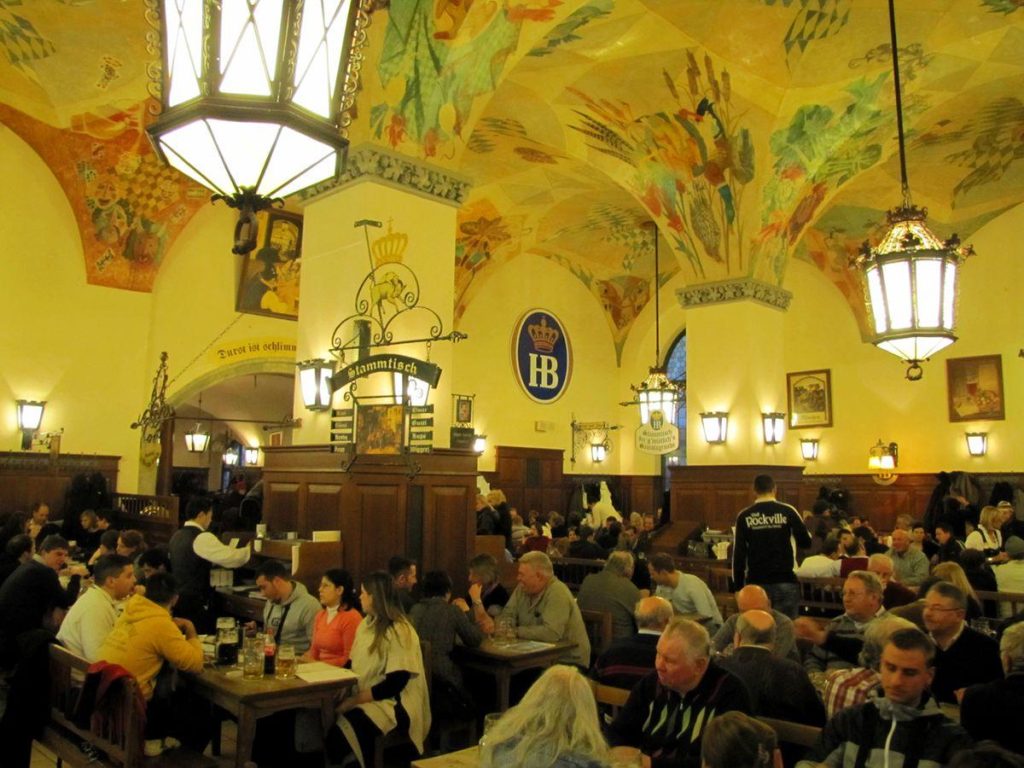
Today Hofbräuhaus is a huge, noisy, yet homely corner of Munich that attracts tourists from around the world and where locals love to spend time. It’s always crowded — tables weighed down with plates, mugs clinking loudly, music playing, people singing and laughing.
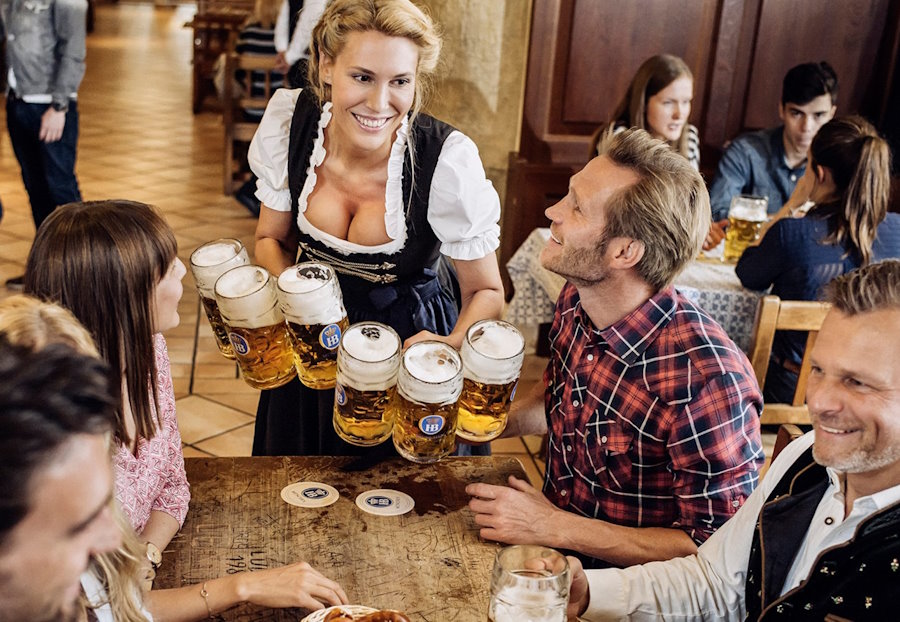
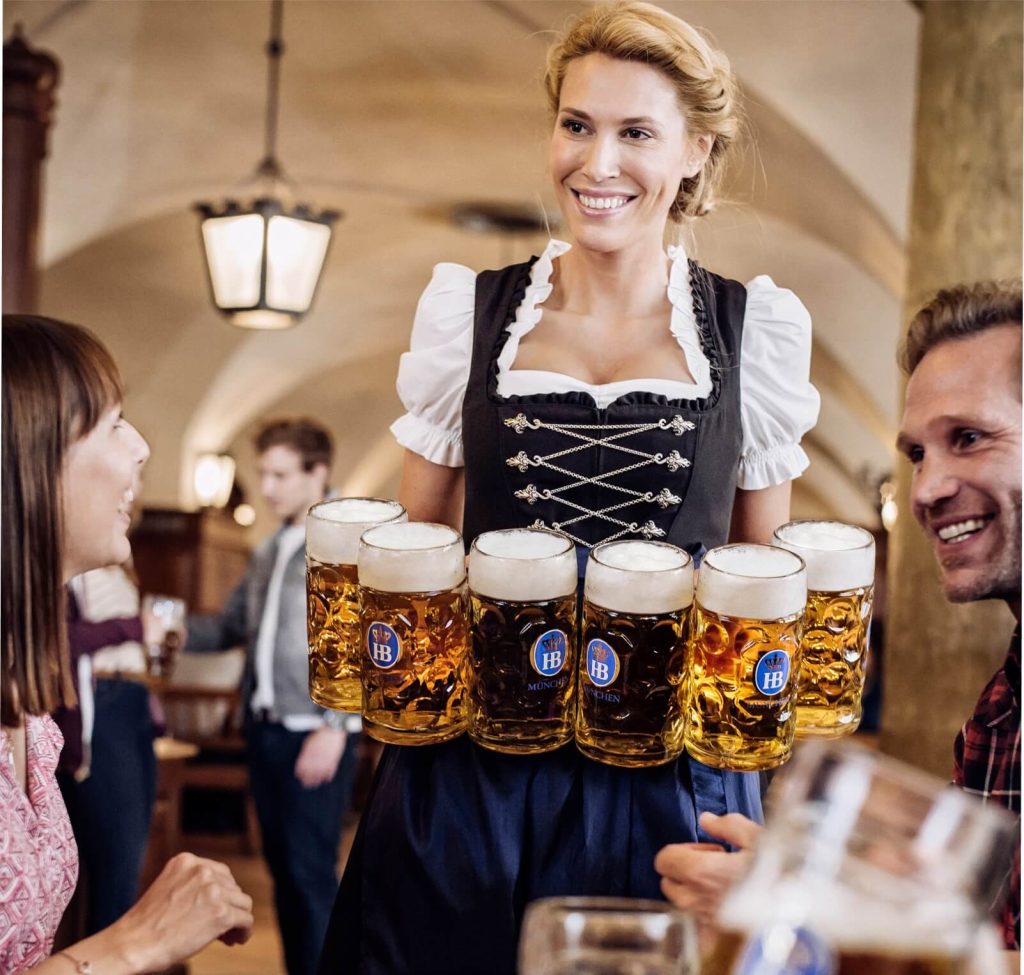
You step inside and immediately feel that incomparable spirit. High ceilings, painted walls, long wooden tables and benches. Waitresses in traditional costumes — dirndls — nimbly weave between tables carrying trays with ten-liter mugs of beer, all with smiles that instantly lift your mood. And those mugs — the “Maß” — are so huge it feels like you’ve shrunk.
The main hall — the “Schwemme” — is always lively and fun. There’s also the “Brau-Stüberl” — quieter and cozier. And, of course, the famous “Festsaal,” where celebrations take place and you can admire beautiful frescoes. In summer the “Biergarten” beer garden opens too, where you can sit under chestnut trees, enjoy the fresh air and, of course, beer.
The menu fits the place. Don’t expect haute cuisine or sushi. Traditional Bavarian dishes rule here: pork knuckle (think Eisbein), grilled sausages, pretzels (those huge salted twists — mmm!), sauerkraut, Bavarian cheese spread — Obatzda. Simple, hearty, and above all very tasty! And the main star — beer. Dark, pale, wheat — something for every taste.
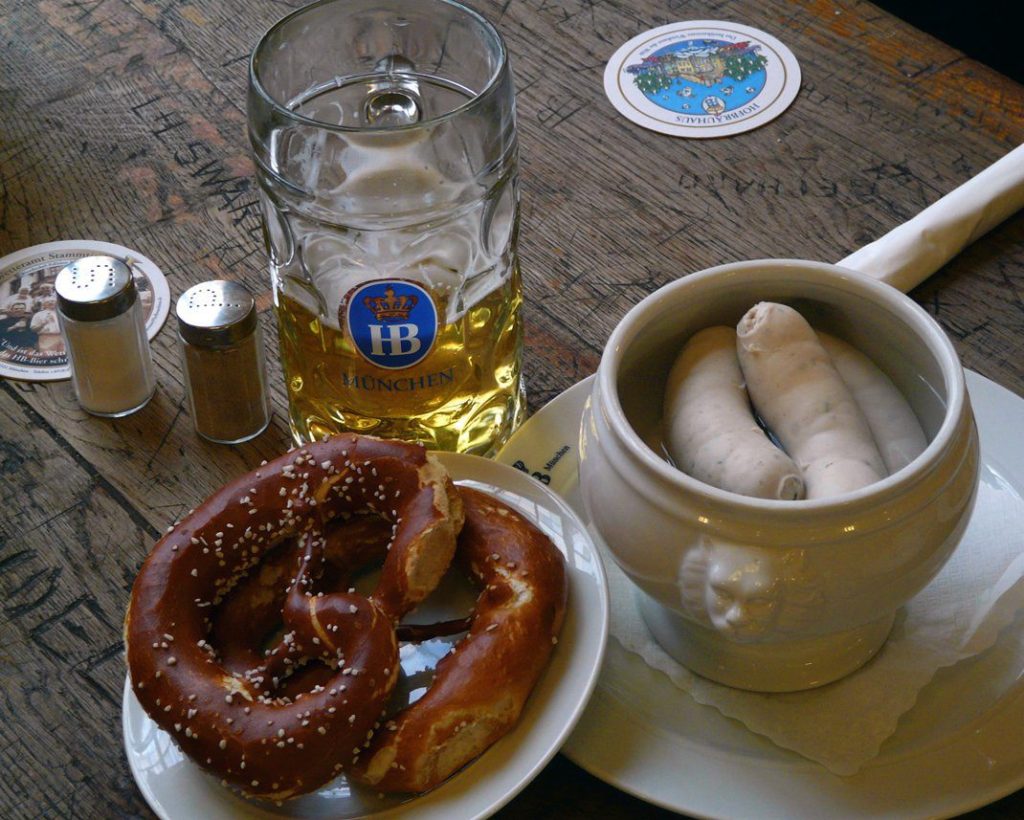
Small details that make a big history
Do you know what else I like about Hofbräuhaus? Those small, very characteristic details. For example, there are special lockers where regular visitors store their personalized beer mugs. It’s so sweet and homey! You feel this place is not just a thoroughfare but a real club of like-minded people who value tradition and each other.
And there’s the house orchestra that plays traditional Bavarian music. It’s not just background — it’s a full performance! Musicians play, people sing along, clap to the beat, raise their mugs — an atmosphere of universal merriment and camaraderie that makes you forget your worries.
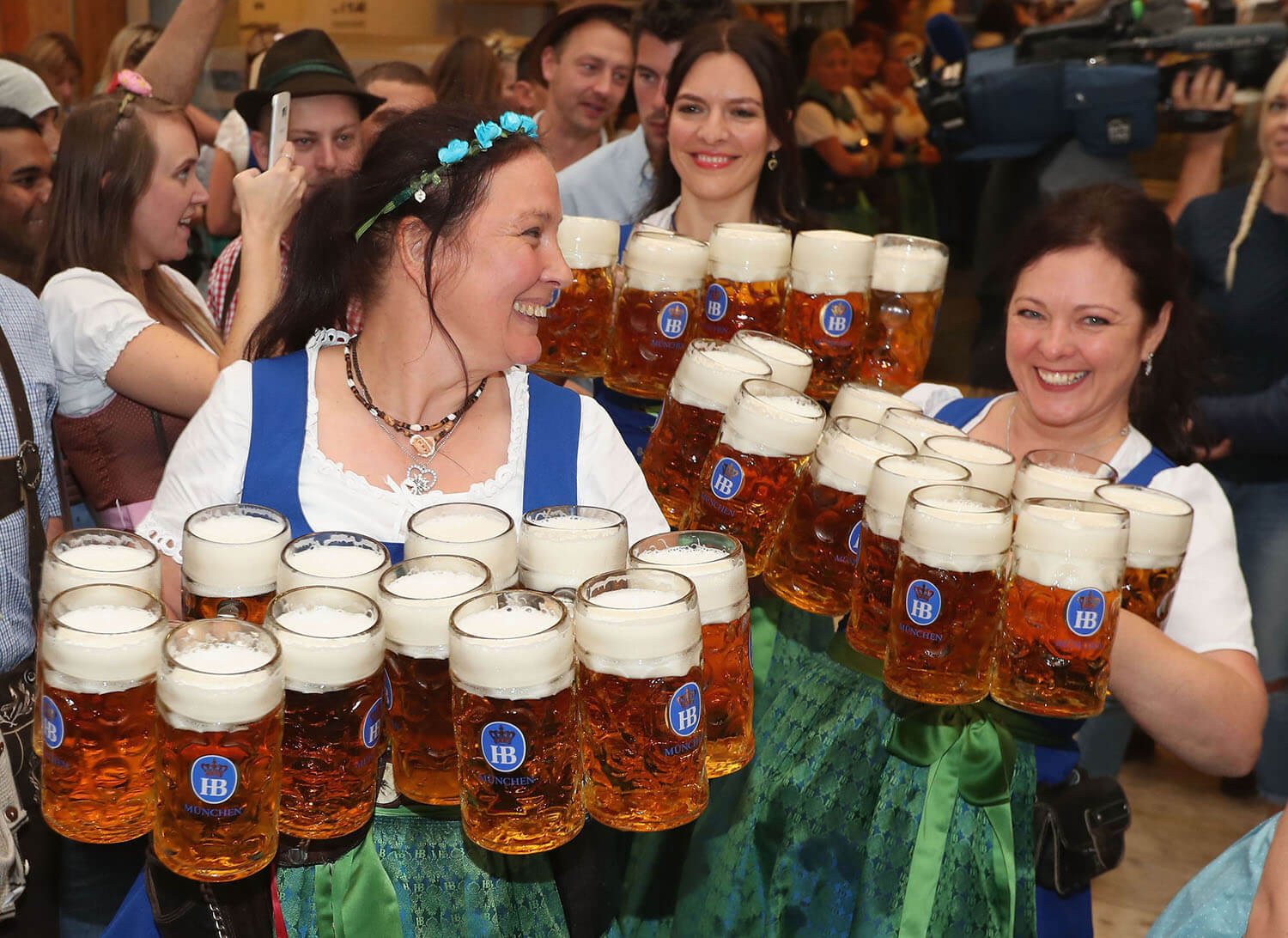
In conclusion: come, you won’t regret it!
So, what can I say. Hofbräuhaus is not just a restaurant or beer hall. It’s a symbol of Munich, a symbol of Bavaria, a symbol of hospitality and cheerfulness. It’s a place where you can dive into genuine Bavarian culture, feel part of something big and very old. Even if you don’t drink beer (that happens!), it’s still worth visiting to breathe the atmosphere, watch people, listen to music, and taste great food.
So if you’re in Munich, don’t skip Hofbräuhaus. It’s more than a visit to a beer hall — it’s a real journey through time into the world of Bavarian traditions and serene happiness. I guarantee the impressions will last a long time! Tested on myself! And now I’ll probably go have a mug of something tasty, because after stories like this… you understand! Prost!