Until the 1960s, this country, isolated from the outside world both geographically and politically, had no roads, electricity, cars, telephones, or even mail. Modern Bhutan is trying to do the impossible: make a giant leap from the Middle Ages into the 21st century while maintaining its inner equilibrium.
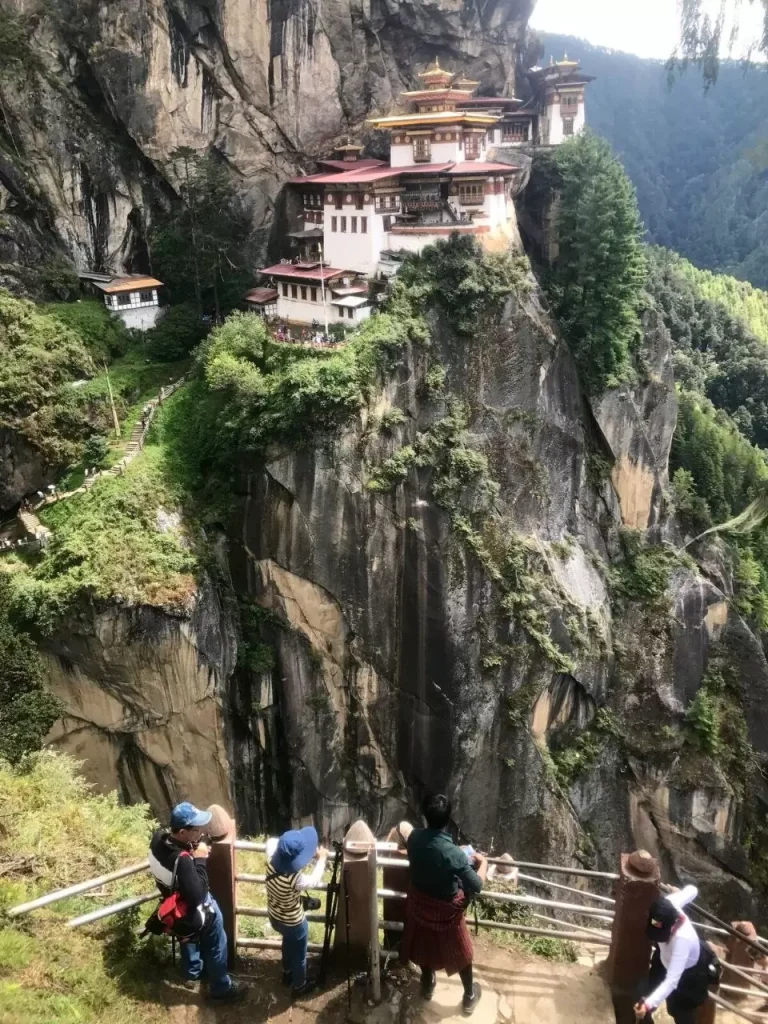
For over a thousand years, the kingdom of Bhutan (Druk Yul, or Land of the Thunder Dragon) remained in absolute solitude — nestled among mountains, surrounded by two giants, India and China. Ancient temples in high, mist-shrouded cliffs, unconquered mountains, untouched rivers and forests — it remains so to this day. But life is changing.
“Gross National Happiness”: A Philosophy of Development
When King Jigme Singye Wangchuck ascended the throne in 1972, Bhutan was among the sad leaders in terms of poverty, illiteracy, and child mortality. All of this is a consequence of isolationist policies.
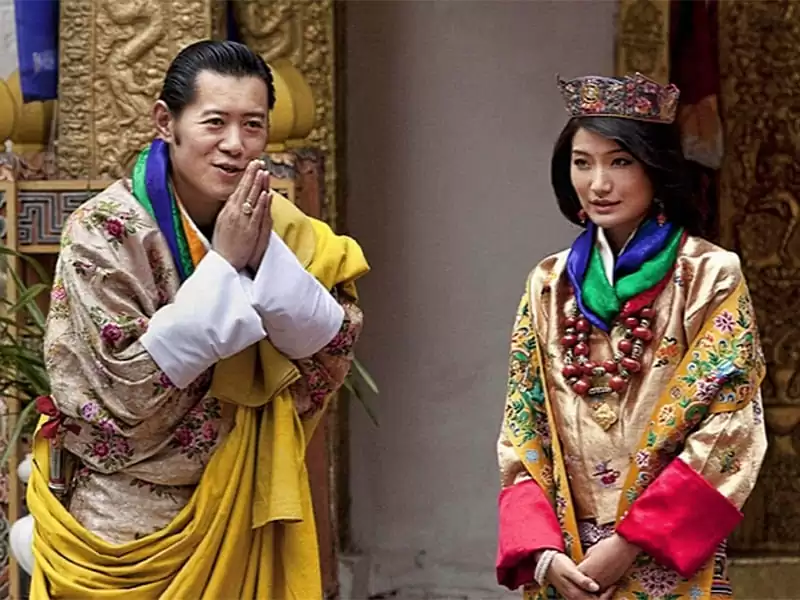
“We paid a high price,” the monarch would later say. His father, the third king of Bhutan, began opening the borders in the 1960s. He built roads, schools, and hospitals, and sought membership in the UN. But his son went much further, devising a way to bring Bhutan out of isolation. His know-how, which many Bhutanese perceive as a survival guide, is called “Gross National Happiness.”
It is based on four principles: sustainable development, protection of nature, preservation of cultural heritage, and good governance. Guided by these, Bhutan emerged from poverty without depleting its natural resources. The only exception is hydroelectric power, which provides the main export revenue through supplies to India.
Conservation of Nature and Economic Growth
Almost three-quarters of the country’s territory is still covered with forests, with more than twenty-five percent of their area consisting of national parks and other protected areas. This is one of the highest rates in the world.
Illiteracy and child mortality have decreased sharply, and the economy is growing rapidly. Tourism is also developing, but due to strict construction restrictions and a stay tax (up to two hundred and forty dollars per visitor per day), there are not as many tourists here as, for example, in neighboring Nepal.
The Impact of Technology: Television and the Internet
In 1999, the King of Bhutan granted his subjects television — it was the only country where it did not exist at that time. In the same year, the Internet appeared in the kingdom.
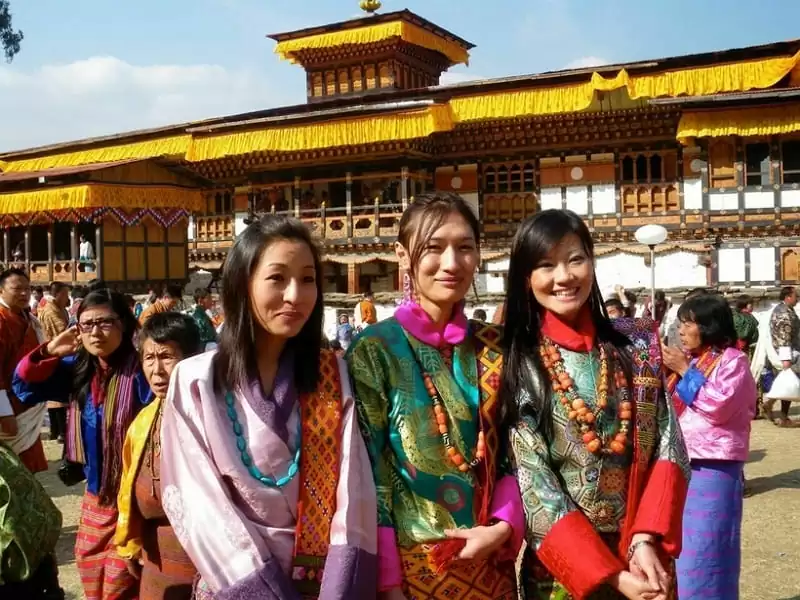
The inhabitants of Bhutan were ecstatic: the foreign world in all its unfamiliar splendor crashed down on them. But after this Pandora’s box was opened, many were also filled with anxiety. What awaits a nation of only 635,000 people, half of whom are under 22 years old? Now the Bhutanese experiment is at its climax — democracy has been declared in the country. So the real test of strength for “Gross National Happiness” is only just beginning.
The new civilian leaders face many challenges, and one of the most important is the people themselves, who still adore their kings and are skeptical of democracy. The world is watching the events in Bhutan closely — perhaps the small Himalayan people will help answer a question so important to humanity: how to preserve one’s individuality if globalization erases all differences? Is it possible to successfully combine tradition and modernization?
Traditions in the Hinterland: Life in the Village of Nabji
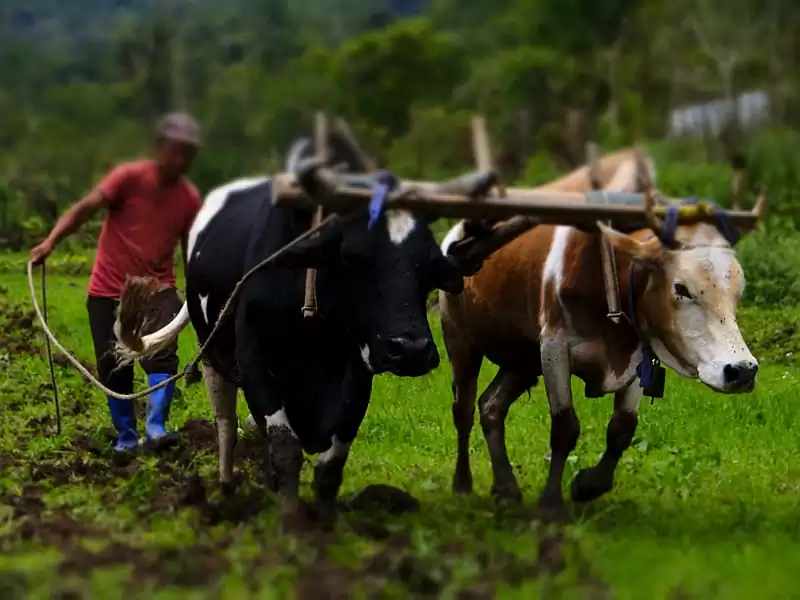
Almost seventy percent of citizens live in villages — such as, for example, Nabji. It is located among pristine forest and mountains, six hours walk from the nearest road. Here, in the Black Mountains of Central Bhutan, there is no electricity. But in the ancient temple in Nabji there is something much more valuable — a sacred stone pillar with a barely noticeable dent. As the legend goes, this is the handprint of Guru Rinpoche — a mystic who flew to Bhutan on a tigress in the 8th century and began preaching the Tibetan version of Tantric Buddhism.
Bhutanese Buddhism: Features and Beliefs
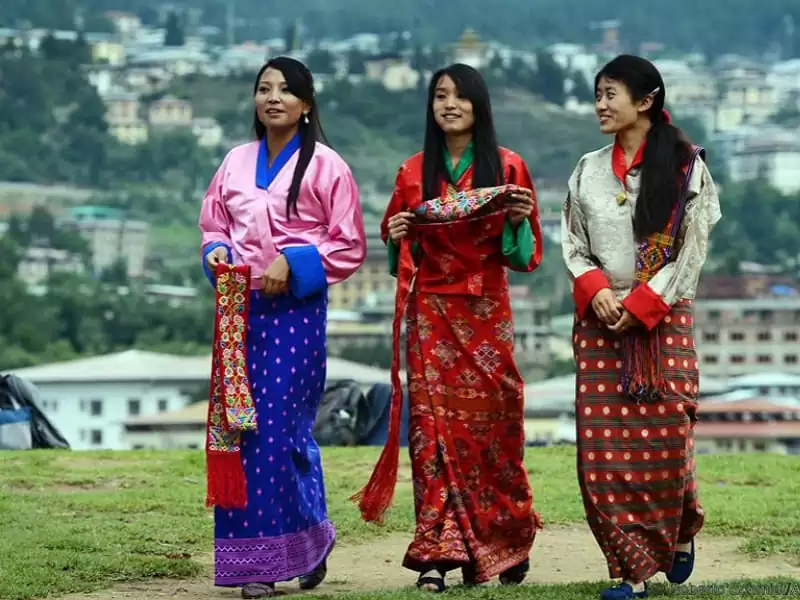
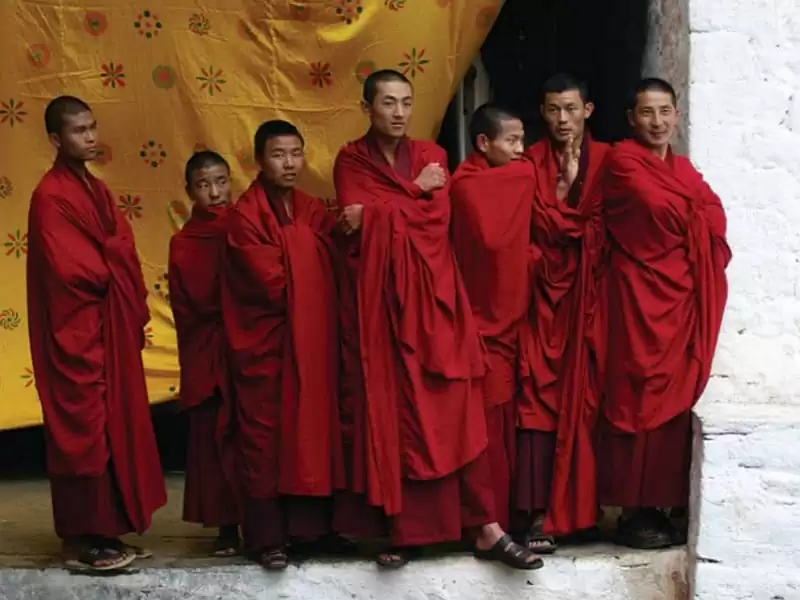
Today the surrounding fields are empty: according to the lunar calendar, a sacred day has arrived. The inhabitants of Nabji, dressed in festive attire, came to the temple. Women — in bright kiras to the ankles, men — in patterned ghos to the knees. Bhutanese Buddhism has a light, even humorous view of things. There is much that is earthly in it — and this distinguishes it from the epically calm traditional Buddhism. Representatives of other branches of Buddhism may be shocked by the abundance of deities and demons here.
There are also many explicit images — in Tantrism it is believed that intimate relationships open the way to enlightenment.
This idea was especially boldly embodied in the 16th century by Lama Drukpa Kunley, known as the divine madman — a saint revered by most Bhutanese. Kunley threw parties all over the country, destroyed demons, and bestowed enlightenment on young girls with the magical power of his “Flaming Thunderbolt.” Many Bhutanese houses still adorn his protective symbol: a huge phallus, often with a playful bow. But even “flaming thunderbolts” did not prevent change.
Social Achievements: Education and Healthcare
A primary school has appeared in Nabji — it was opened as part of an educational reform that increased literacy in Bhutan from ten percent in 1982 to the current sixty percent. And the medical center nearby is the result of the adoption of one of the decisive measures, thanks to which the average life expectancy in the country increased from forty-three years (1982) to sixty-six (2007). The child mortality rate over the same period decreased from one hundred and sixty-three to forty per thousand.
Nabji does not have its own doctors, but medics from the Trongsa District Hospital get here on foot through the mountains to vaccinate the village children.
Media and Culture: New Horizons
Optimists believe that Bhutan’s exit from isolation will stimulate local culture. Communications are developing: now fifty-eight percent of families have a TV, forty percent have a cell phone, about twenty percent have a computer, and citizens are beginning to communicate more and more with each other, as they do all over the world. For Bhutan, where transport links are practically undeveloped, this is already a considerable achievement. After all, now villagers, who are separated by mountains, can watch the same national TV channel.
And new radio stations, such as Kuzoo FM, give young people a reason to gather to talk about music, culture, modernization.
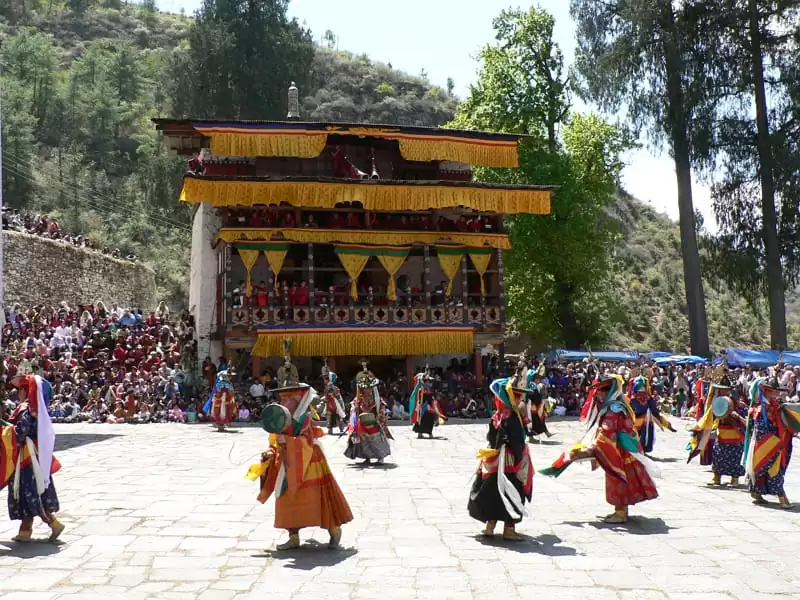
Local music and film production are also developing successfully. Just two decades ago, not a single feature film had been shot in Bhutan. And in 2006, this tiny country released 24 films — which is almost the highest per capita rate in the world. True, Bhutanese traditionalists see a negative side in all this — the invasion of a global materialistic monoculture that destroys their values. The authorities have banned channels that are harmful from their point of view.
Social Challenges of Modernization
Modernization, however, is turning into a whole range of social problems. Thus, in Thimphu, the unemployment rate among young people reaches almost thirty percent, since graduates of rural schools go to the city, hoping to enter the civil service, and cannot find work. They remain in the capital, forming street gangs. There are still few violent crimes in Bhutan, but cases of theft (once there were none at all, and doors were rarely locked) are becoming more frequent: people are coveting other people’s cell phones and CD players. Drug addiction is also growing.
Preserving Sovereignty and Ethnic Conflicts
Bhutan, despite its independence, is haunted by a sense of vulnerability — after all, it is the last bastion of Himalayan Buddhism. All other similar countries have disappeared from the face of the Earth: Ladakh (occupied in 1842 and later annexed to India), Tibet (conquered by China in 1950), the neighboring kingdom of Sikkim (annexed to India in 1975). “We are a small country, not possessing economic and military power,” Jigme Singye Wangchuck explained to a journalist from The New York Times in 1991. “The only thing that can strengthen Bhutan’s sovereignty is its unique culture.”
It would seem to be a reasonable approach, but it was precisely this that caused the monarchy’s conflict with the country’s largest ethnic group — the Indo-Nepalese. Unlike the ruling Ngalongs, or Drukpa, in the northwest, and the Sharchops in the east (both peoples are Buddhist descendants of Tibetans who settled in this territory many centuries ago), most of the Nepalese settled in the lowland regions of Bhutan in the late 1800s and early 1900s. Subsequent waves of migrants appeared after 1960 — some people came as laborers, others crossed the border illegally.
The monarchical regime supported assimilation, but the Drukpa elite was concerned about the increase in the Nepalese population. The King tightened citizenship laws, issued a decree that all Bhutanese must dress and behave as the Drukpa code dictates. And when the Nepalese organized protests, mass arrests followed. For many ethnic Nepalese who remained in Bhutan (according to approximate estimates, there are about one hundred and fifty thousand of them), the monarchy’s active imposition of Buddhist culture turned into poverty.
Now the conflict in southern Bhutan is almost exhausted, but many Nepalese still remain on the social periphery: they perform physically hard work, do not have the opportunity to do business, work in government structures, and receive higher education.
The Path to Democracy: Transition and Challenges
In Bhutan, royal power is revered, but democracy is not welcomed. The new king’s first democratic steps were quite timid.
Even nominating suitable candidates proved difficult, partly because all applicants must be university graduates — and this in a country where less than two percent of the population has a bachelor’s degree.
However, two high-ranking officials, ministers Jigme Thinley and Sangay Ngedup, resigned to lead opposition parties in the elections in the hope that any Bhutanese prime minister would continue the policy of Gross National Happiness. In 2008, the Kingdom of Bhutan became a constitutional monarchy.