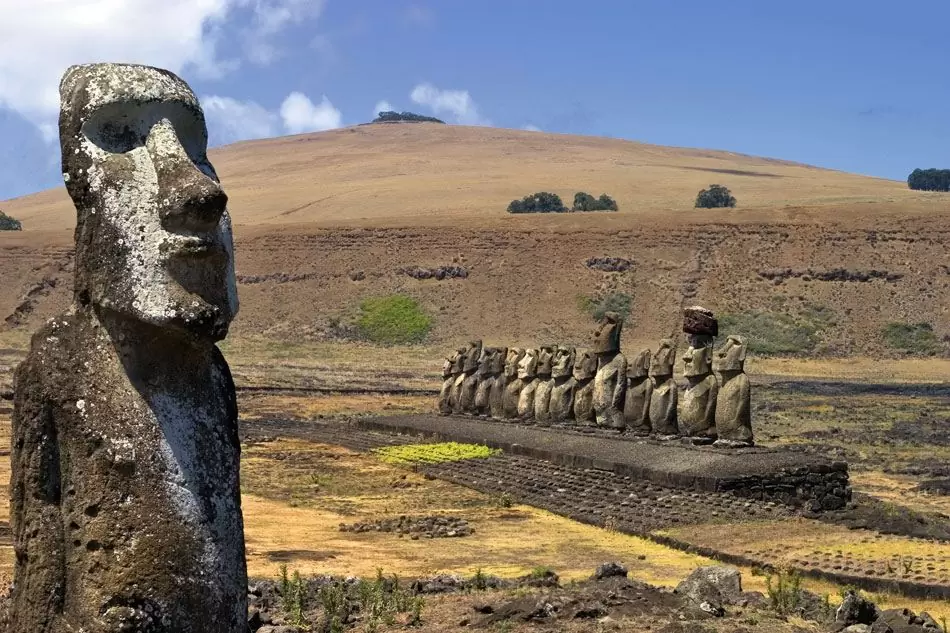
Well, friends, are you ready to embark on one of the most mysterious and alluring adventures of your life? Forget for a while about the banal beaches and boring museums. Today we will be transported to the edge of the world, to a small piece of land in the middle of the vast Pacific Ocean, which for many centuries has stirred the minds of scientists, archaeologists, and simply curious travelers. Yes, you guessed right – we are talking about Easter Island, or, as the locals call it, Rapa Nui!
Remember those huge, pensive faces looking into the distance, which you have probably seen on postcards or in documentaries? Moai. These giants are the main hallmark of the island, its heart and soul. But believe me, Easter Island is not just statues. It’s a whole world, full of secrets, incredible beauty, and energy that literally permeates the air. Get ready, it will be long, but I promise, very interesting!
Welcome to Rapa Nui: The Island That Whispers Stories
Imagine: you are flying over the vast expanses of the Pacific Ocean. There is only blue around, and suddenly, out of nowhere, a tiny green dot appears. This is it, Easter Island. The feeling when the plane lands on the only runway cut out of lava fields is unforgettable. The air here is special – salty, fresh, imbued with the aroma of the ocean and antiquity.
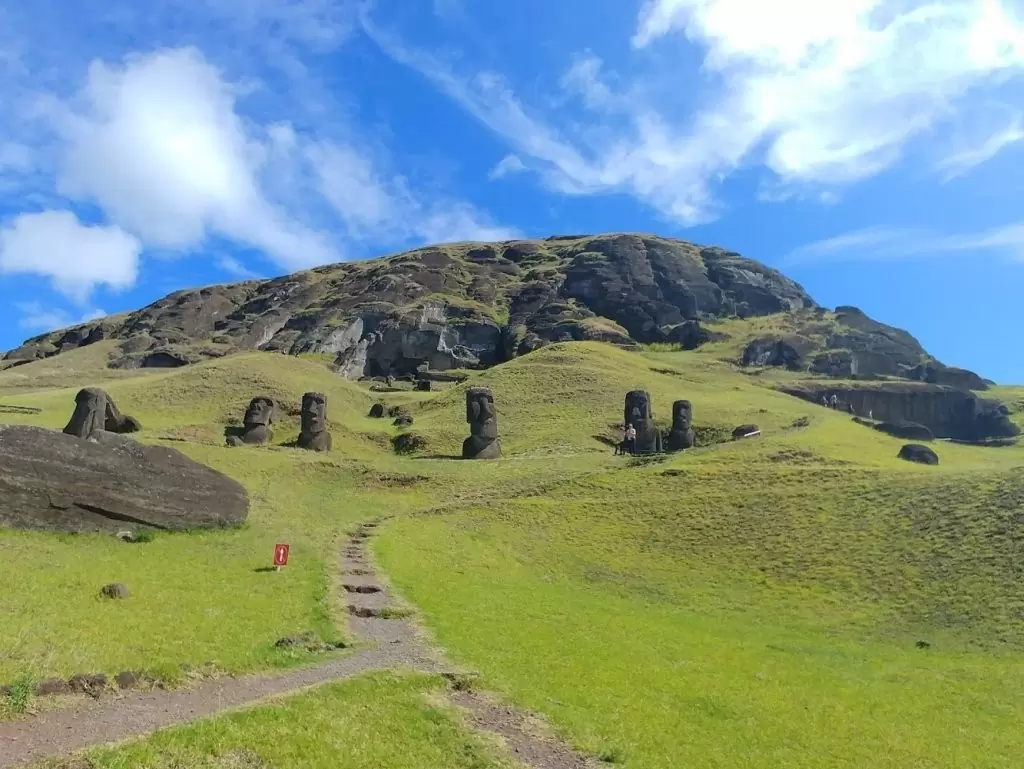
The first thing that catches your eye is the silence. Not the oppressive kind, but the kind that allows you to hear yourself, your thoughts. And, of course, the moai. They are everywhere. Standing proudly on their ahu (ceremonial platforms), lying overthrown, waiting their turn for restoration. Each of them is a silent witness to a history that spans hundreds of years.
Moai: Not Just Stones, but Souls of Ancestors
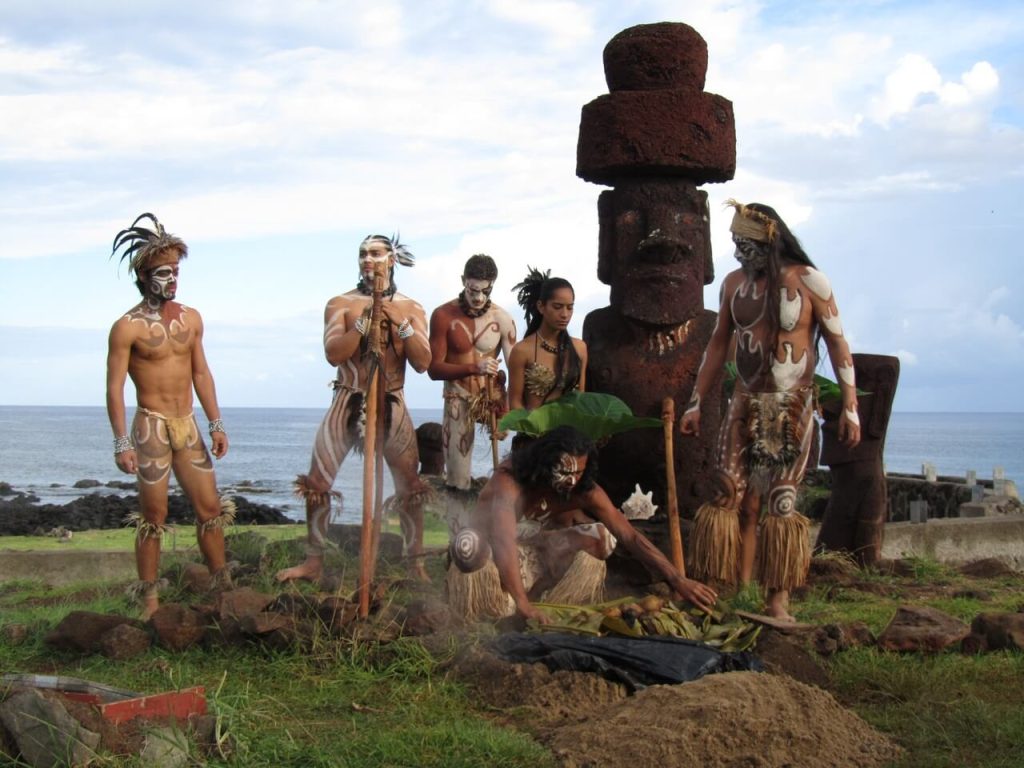
Let’s immediately deal with the main star. Moai. These colossal statues, carved from volcanic tuff, are not just works of art. For the ancient Rapa Nui people, they were the embodiment of ancestors, keepers of family lines, sources of mana – life force and spiritual energy. The higher the status of the ancestor, the larger and more majestic the moai carved in his honor.
They were carved mainly in the quarries of the Rano Raraku volcano. Just imagine: these people, without modern tools, using only primitive obsidian adzes, carved tons of stone from the rock. Then, in some mysterious way, they moved these multi-ton boulders for many kilometers to the coast and installed them on the ahu. How did they do it? No one can give a definitive answer to this day. There are many theories: from the use of wooden sleds and levers to “walking” statues rocked by ropes. But even if you imagine all these laborious processes, it still seems like a miracle.
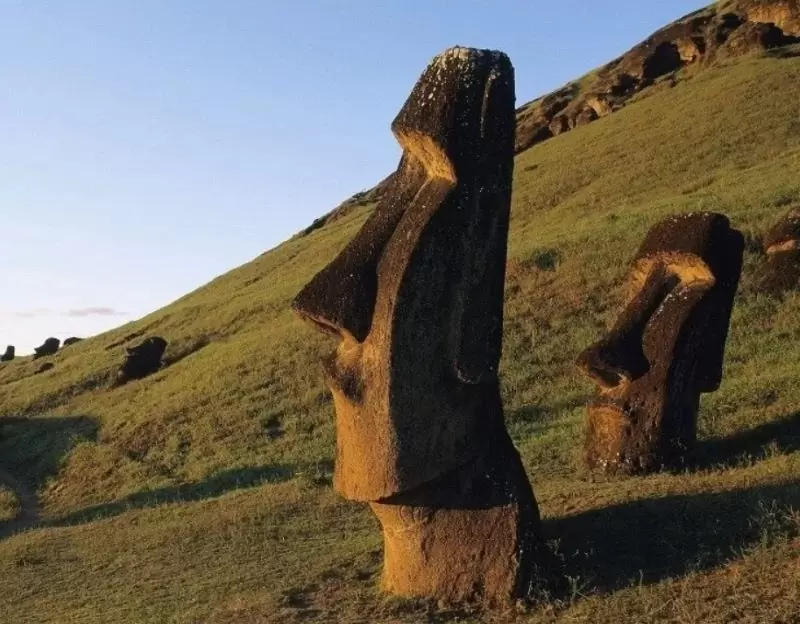
The largest moai, which was never raised, is “El Gigante” – lying in the Rano Raraku quarry. Its dimensions are striking – about 22 meters long! If it had been installed, it would have been taller than a five-story building. Next to it lie hundreds of other moai, some of them completely carved, others only half. It feels like the quarry is a huge workshop, where time froze at the moment when work was suddenly interrupted.
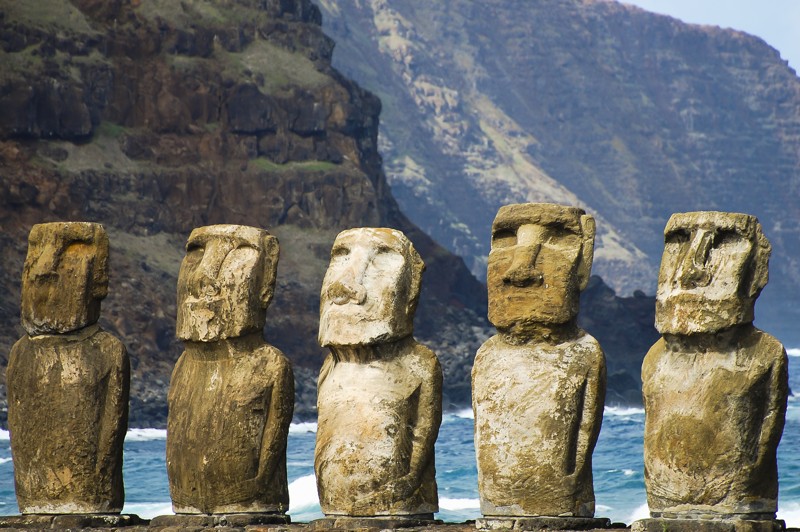
And here’s something else interesting: most of the moai standing on the ahu face DEEP into the island, not the ocean. This emphasizes their role as guardians who protect and guard their villages and families. Only one ahu, Ahu Akivi, where seven moai stand, faces the ocean. It is believed that these statues symbolize the first seven explorers who arrived on the island, or serve as an astronomical landmark.
Diving into History: Ahu, Pukao, and Petroglyphs
Easter Island is not just moai. It’s hundreds of ahu – ceremonial platforms scattered all over the coast. Many of them are destroyed, but some have been restored, and this allows us to imagine what these sanctuaries looked like in ancient times.
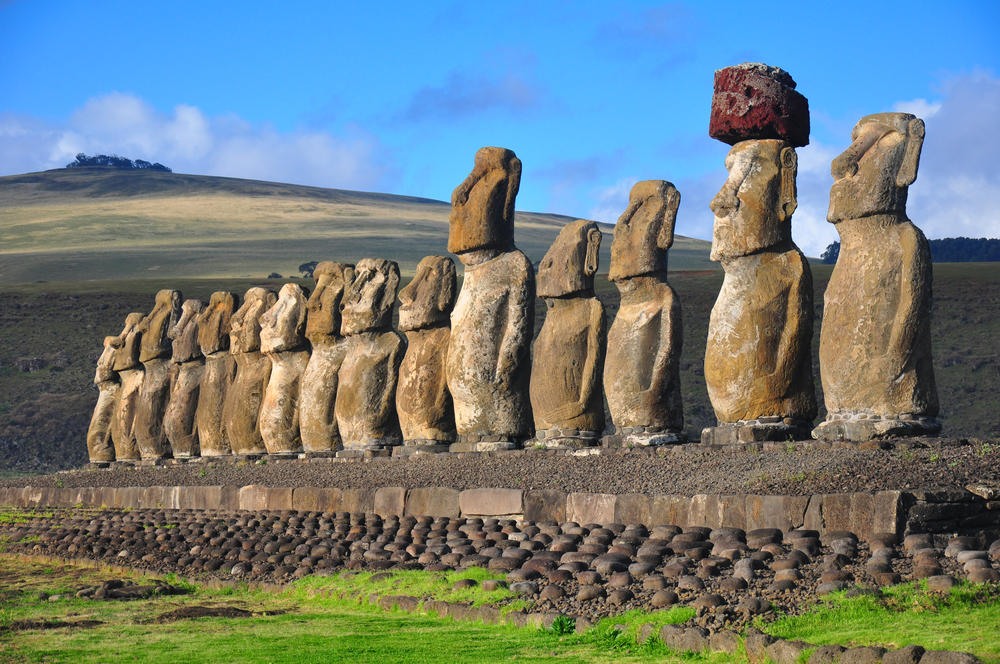
One of the most impressive is Ahu Tongariki. This is the largest ahu on the island, on which there are 15 huge moai, restored by a Japanese team after the devastating tsunami of 1960. Imagine: early morning, the sun is just beginning to rise above the horizon, painting the sky in incredible colors. And these 15 giants, illuminated by the first rays, look simply magical. This is a place where you can feel all the power and grandeur of ancient civilization. You can spend hours here, just sitting and contemplating, trying to imagine the rituals that were performed here hundreds of years ago.
Another interesting detail that you will notice on some moai is the pukao. Red “hats” or “bunches” that were put on the heads of the statues. They were carved from red volcanic slag found in the Puna Pau quarry. There is still debate about what they symbolize: hairstyles, headdresses of leaders, or simply decorative elements. But they definitely add even more mystery and individuality to the moai.
And, of course, petroglyphs. These ancient rock carvings, carved on the rocks, tell about the life, beliefs, and rituals of the ancient Rapa Nui people. They can be found in many places on the island, but especially many in the area of the village of Orongo. Petroglyphs depict birdmen (the main symbol of the Birdman Cult), boats, marine animals, and abstract symbols. Deciphering these images is the key to understanding the ancient culture of the island.
Orongo: The Sacred Site of the Birdman Cult
Perhaps one of the most atmospheric and significant places on the island, in addition to Rano Raraku, is the ceremonial village of Orongo. Located on the top of a steep cliff, between the crater of the Rano Kau volcano and the stormy waves of the ocean, Orongo is the place where the annual Birdman Cult (Tangata Manu) competitions were held.
Imagine: tribal leaders chose their representatives, who had to descend the steep cliff, swim to the small island of Motu Nui, find the first egg of the black tern (manutara), bring it back, climb up the cliff, and be the first to deliver the egg to their leader. The winner became the “Birdman” for a whole year, and his tribe received special privileges and respect. It was not just a competition, but a sacred ritual that determined the political and social structure of the island.
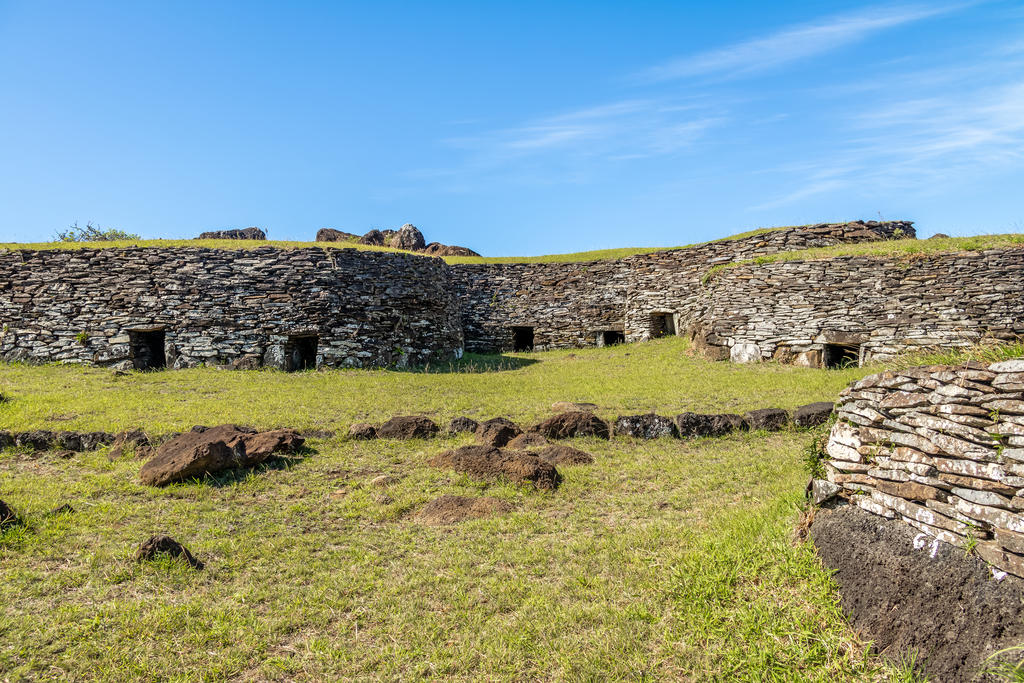
In Orongo, you will see ancient stone houses, built to withstand strong winds, and, of course, many petroglyphs depicting birdmen. The view from here is simply breathtaking. On one side is the bottomless ocean, breaking against the rocks, on the other is the mysterious crater of the Rano Kau volcano, filled with fresh water and vegetation. Here you can feel all the power of nature and the spirit of ancient traditions.
Natural Wonders: Volcanoes, Caves, and Beaches
Easter Island, as you already understand, is not only archeology. It also has incredible natural landscapes created by volcanic activity.
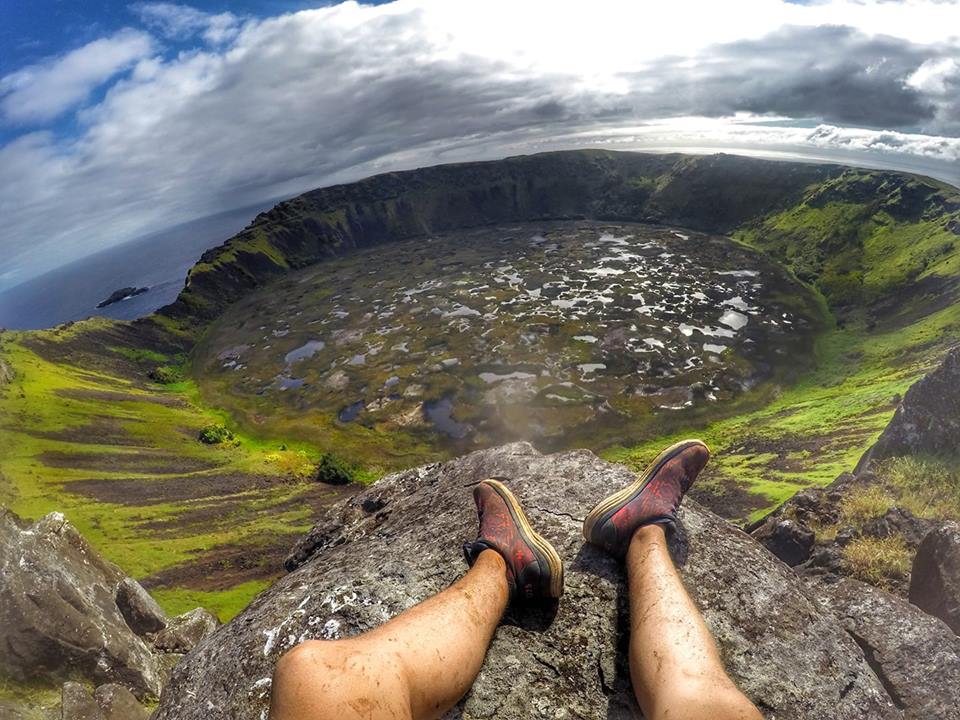
Rano Kau Volcano is one of the three major volcanoes on the island, which forms its triangular shape. Its huge crater, filled with fresh water, is a stunning sight. Here you can not only enjoy the views, but also imagine what the island looked like before it was inhabited by people.
Another interesting volcano is Terevaka, the highest point of the island. Climbing it is an opportunity to see the whole island as if in the palm of your hand. From here, panoramic views open up to the ocean, green hills, and, of course, the moai scattered everywhere.
Easter Island is permeated by a network of volcanic caves. Some of them were used by the ancient Rapa Nui people as shelters, dwellings, or even burial sites. The most famous are the Ana Kai Tangata Cave with petroglyphs of birdmen and the Ana Te Pahu Cave. Exploring the caves is a kind of immersion into the underground world of the island, where you can feel like a real pioneer.
And, of course, we must not forget about the beaches. Despite the fact that Easter Island is not associated with a typical beach holiday, there are several amazing places for swimming. The most famous is Anakena Beach with its white coral sand and palm trees. Here, right on the beach, stands the restored Ahu Na-Nau, where the moai once stood, the eyes of which were inlaid with coral (the only moai found with eyes). Swimming in the warm water, watching the majestic moai, is a unique experience. Another beautiful beach is Ovache, located in a small bay surrounded by red rocks. This is a more secluded place, ideal for those seeking tranquility.
Mysteries and Theories: What Happened to Rapa Nui?
In addition to grandeur and beauty, Easter Island is shrouded in an aura of tragedy. What happened to the thriving civilization that built these giants? Why were most of the moai overthrown?
The most common theory is ecological disaster. It is believed that the ancient Rapa Nui people cut down all the forests on the island to build moai (transportation, levers), build boats, and obtain firewood. This led to soil erosion, desertification, and, as a result, to famine and wars for the remaining resources. As a result, society collapsed, and the moai may have been overthrown as a result of intertribal conflicts.
However, there are other theories. Some researchers suggest that diseases introduced by Europeans, as well as slave trade, which took the lives of thousands of Rapa Nui people, played a major role. Of course, this also affected the decline of civilization.
The truth is probably somewhere in the middle, representing a complex combination of factors. But this mystery, this “ecocide” in miniature, makes Easter Island even more attractive and makes you think about the consequences of human activity on nature.
Practical Tips for Travelers
If you are already on fire with the idea of visiting this amazing island (and I sincerely hope so!), here are a few practical tips:
- How to get there: The only way to get to Easter Island is by plane. LATAM Airlines operates flights from Santiago (Chile). The flight takes about 5.5 hours.
- When to go: The best time to visit is spring (October-November) and autumn (April-May), when the weather is comfortable and there are not so many tourists. In February, the Tapati festival takes place – the main cultural event of the island, but at this time it is very crowded and expensive.
- Where to stay: There are hotels, guesthouses, and campsites on the island. It is better to book in advance, especially in high season.
- How to get around: You can rent a car (recommended to freely explore the island), scooter, bicycle, or use taxi services. There are also tourist tours.
- What to bring: Comfortable shoes for walking, a hat, sunscreen, insect repellent, a raincoat (the weather can be changeable), and, of course, a camera!
- Language: Spanish. Locals also speak the Rapa Nui language. English is understood in tourist spots.
- Important: Respect local traditions and archaeological sites. Do not touch the moai or climb on the ahu. Remember that these are sacred places.
An Island That Changes You
Easter Island is not just a tourist destination. It’s a journey into the depths of history, culture, and even yourself. It makes you think about the fragility of civilizations, about the greatness of the human spirit, and about the mysteries that have not yet been solved.
Leaving behind the hustle and bustle of the big world, you will find yourself in a place where time slows down, and the wind whispers ancient stories. You will feel the energy emanating from these stone giants, see the beauty of untouched nature, and, perhaps, even find answers to questions that have long haunted you.
Easter Island is a place that leaves an indelible mark on the soul of everyone who dares to visit it. It’s not just a vacation, it’s an experience. It’s an adventure. It’s an encounter with history that comes alive before your eyes.
So, if you are looking for something more than just a vacation, if you are ready to immerse yourself in the mysteries of the past and experience the magic of one of the most remote and unique places on the planet – pack your bags. Easter Island is waiting for you. And believe me, it will be one of the most amazing and memorable chapters in your travel book. Haka nui! (Goodbye in Rapa Nui!)