You know that feeling when you’re scrolling through your newsfeed, jumping from one work Zoom call to another, trying to keep up with the frantic pace of the modern world, and suddenly realize – your battery’s dead? Residents of London, Paris, New York, and other megacities are increasingly finding themselves thinking they desperately need a break. Not just an all-inclusive vacation, but a real reboot. A place where time flows differently.
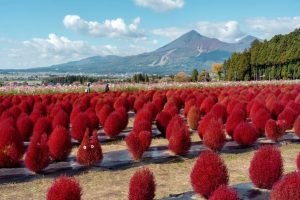
If you’re looking for such a spot on the map, pack your bags – we’re heading to Japan. But not to the neon, cyberpunk-pulsating Tokyo, but to where the very soul of this amazing country lives. Introducing: Lake Kawaguchiko. The pearl of the famous Five Lakes, spread out at the foot of the great Mount Fuji.
Let’s be honest: a text from a guidebook will tell you that it’s simply “a body of water in Yamanashi Prefecture.” But in reality, Kawaguchiko is a portal to another dimension, where your main occupation will be contemplation.
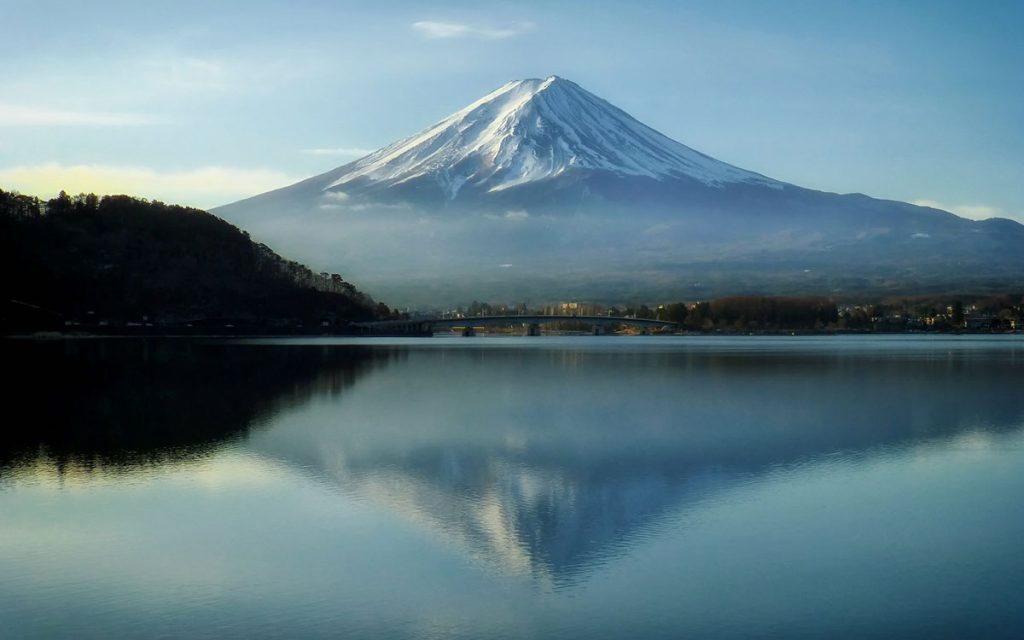
A Postcard Come to Life
Kawaguchiko is the most accessible and perhaps the most photogenic of all the Fuji Five Lakes. It is from here that you get those very views that you’ve probably seen in vintage Japanese ukiyo-e prints or in the feeds of top travel bloggers.
Imagine a morning. A light mist drifts over the crystal clear water. You step out onto the balcony of your ryokan (traditional Japanese inn), a steaming cup of freshly brewed drip coffee or tart green tea in your hands, and directly in front of you, in all its incredible, overwhelming grandeur, stands Mount Fuji.
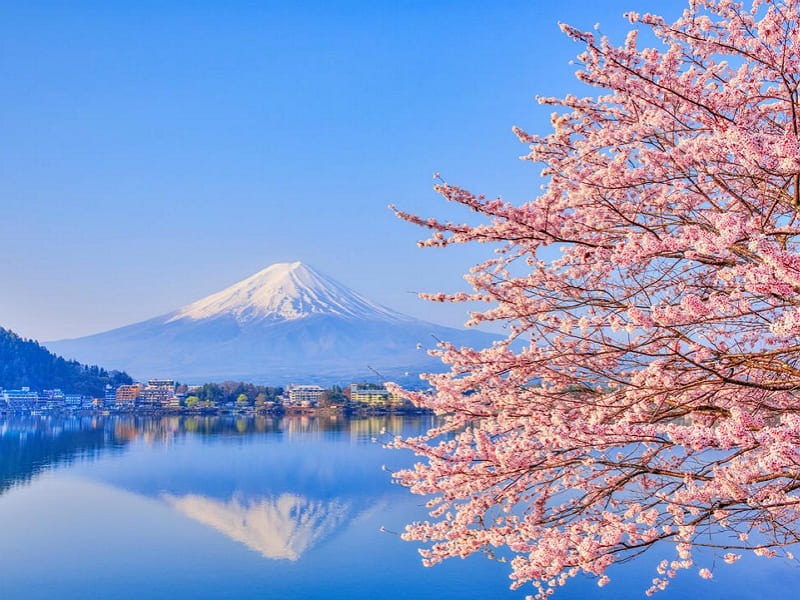
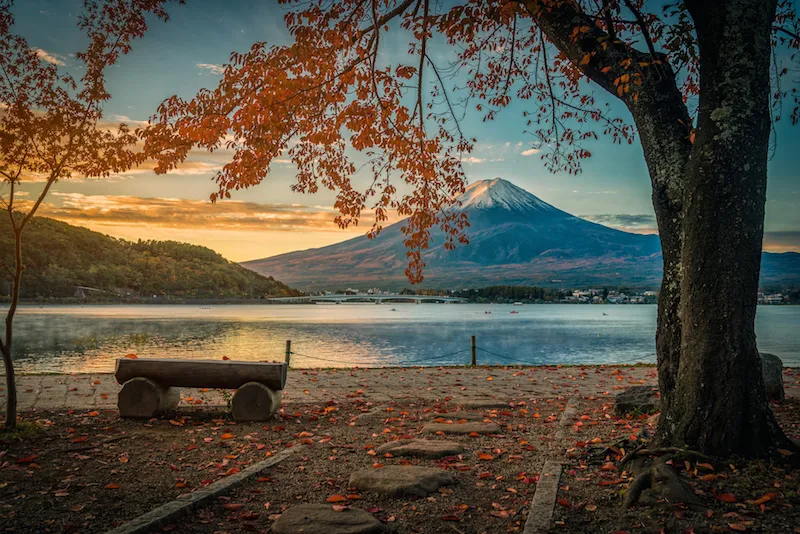
If you’re lucky with the weather and there’s no wind, you’ll see magic called “Sakasa Fuji” – the perfect reflection of the perfect volcano in the mirror-like surface of the lake. This view sends shivers down your spine. No Instagram filters can convey the scale and that ringing silence that envelops this place.
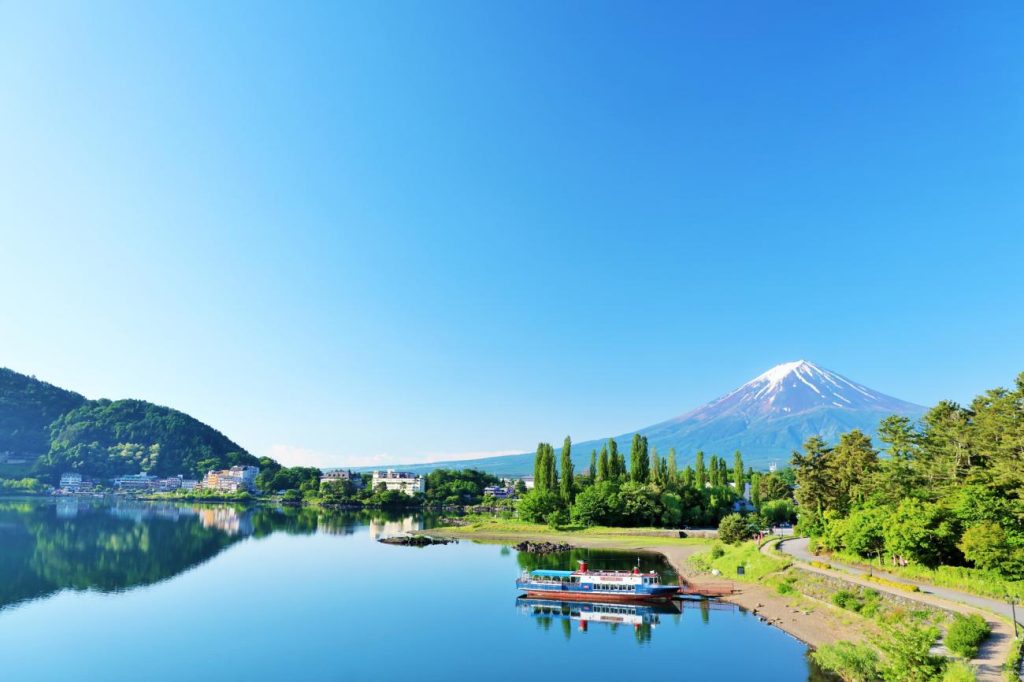
Four Seasons of Japanese Zen
Today, when the world is changing at the speed of light, in Kawaguchiko, nature continues to live according to its immutable, centuries-old laws. And that’s incredibly calming. The lake is beautiful at any time of year, and each season offers its own unique visual array.
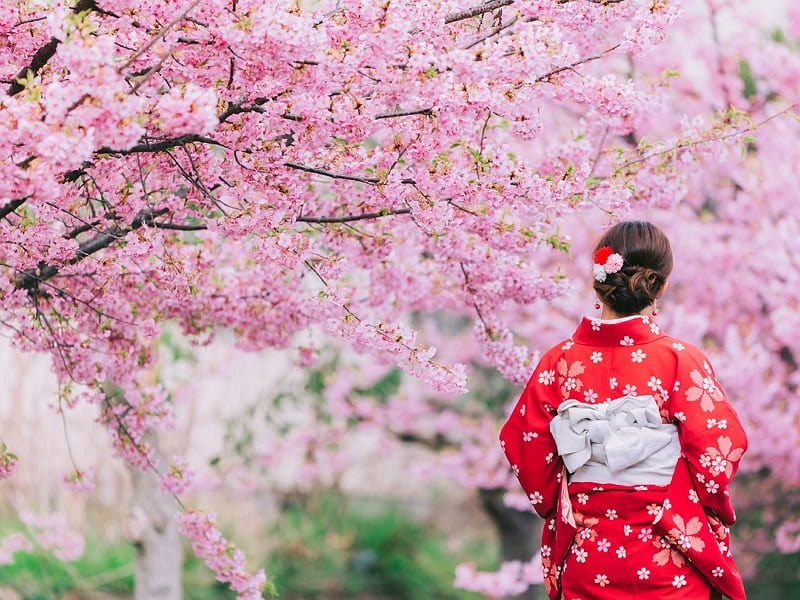
Spring. The end of April here is a time of pink clouds. Sakura blossoms along the northern shore of the lake, creating an incredible contrast between the delicate petals, the blue water, and the snow-capped peak of Fuji. This is the time when aesthetes from all over Europe, tired of the long, gray winter, flock here.
Autumn. November brings with it the “momiji” season – red maples. The trees erupt in crimson, gold, and orange fires. The famous “Maple Corridor” (Momiji Kairo) becomes a true pilgrimage site. Walking through the rustling red leaves under the evening lighting is aesthetic ecstasy in its purest form.
Winter and Summer. In winter, the air here becomes so clear and crisp that Fuji is visible in the smallest details, and a thick cap of snow lies on the top of the mountain. In summer, everything is immersed in lush greenery, lavender and hydrangeas bloom, and hiking and glamping enthusiasts from all over the world flock to the lake.
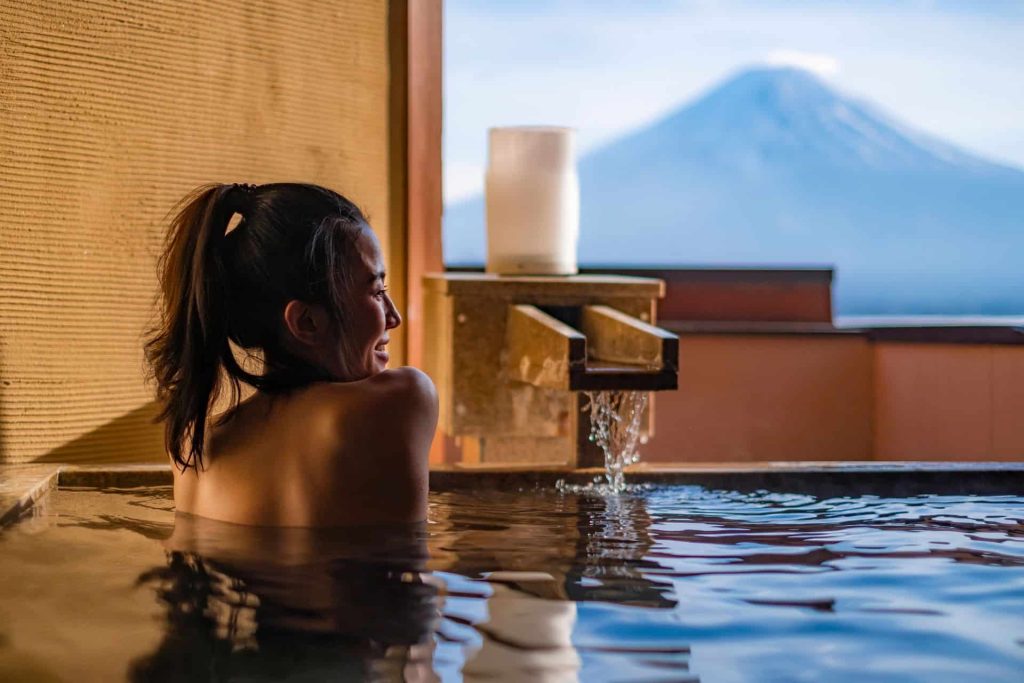
Onsen: Ancient Spa Detox We Deserve
Modern spas in Milan or Los Angeles can offer you gold masks and hot stone massages, but all of this pales in comparison to the culture of Japanese onsen – thermal springs. Kawaguchiko is famous for its hot baths, the water in which comes directly from the volcanic depths.
To plunge into the scalding, mineral-rich water when it’s a cool evening outside is the best way to relieve stress accumulated over months of deadlines. And now add to that the fact that many baths (rotenburo) are located directly under the open sky, and offer panoramic views of the lake and mountain. Your body relaxes, your mind clears of information noise, and only the here and now remains. This is not just a hygienic procedure, it’s deep meditation.
How to Have Fun If You’re Not a Buddhist Monk
Of course, contemplation is wonderful, but Kawaguchiko is not a place where you can get bored. If the explorer in you has awakened, the lake has something to offer.
First, the Kachi Kachi Ropeway (officially – Mount Fuji Panoramic Ropeway). Just a few minutes of smooth ascent to Mount Tenjo, and you find yourself on an observation deck with a 360-degree view. On one side is the endless sea of Aokigahara trees and the foot of Fuji, on the other is Lake Kawaguchiko in the palm of your hand. Spoiler: they sell excellent dango (Japanese sweets on a stick) at the top, which you should eat while admiring the views.
Secondly, this is a paradise for lovers of leisurely bike rides. The lake’s coastline is equipped with excellent paths. You can rent a bicycle with an electric motor (so as not to get tired) and cycle around the entire lake in a couple of hours, stopping at tiny shrines, going to cozy cafes for matcha lattes, and taking a million photos.
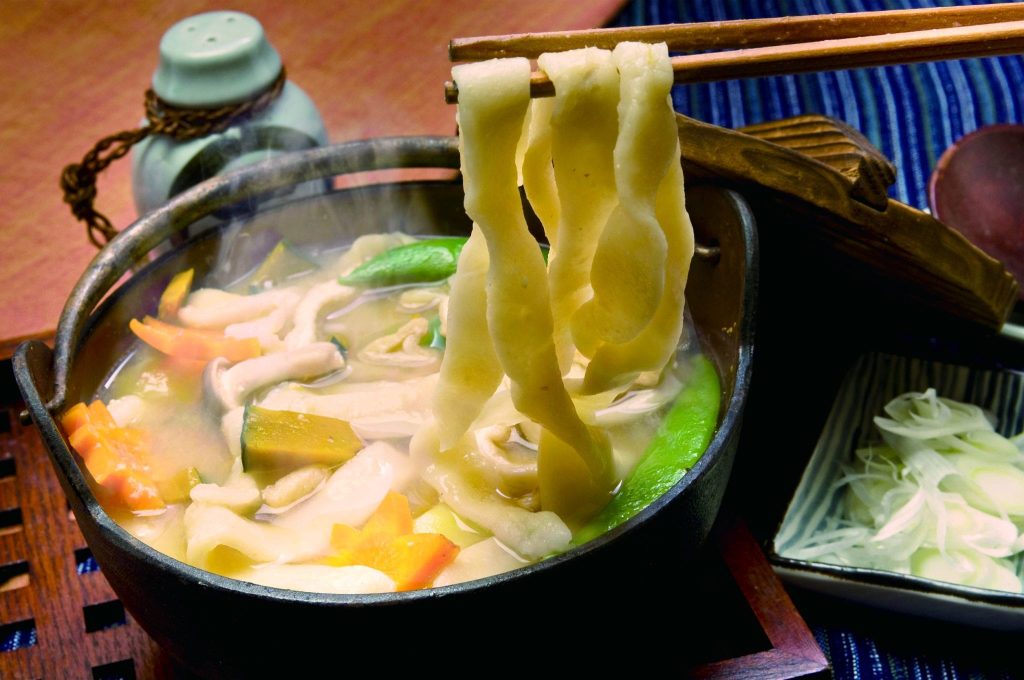
And don’t forget about gastronomy! After a walk in the fresh air, you must try houtou – a local specialty. This is a thick, rich soup with wide udon noodles, vegetables, mushrooms, and pumpkin based on miso broth. It warms you from the inside and gives you a feeling of absolute home comfort, wherever you are.
Why We All Need a Little Kawaguchiko Right Now
In today’s reality, when borders are being erased thanks to digitalization, and the concept of “home” for many has come to be measured by the availability of good Wi-Fi, we are losing touch with nature and ourselves. Digital nomads, entrepreneurs, and simply tired residents of megacities come to Mount Fuji not just for beautiful photos.
Kawaguchiko today is a symbol of returning to our roots. It is a reminder that there are things in the world that are beyond the control of bustle, crises, and news reports. Mount Fuji stood here for millennia before us and will stand after.
So, if you feel like you need to exhale, buy a ticket, book a house by the water, and let the magic of Kawaguchiko do its thing. Just sit on the shore, watch the sun set behind the volcano, and drink your tea. Believe me, the world outside this lake can wait.