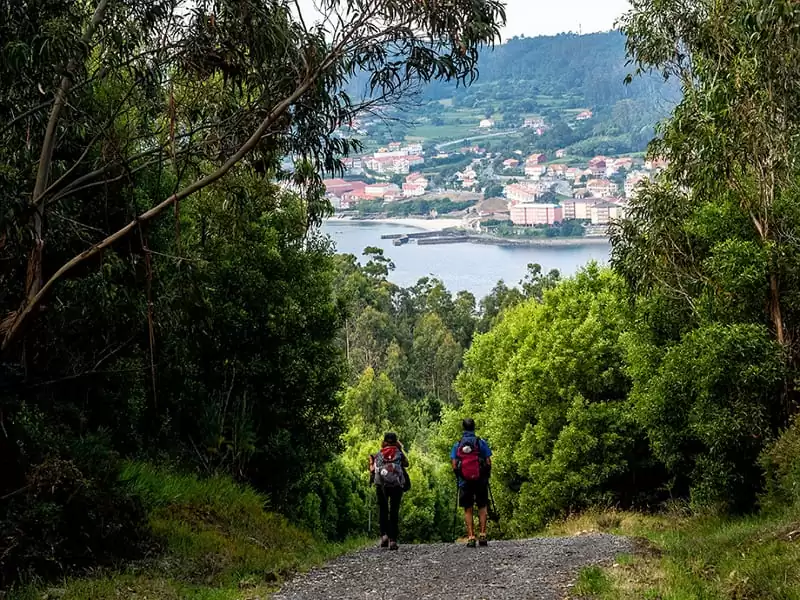
Is it possible to know how many paths and roads exist in the world? Throughout history, humanity has laid so many that no one can count them all. Some are forgotten over time, and then roads disappear into tall grasses, dense forests, alongside babbling streams, or in rocky mountains. But sometimes people suddenly remember old, almost vanished trails and set off on a long journey along them again. This is exactly what happened with the Way of St. James in Northern Spain: along this ancient path, laid more than a thousand years ago, thousands of travelers from all over the world walk today.
The Way of St. James: Origins and Significance
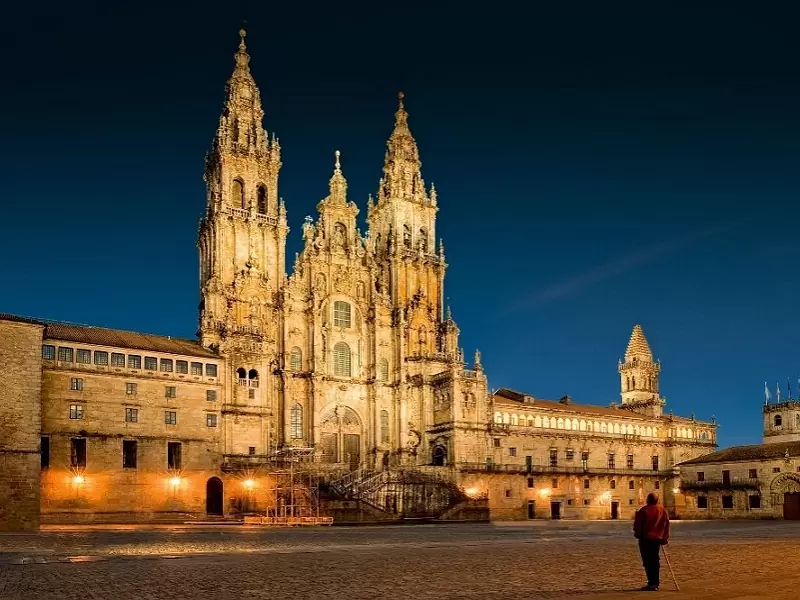
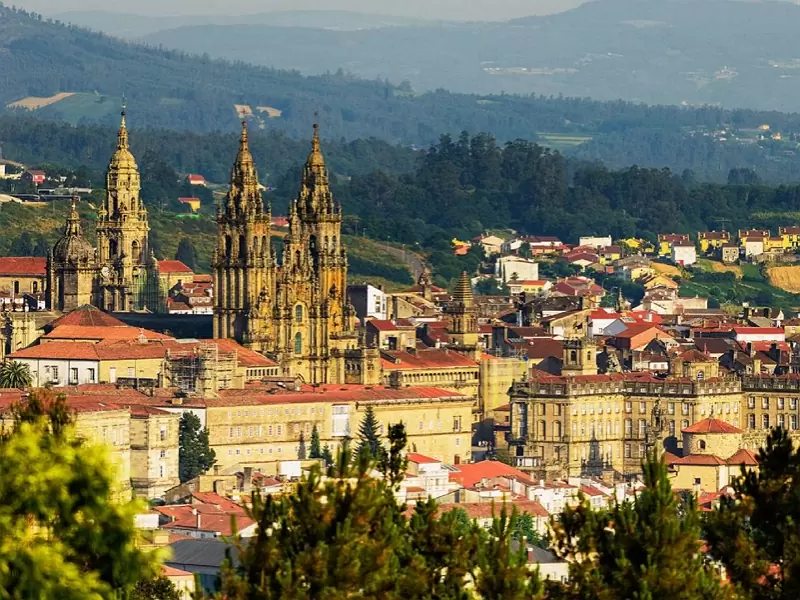
The Way of St. James (El Camino de Santiago) is a UNESCO World Heritage site. This famous road to the tomb of the Apostle James in the Spanish city of Santiago de Compostela is the third most important Catholic sanctuary, surpassed only by Jerusalem and Rome. The reason for such veneration, which gave the city the nickname “Christian Mecca,” is Spain’s greatest relic—the relics of the Apostle James, the country’s patron saint.
A disciple of Christ, the Apostle James, preached in the Roman province of Spain. When he returned to Jerusalem, he literally paid with his head. After his execution, the apostle’s followers secretly placed his body in a boat, which, after a long voyage, miraculously landed on the Spanish coast. There, pious Christians, who found the sacred remains of the apostle, moved them to the city of Iria Flavia. For several subsequent centuries, the fate of the relics remained shrouded in mystery.
The Discovery of the Relics and the “Field of the Star”
But the time came, and an unusually bright celestial constellation indicated the burial place of the holy relics to a pious hermit named Pelayo. The sarcophagus with the saint’s body was found exactly in the place over which the star shone. The city, founded there some time later, was named Compostela—Campus Stellae, which means “Field of the Star” in Latin.
From Legends to Modernity: The Allure of the Camino
Almost from the very first days, the relics’ ability to work miracles became legendary. The first pilgrims came to worship at the tomb of the Apostle James as early as the 10th century. And today, the beauty of the natural landscapes, masterpieces of Spanish architecture, and the friendly attention of locals attract travelers to the road. Many travelers choose this route not for religious reasons, but out of a desire to get acquainted with the culture, history, national traditions, and gastronomic features of Spain.
This is how one can see and love not the “quaint, touristy,” but the “real” Spain. The Camino de Santiago is very popular among art historians who study and simply enjoy the art monuments, perfectly preserved away from cultural centers and capitals. The most popular route is the so-called French Way (El Camino Frances de Santiago), about 800 kilometers long.
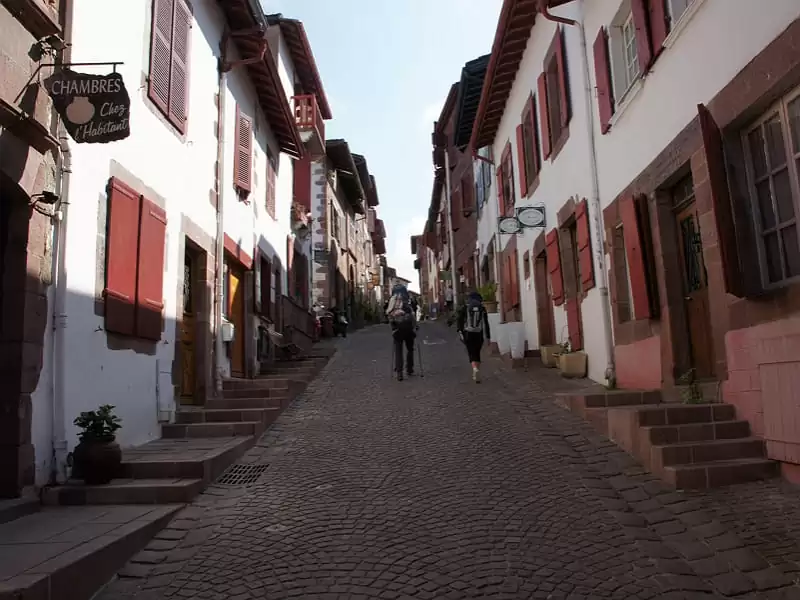
It starts from the ancient French town of Saint Jean Pied du Port in one of the Pyrenean passes, where thick clouds sleep clinging to the tops of the mountains, passes through several regions of Spain (Navarre, Rioja, Castile and Leon, Galicia) to Santiago de Compostela, and ends in the small town of Finisterre on the shore of the vast, bright blue waters of the Atlantic Ocean.
Preparing for the Journey: The Pilgrim’s Passport and Symbols
In 1987, the Council of Europe not by chance officially named the road to Santiago de Compostela the first European cultural route: along the road there are more than two thousand historical and cultural heritage sites of Spain. Before setting off, today’s pilgrims need to obtain a pilgrim’s passport (credencial). This document grants the right to stay overnight in special pilgrim shelters.
The scallop shell is the symbol of St. James. Pilgrims sewed them onto their clothes. Images of the shell adorn buildings along the entire route. All pilgrims buy shells in souvenir shops and attach them to their backpacks.
Waymarkers and Certificates: Guidance on the Camino
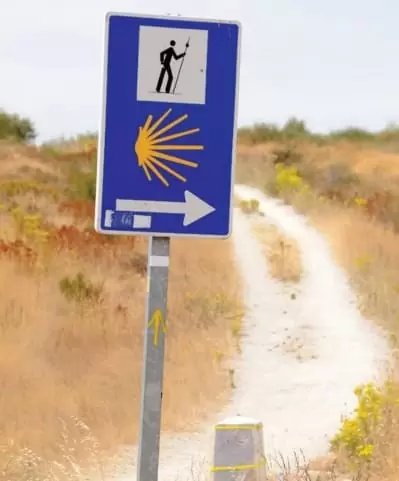
Along the way, stamps from visited churches or shelters must be placed in the passport. If, at the end of the journey, the pilgrim wishes to receive a personalized certificate in Latin (compostela) confirming the completion of the Santiago pilgrimage route, these stamps will serve as proof. To prevent pilgrims from getting lost, the entire El Camino route is marked with special signs featuring a scallop shell and a yellow arrow.
The scallop shell is the symbol of Saint James. Pilgrims sewed them onto their clothes. Images of the scallop shell decorate buildings all along the route. All pilgrims buy shells in souvenir shops and attach them to their backpacks.
Along the way, stamps from visited churches or shelters must be placed in the passport. If, at the end of the journey, the pilgrim wishes to receive a personalized certificate in Latin (compostela) confirming the completion of the Santiago pilgrimage route, these stamps will serve as proof. To prevent pilgrims from getting lost, the entire El Camino route is marked with special signs featuring a scallop shell and a yellow arrow.
Pilgrim Shelters: Where to Rest on the Camino
For overnight stays, there is a developed network of inexpensive or completely free pilgrim shelters. Sleeping arrangements vary—a large room for 50-100 people with bunk beds or small, neat rooms for four. Pilgrim shelters can occupy old church buildings as well as modern ones.
All pilgrims buy shells in souvenir shops and attach them to their backpacks. For overnight stays, there is a developed network of inexpensive or completely free pilgrim shelters. Sleeping arrangements vary—a large room for 50-100 people with bunk beds or small, neat rooms for four. Pilgrim shelters can occupy old church buildings as well as modern ones.
Immersing in the Atmosphere: The Beauty and Tranquility of the Journey
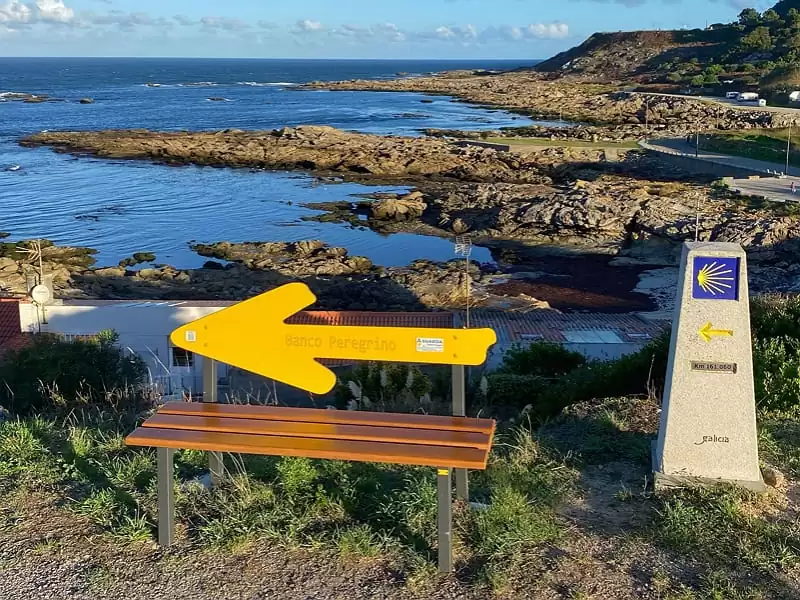
To fully enjoy this difficult but incredibly beautiful journey, one must correctly prioritize from the very beginning: at what pace to move, which sights to see. If you enter a small chapel, church, or monastery in the Spanish hinterland, far from the noise and dust of highways and cities, with overgrown bells, creaking doors, and ivy-covered walls, it seems that time takes you back several hundred years.
If you look up, you can see how rays of light break through openings in the dome and penetrate the gloom with a magical solar net. Around you is a resonant, ringing silence.
If you slow your steps, walking through a forest clearing or a blooming meadow, inhale deeply the dizzying aromas of a thousand herbs and flowers, take off your backpack and, spreading your arms, fall into the emerald waves of greenery, you can hear the magical trills of birds, the buzzing of beetles and the chirping of grasshoppers, see how the mischievous wind chases the clouds, and feel sadness recede, and your heart stop in anticipation of happiness.
The End of the Journey: Santiago de Compostela and Finisterre
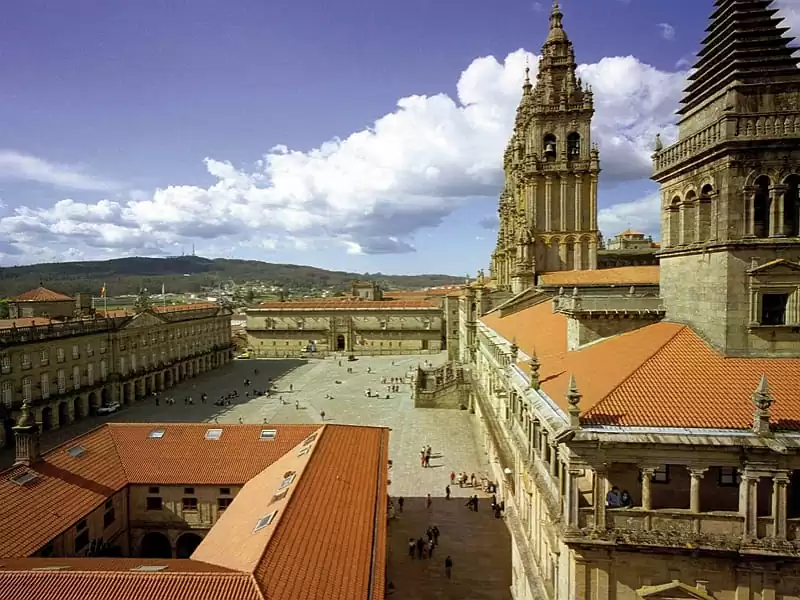
After the travelers finally reach their cherished goal—the Cathedral of St. James—an exciting, unforgettable event awaits them: participation in a service in honor of the pilgrims who have honorably completed their pilgrimage. The service begins every day at noon. By this time, all arriving pilgrims gather in the temple and offer praise to the Lord. After the prayer, pilgrims take turns going behind the altar, where the statue of St. James is located, step onto a small step, and, placing their hands on the apostle’s shoulders, kiss the scallop shell on his cloak.
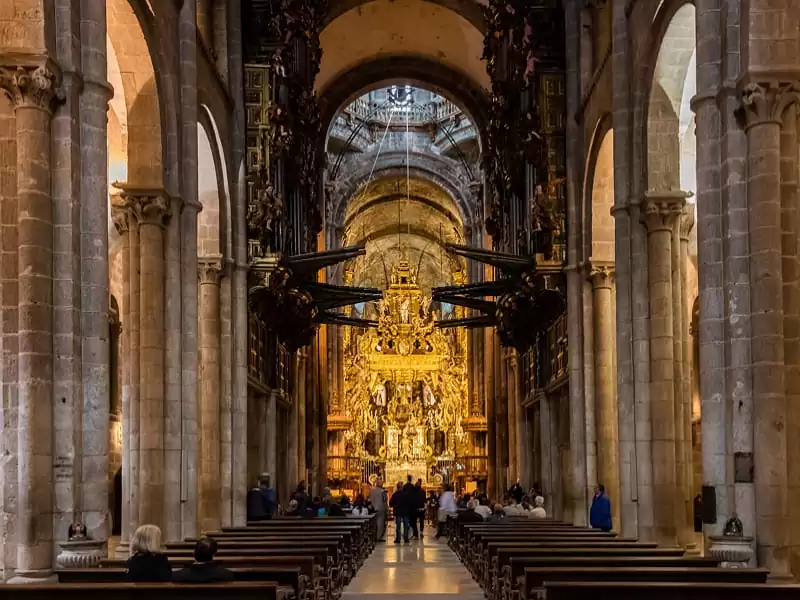
Then the travelers descend the steps to the reliquary with the imperishable relics of the great martyr. After the service, one can receive a personalized certificate in Latin, sealed by the Bishop of Santiago de Compostela, confirming the completion of the Way. However, many pilgrims do not stop there and continue their walking journey to Cape Finisterre—one of the westernmost points of the Iberian Peninsula.
The name of the cape comes from the Latin Finis Terrae, meaning “End of the Earth.” Finisterre is a small fishing village where Spaniards come to relax on weekends in the summer. In August, gourmets from even Madrid rush here for the gastronomic octopus festival. Few people swim here—the ocean water is too cold.
In ancient times, pilgrims, having reached the “End of the Earth,” would burn part of their worn-out clothes on the cape, symbolizing the end of the pilgrimage and the beginning of a new stage of life. Today this is prohibited for safety reasons, so a new ritual has emerged: one must watch the sunset and greet the sunrise on the cape, and then dip one’s feet into the icy ocean water. And the sunsets here are breathtaking!
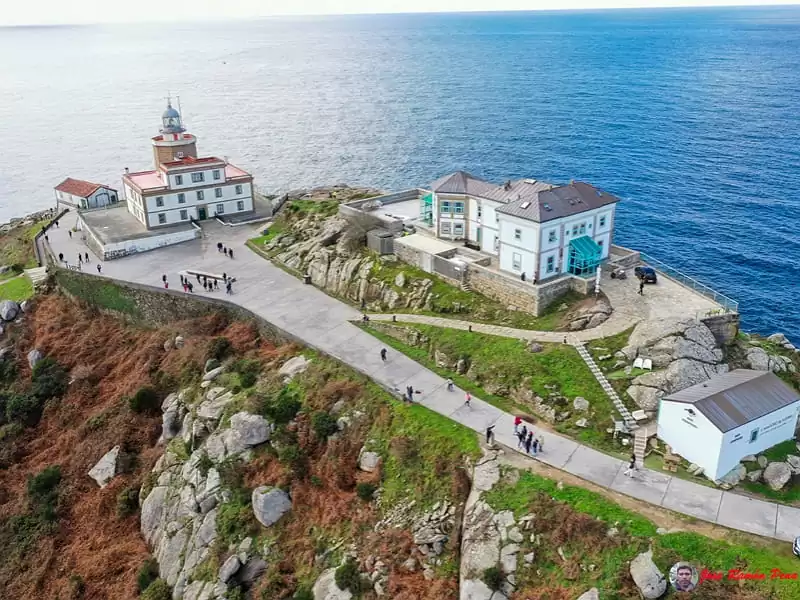
Well, that’s all… The Way is finished. You can buy a ticket and go home…
The Meaning of the Journey: Something More Than a Road
Leaving home, we strive not only for new experiences but also for something intangible that will disrupt the measured course of our lives, tear us away from the familiar hustle and bustle. Perhaps what makes a person embark on a journey is the natural and inherent desire to cleanse oneself of heavy thoughts, acquire new spiritual experience, tune in to a positive mood, test oneself, fill oneself with spiritual strength, learn patience, overcome anger and pride, change something in one’s destiny.
After all, the world is much larger than our perceptions of it!