You know, there are places in the world that seem to sit quietly for ages, bothering no one, and then suddenly—bam!—they become world-famous. Not because something incredible actually happened there, but because someone very talented invented a story about them that became truer than reality itself. The Château d’If, near Marseille, is exactly such a case. It’s not just a fortress, not just a former prison. It’s a monument to the power of imagination, proof that the pen can be mightier than the cannon, and that a fictional prisoner can bring fame to real walls more than any king.
Let’s be honest: if it weren’t for one very famous count, most of us ordinary mortals wouldn’t even know about that rocky islet in the Mediterranean. But thanks to Alexandre Dumas and his immortal The Count of Monte Cristo, the Château d’If became something like a cult site. A place where it seems the ghosts of Edmond Dantès and Abbé Faria still linger, even though they were never really there. That’s the marvelous transformation — when legend outweighs facts — that we’ll talk about today.
And it all began, as often happens, with a king…
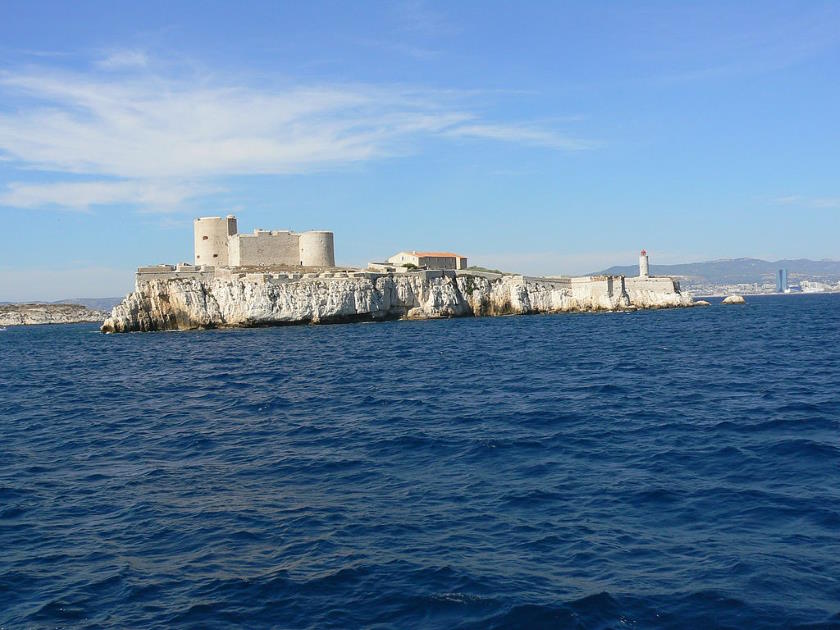
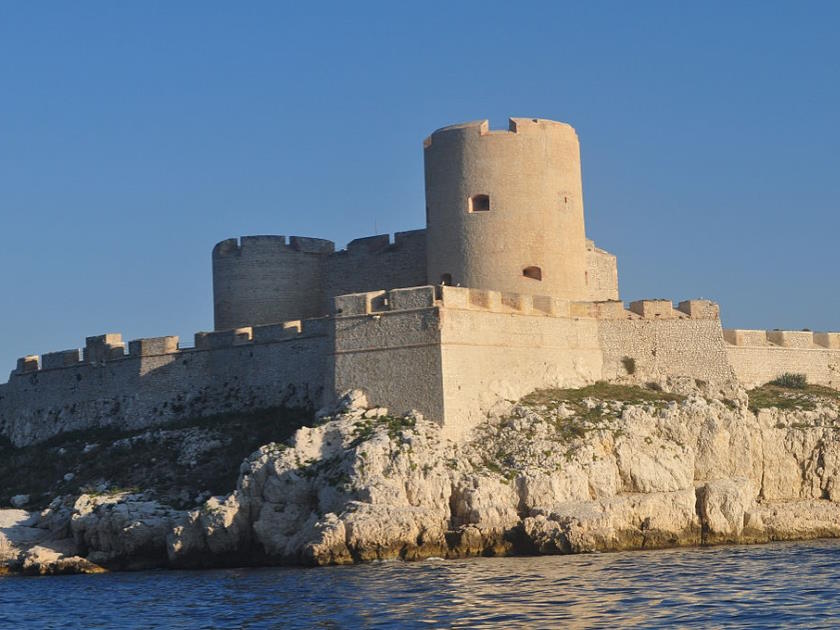
Picture the early 16th century. France. King Francis I — a notably energetic and ambitious man. He had big plans for Marseille, that important port city in the south. Inspecting the surroundings, he noticed a small rocky islet a couple of kilometers off the coast. The idea came at once: why not build a fortress there? Not just any fortress, but an imposing defensive fort that would protect approaches to Marseille from the sea. And, to be honest, it would also serve as an excellent reminder to locals who was in charge.
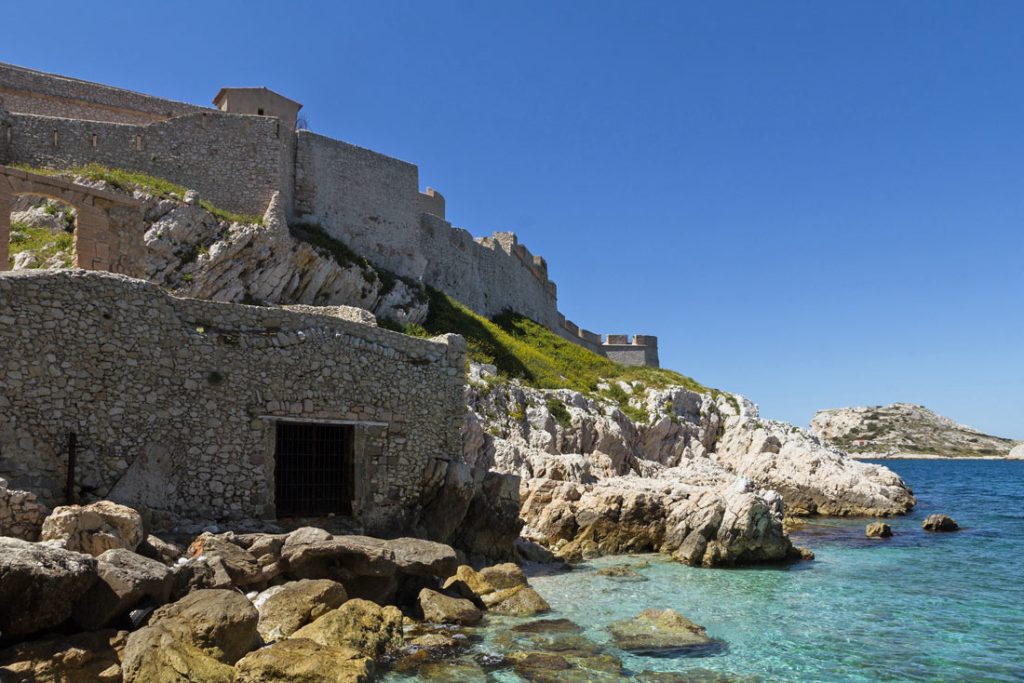
So, from 1524 to 1531, a true stone giant rose on that patch of land that would later be called the Île d’If. Three massive towers — a round one, a square one, and a central one — plus high walls with battlements. A beauty! For those times it was, of course, advanced military construction. No one could foresee that this formidable structure would gain an entirely different, much darker, yet far more romantic fame.
Not a castle but almost a resort? (Or how If turned into a prison for the “special”)
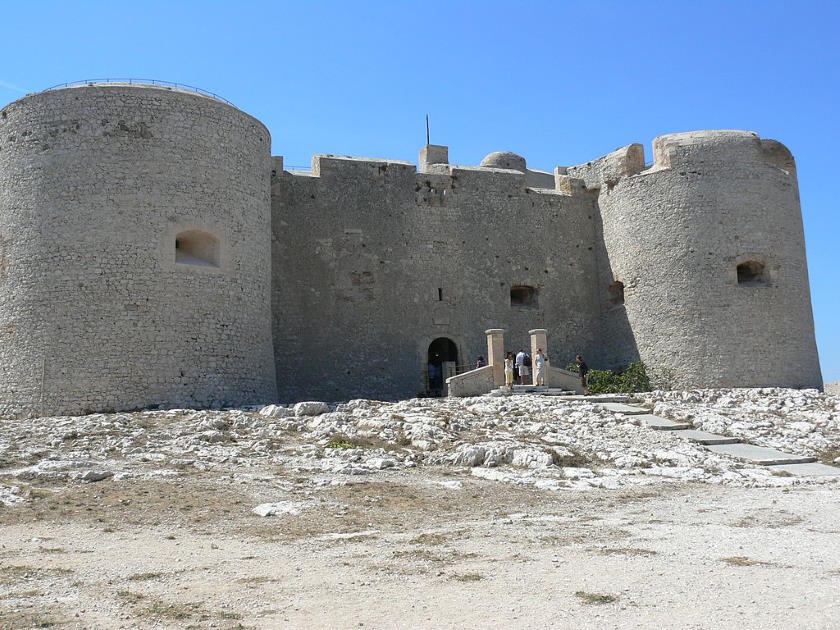
Every fortress sooner or later becomes not only a shield but also a potential prison. The Château d’If was no exception. By the mid-16th century, just a few decades after its construction, it began to be used to hold especially important or particularly inconvenient people. These were not merely bandits or petty criminals. Political prisoners, religious dissenters (especially Huguenots during the Wars of Religion), aristocrats who dared to displease the king, or simply very influential people who needed to be “taken out of sight” for a while were sent there.
Conditions varied, to be honest. If you had money or connections, you could end up in so-called “comfortable” cells. Well, “comfortable” by the standards of the time is a stretch. They were simply more spacious, sometimes with a window, occasionally even with a fireplace. These cells were called “pistoles” (from the French “pistole” — a coin — hinting at the price of such “comfort”).
But if you were an ordinary mortal with no money, welcome to the “dungeons” (les cachots). These were dark, damp, cold underground cells with no windows, but with plenty of rats, filth, and despair. Hundreds of Huguenots were thrown into such pits, many of whom never left. Not the most pleasant holiday destination.
The Château d’If retained this grim status as a prison for centuries, up until the late 19th century. Its walls witnessed much suffering, despair, and perhaps the occasional flicker of hope. But let’s be honest: who among us would remember those sufferings now if not for one small but very important detail…
When the pen is mightier than the cannon: Edmond Dantès to the rescue
And here’s where it gets really interesting! Imagine the year 1844. Alexandre Dumas, already a famous and respected writer, is pondering his new novel. He needs the perfect prison. A place that seems impossible to escape from. A location wrapped in an aura of mystery and despair. Then he finds the Château d’If — a real fortress-prison off the coast of Marseille. It fits perfectly!
Thus The Count of Monte Cristo was born. The story of the unjustly accused sailor Edmond Dantès, who spent 14 years in the dreadful conditions of the Château d’If. There he meets the wise Abbé Faria, who teaches him everything he knows, reveals hidden treasures, and essentially transforms the naive young man into a brilliant, vengeful aristocrat. After escaping the Château d’If (no spoilers, in case someone hasn’t read it!), Dantès returns to the world to carry out his elaborate revenge.
The book became a worldwide bestseller. People devoured it, rooted for Dantès, hated his enemies. Of course, the Château d’If, described by Dumas with such mastery that it seemed almost a living character, instantly shot to fame. It became not merely a prison but a symbol of imprisonment, injustice, yet also incredible strength of spirit and yearning for freedom. And all this — thanks to fictional characters!
Dantès and Faria: fellow sufferers… who never existed
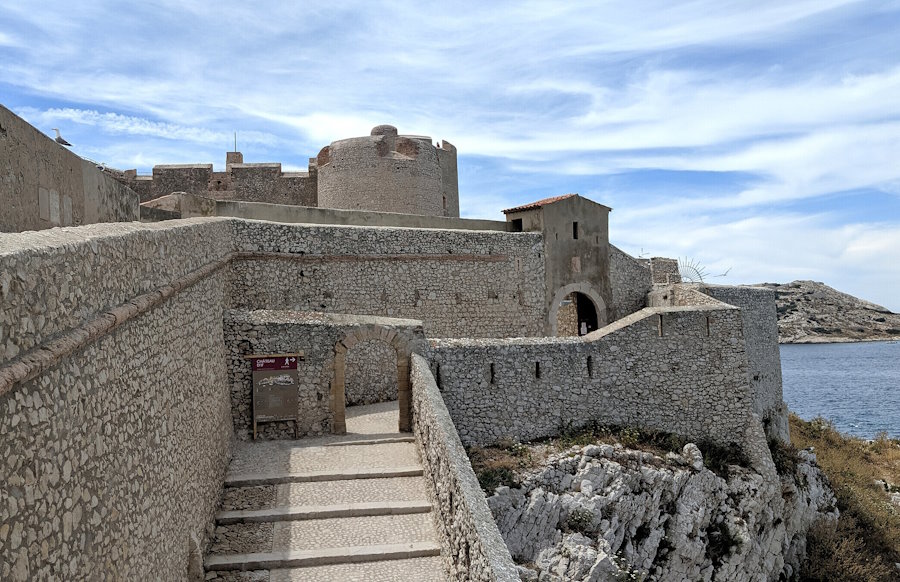
The funniest — or perhaps saddest — thing is that thousands, if not millions, of visitors to the Château d’If over the decades genuinely believed Edmond Dantès and Abbé Faria were historical figures. They searched for their cells, imagined Faria digging his tunnel, imagined how Dantès changed behind those stone walls. Tour guides still report visitors asking: “Where is Monte Cristo’s cell? Where did Abbé Faria sit?”
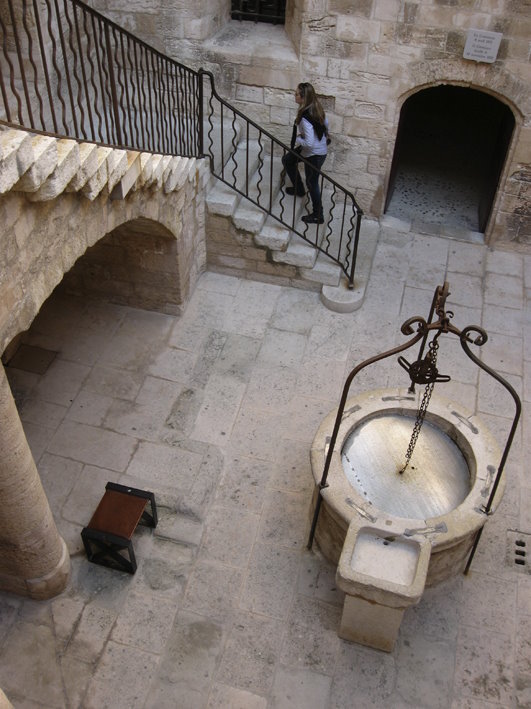
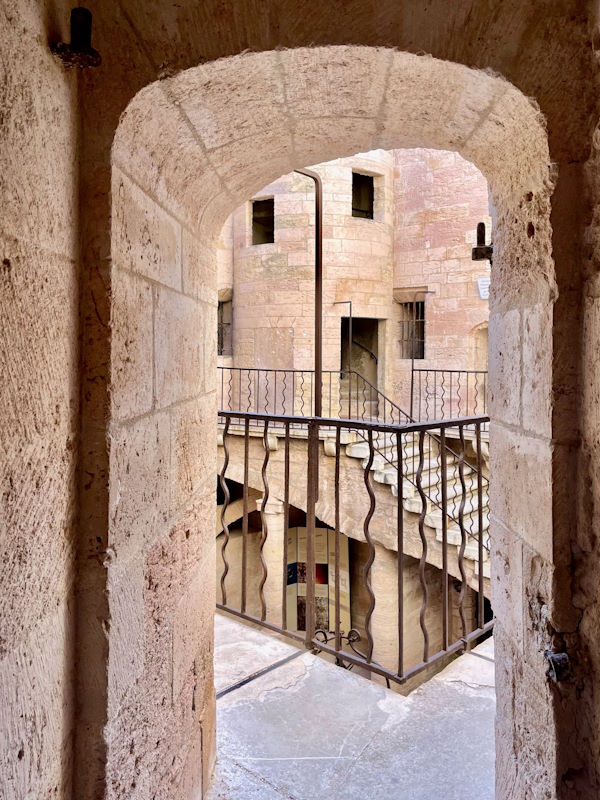
And instead of dryly saying, “Sorry, it’s all fiction,” museum staff did something ingenious. They embraced the legend! Now the castle has a “Monte Cristo cell,” and next door a “cell of Abbé Faria,” connected, naturally, by a drilled tunnel (of course, a prop tunnel). And that’s wonderful! What could be more engaging than diving into a world where reality mixes with imagination? Where you can touch the wall and picture that your favorite book hero dreamed of freedom right there?
This is the magic of literature. Dumas didn’t just write a book; he gave the Château d’If a new, immortal life.
Real prisoners: not as famous, but just as “interesting”
Of course, it would be unfair to forget those who truly spent years, even their lives, in the Château d’If. Their stories may not be as romantic as Dantès’s, but they deserve mention.
Among the most notable real prisoners were:
- Jean-Baptiste Chabannier: the first prisoner, arrested in 1580 for participating in a plot against the local government.
- Gion de Balzac d’Antrag: another conspirator held there in the early 17th century.
- General Jean-Baptiste Kléber: though he did not serve time there, his body, after his assassination in Egypt, was temporarily interred in the castle for 18 years until Napoleon allowed it to be returned to France — a kind of “posthumous” prisoner.
- Marquis de Sade: rumors say he was there too, though this is not documented. Still, it fits the castle’s gloomy atmosphere.
- Thousands of Huguenots: During the Reformation and subsequent religious wars, the Château d’If became a real grinder for French Protestants. Many were thrown into the dungeons, where they died of hunger, disease, and damp. Their stories, though not personalized, are no less tragic.
All these real inmates of the Château d’If gave it the dark, oppressive aura that drew Dumas’s attention. And even if we visit to follow the footsteps of a fictional count, subconsciously we sense these real echoes of the past.
Today the Château d’If: from prison to tourist dream
In 1890 the Château d’If was officially decommissioned as a prison and opened to the public as a historic monument. Since then it has become one of the most popular attractions in Marseille and along the French Riviera.
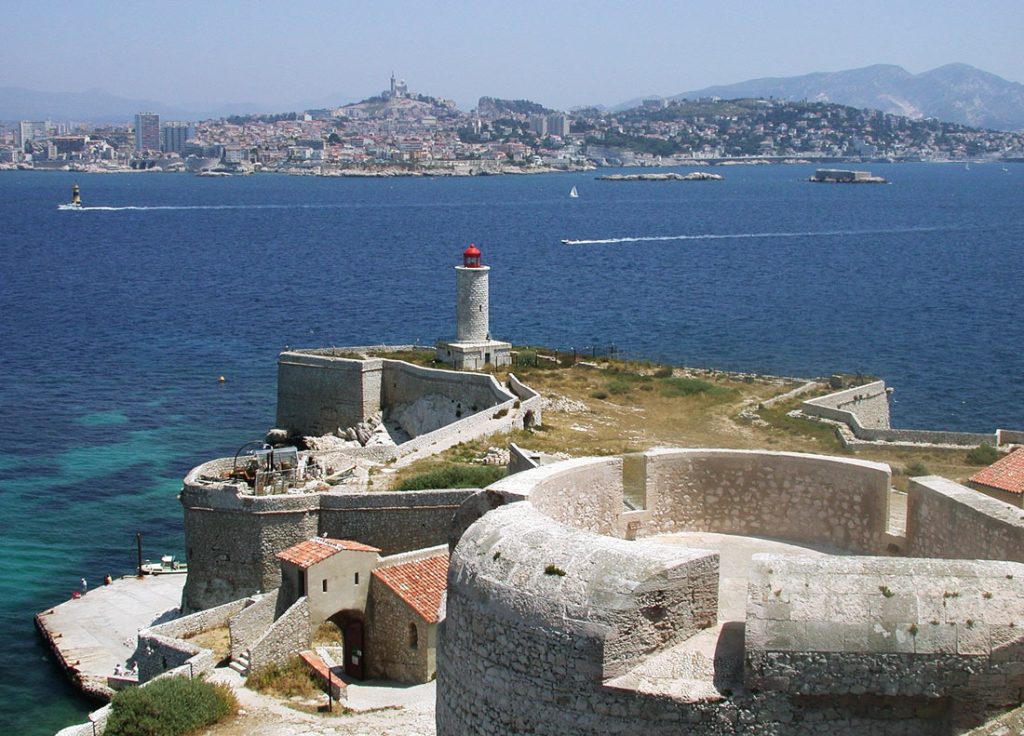
How to get there? Simple! Tourist boats regularly sail from the Old Port of Marseille. The boat trip itself is a mini-adventure, with views of Marseille, the sea, and the approaching mysterious island. When you approach the castle, it looks just as Dumas described: austere, impregnable, rising above the waves.
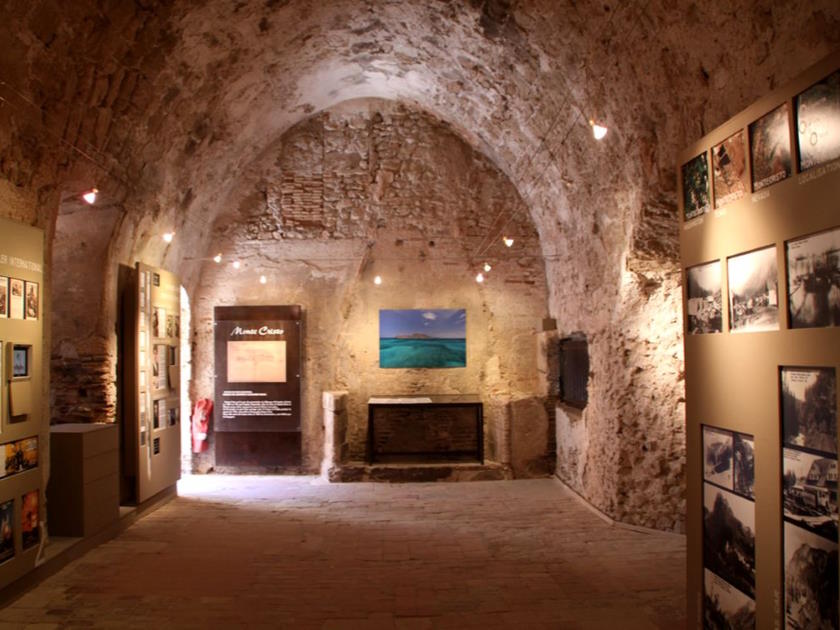
Inside the castle you can wander along ancient walls, climb the towers for stunning views of Marseille and the Mediterranean, and peek into the very “cells” of Dantès and Faria to feel the atmosphere of the grim dungeons where real prisoners sat. Graffiti and inscriptions left by inmates remain on the walls — it’s very moving and adds realism, even when the air is filled with literary fiction.
By the way, there’s nothing else on the islet besides the castle: only rocks, the sea, and the wind. This heightens the sense of isolation prisoners felt. And don’t forget to buy souvenirs! You’ll find books about Monte Cristo, magnets with the castle, and even stylized “letters from captivity” — all to memorialize the great book and its fictional hero.
Why does the Château d’If still captivate?
So what’s the secret of the Château d’If’s incredible popularity? Why does an otherwise historically significant fortress-prison attract millions from around the world?
It’s not just the beautiful views or historic architecture. It’s the story. Not dry facts about Francis I or the Huguenots, but the gripping, heart-stirring tale Dumas created. He found the perfect stage for his novel — and that stage, in turn, came alive because of the novel.
The Château d’If is a bridge between fiction and reality. It shows how profoundly literature can shape our perception of the world. It reminds us of eternal themes: injustice and revenge, hope and despair, strength of spirit and the thirst for freedom. We go there not just to look at stones, but to feel part of a great story, to walk in Edmond Dantès’s footsteps even when we know it’s only a tale.
And perhaps that’s the main charm of the Château d’If. It is living proof that sometimes the most interesting things happen not in plain sight but in our dreams and books. That occasionally fiction can glorify reality far more than any historical event. And we readers and travelers gladly surrender to that. After all, isn’t it wonderful to believe in a miracle for a while, even if it’s written in the pages of a novel?