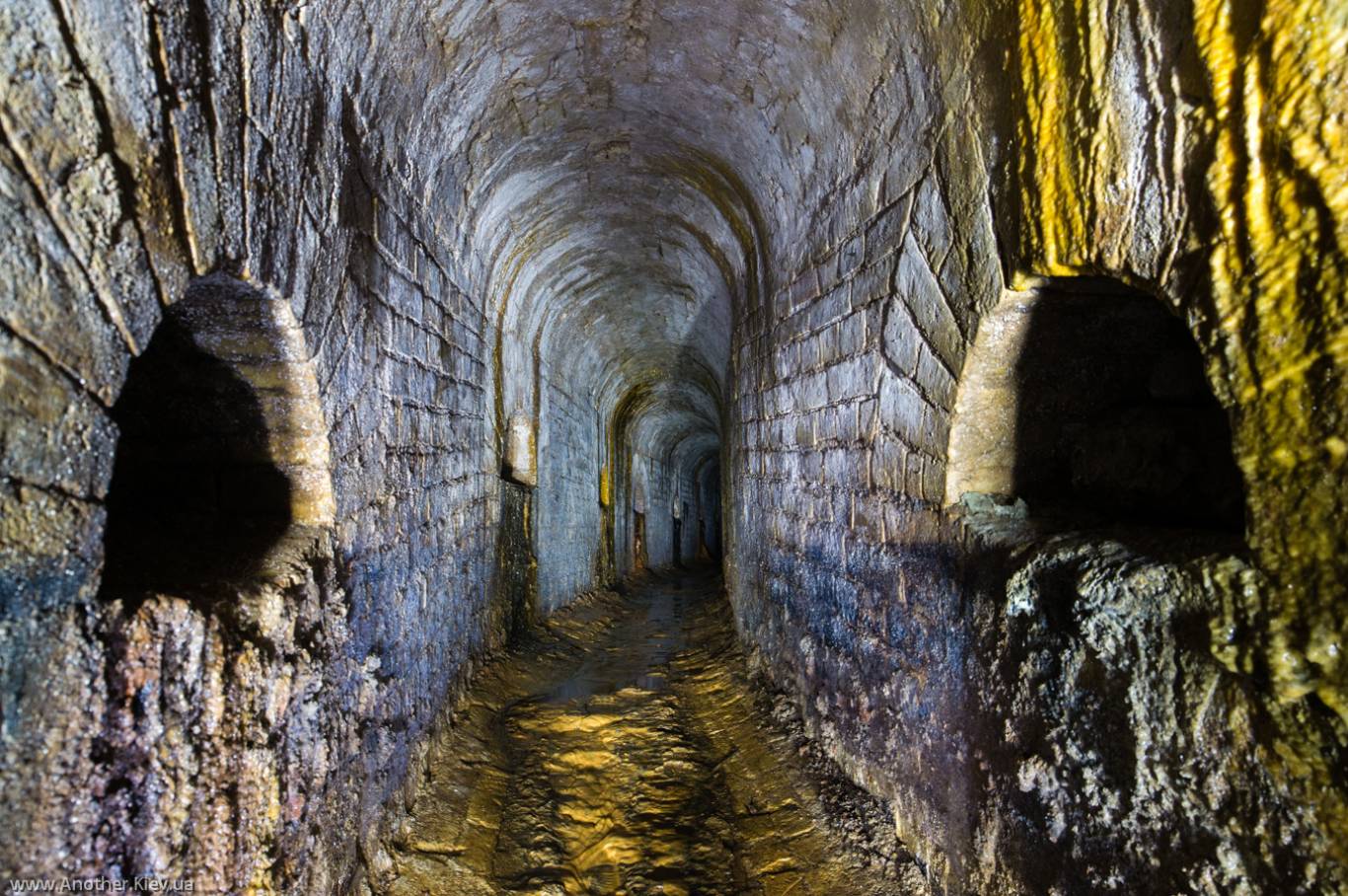
Hi there! If you think you know Kyiv because you’ve strolled down Khreshchatyk, admired the chestnut trees, and taken selfies on Andriivskyi Descent, I’m here to disappoint you. Or, rather, pleasantly surprise you. Because the most amazing, the most mysterious, and sometimes the creepiest Kyiv is located… right beneath your feet! That’s right, today we’ll dive into the world of the capital’s underground secrets, and I promise it will be an adventure more thrilling than any blockbuster. Ready? Let’s go!
Metro: Not Just Transportation, But a Museum and Bomb Shelter
Let’s start, perhaps, with the most obvious, but no less impressive – the Kyiv Metro. It might seem like just a metro, they’re everywhere. But the Kyiv one is something special! To begin with, it’s one of the deepest metros in the world. As you descend on these endless escalators, you feel like you’re embarking on a journey to the center of the Earth, only with air conditioning and advertising posters.
And what about Arsenalna station? It’s officially recognized as the deepest in the world – 105.5 meters underground! Imagine, almost like a 35-story building, but upside down.
Why so deep? Well, firstly, geology – Kyiv stands on high hills, and to lay tunnels under the Dnieper, it was necessary to go to a considerable depth. Secondly, don’t forget that it was built in Soviet times, and each station was designed with the aim of being a bomb shelter as well. And it came in handy! During the full-scale invasion of 2022, the metro became a real home for thousands of Kyiv residents, saving them from missile strikes.
There’s no time for jokes here; you feel the full seriousness and power of these underground structures. Each station is not just a stop; it’s a work of art with unique architecture and history. From Zoloti Vorota to Slavutych – it’s like an underground museum, only very fast.
Secret Rivers: Where Are Kyiv’s “Veins” Hiding?
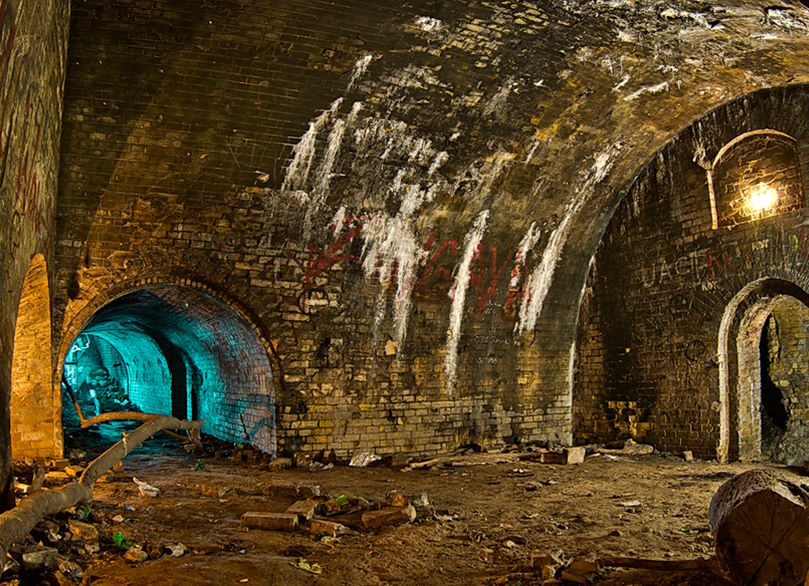
Now let’s move on to something more mystical. Kyiv stands on numerous rivers and streams, but where are they? You don’t really see them because most of them have long been… driven underground. Yes, such a sad fate befell many of the city’s waterways. The most famous of them are Lybid, Pochaina, Klov, and Polevaya.
Once upon a time, these were full-fledged, living rivers, where even ships sailed, and life bustled around. But the city grew, the rivers became shallow, polluted, turned into fetid streams, and the authorities decided to hide them away from view, in huge concrete collectors. And now these rivers flow somewhere there, deep under the asphalt and buildings, whispering their secrets and sometimes even… scaring!
During heavy rains, they turn into powerful streams that rush along their underground “pipes” with a roar. Diggers say that the sound of the Lybid River flowing underground is something incredible and terrifying at the same time. It’s like the pulse of the city, its hidden circulatory system, which we never see but which is always with us.
Stalin’s Underground Tunnels: Why and Where?
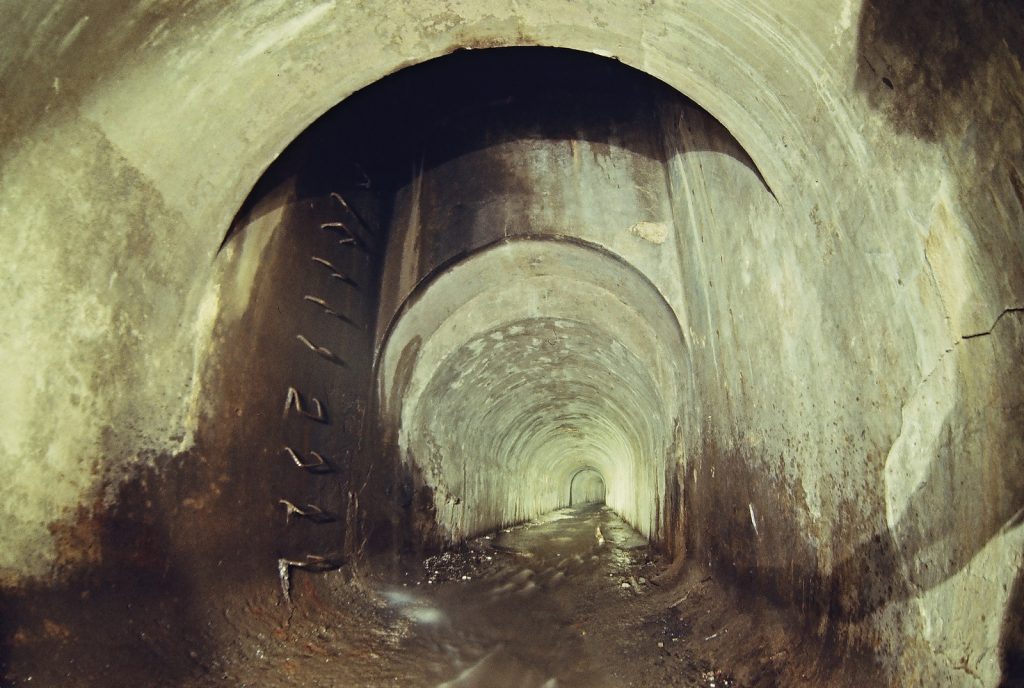
And this is a pure spy thriller frozen in concrete. During the Second World War, or rather, before it and at its very beginning, Stalin conceived an ambitious and, of course, top-secret project – the construction of two railway tunnels under the Dnieper. One in the Obolon area, the other in Osokorky. The goal? To create backup railway tracks for transferring troops and cargo in case the bridges across the Dnieper were destroyed.
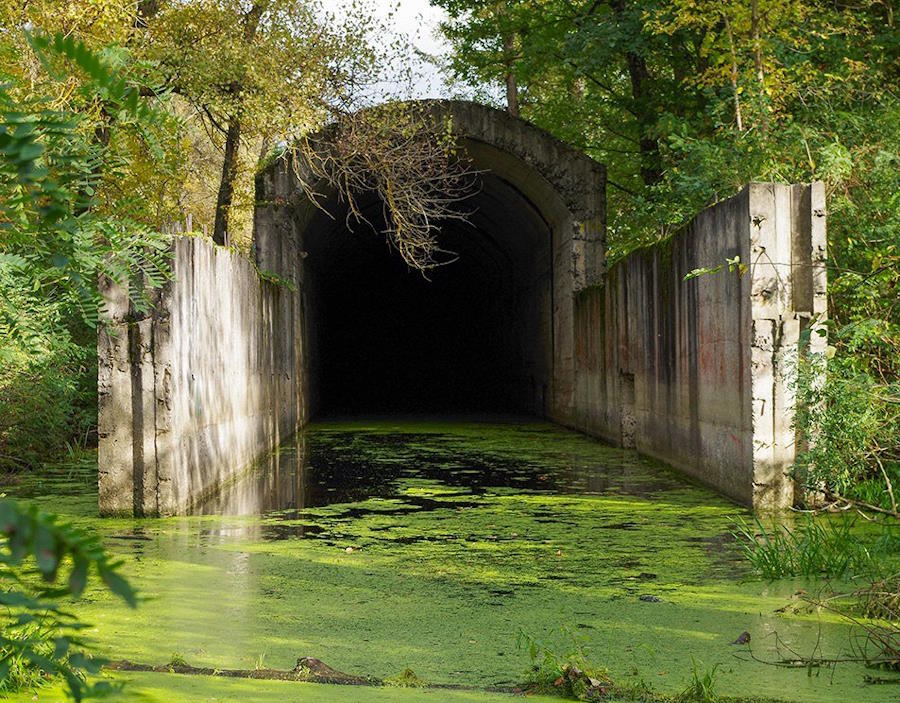
The project was gigantic! Hundreds of workers, special equipment, incredible efforts. They began building from two banks towards each other. But the war interfered with the plans, and construction was stopped. After the war, it was never resumed. And what remained? What remained are huge, abandoned, flooded tunnels-collectors that go deep underground under the Dnieper.
These are such colossal concrete pipes, full of water, which store the echo of unfulfilled military plans. Some of them even tried to use them as bomb shelters or warehouses, but for the most part, they just stand as a monument to imperial ambitions and a grandiose failure. It’s almost impossible and extremely dangerous to get there, but the very fact of their existence stirs the imagination.

Catacombs and Caves: From Shrines to the Unknown
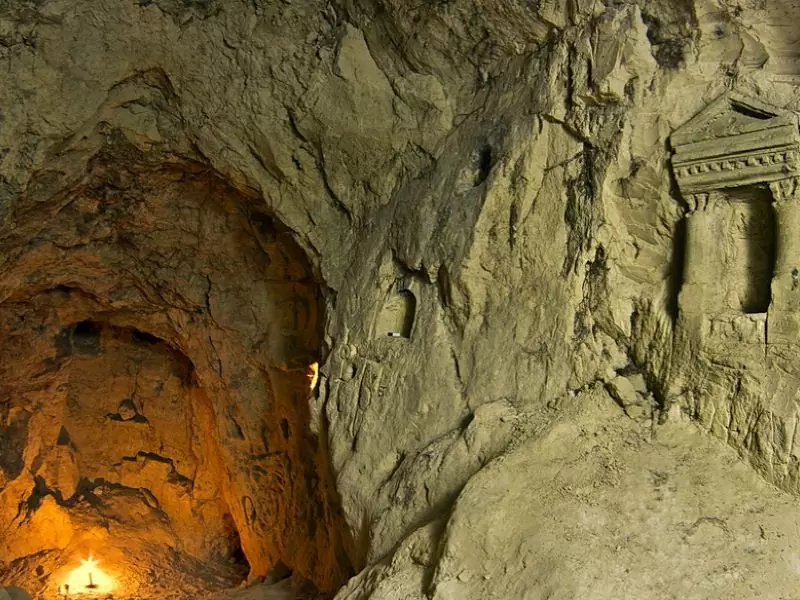
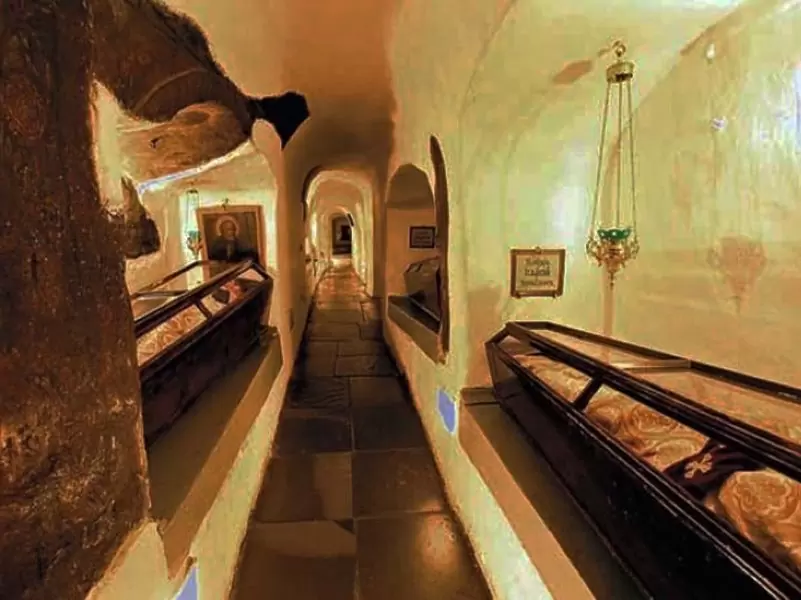
When it comes to Kyiv caves, the first thing that comes to mind is, of course, the Kyiv Pechersk Lavra. These ancient underground labyrinths, dug by monks by hand, are not just a tourist attraction, they are a real shrine where the relics of saints rest, and the air is saturated with centuries of history and prayers. You need to move through them with a candle, in complete silence, and the atmosphere there is very special – both reverent and a little creepy.
But besides the Lavra, Kyiv, as it turns out, is full of other, lesser-known, or even forgotten caves and catacombs. Under the old districts of the city, under Podil, Pechersk, sometimes entire systems of underground passages are accidentally found. These may be ancient drainage systems, wine cellars, secret warehouses, or even just abandoned basements, which over the years have become overgrown with legends and turned into real labyrinths.
Who built them? Why? Many of these secrets remain unsolved, adding even more mystique to Kyiv. Some of them are even called “secret catacombs of Kyiv,” access to which is only available to the most desperate researchers.
Bunkers and Shelters: Echoes of the Cold War and Modernity
The Soviet era left Kyiv not only a deep metro but also a whole network of bunkers and civil shelters. Starting from the legendary “Stalin’s bunker” (the existence of which is still debated by historians – whether it exists or it’s a myth), ending with thousands of smaller shelters under residential buildings, schools, and factories.
Most of them were built during the Cold War when the threat of a nuclear strike seemed quite real. Some of these bunkers are real underground cities, with ventilation systems, water supply, food supplies, and everything necessary for a long stay.
In peacetime, many of them were abandoned, looted, turned into landfills, or simply walled up. But some are still listed on the city’s balance sheet and are periodically inspected. And during the recent events of 2022, as we have already said, many of them regained their function, showing that old Soviet engineering solutions can be quite viable. It’s difficult to get into them, of course, but sometimes diggers find ways, and then they talk about incredible finds – from old equipment to forgotten newspapers.
Collectors and Drains: The Dark Side of the City Sewerage
And finally, the most “wet” and dirty, but no less interesting – is the system of city collectors and drainage tunnels. These are, in fact, huge underground arteries that collect rainwater, meltwater, and sometimes sewage (although the latter, according to the rules, should go through another system, but… Kyiv is like that).
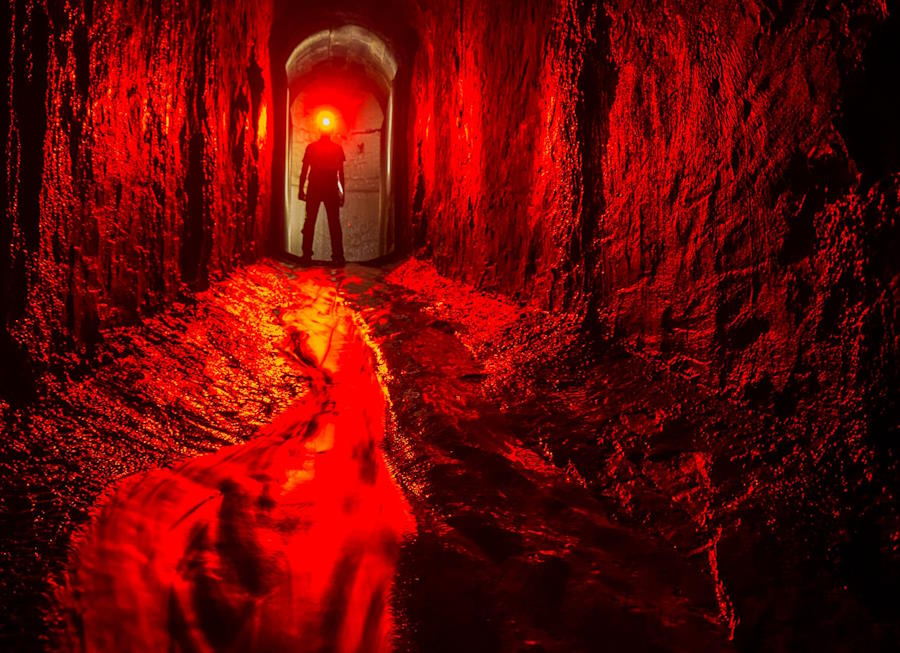
These tunnels are giant pipes or excavated passages through which the underground river carries its waters. They can be both quite dry and clean (drains) and very foul-smelling (stormwater collectors, especially after rain). These are not just pipes; it’s a whole world underground with its branches, descents, ascents, waterfalls.
Here you can hear the water dripping, the stream rumbling somewhere in the distance, the echo carrying any sound. It is here that rats the size of a cat live, and sometimes curious urban explorers wander in. Walks in such places require maximum caution, knowledge of the diagrams, and, of course, special equipment. It smells of dampness, mold, and sometimes very specifically, but the feeling of being on such a scale underground is unforgettable.
Who Are These “Diggers” and Why Do They Climb There?
All these stories about underground rivers, tunnels, and bunkers would not be so accessible to us if it weren’t for a special category of people – diggers. These are not just thrill-seekers; they are real researchers of the urban dungeon. They study maps, look for entrances, master climbing equipment, diving, learn to navigate in pitch darkness and overcome dangers.
Why do they do it? Well, firstly, it’s adrenaline and the spirit of adventure. Imagine, you are the first (or one of the few) to step into a forgotten old tunnel that has not seen the light for a hundred years! Secondly, it’s a thirst for knowledge. Diggers often find artifacts, ancient records, traces of past eras, which can shed light on the history of the city. They are the eyes and ears for those who will never dare to go down.
And thirdly, it’s just incredibly interesting! To see Kyiv from a completely different side, from the one that is not shown on postcards and in guidebooks. Of course, it is extremely dangerous, requires serious preparation, and is never done alone. So, if you suddenly caught fire with the idea of “digging,” it’s better to find experienced guides or… read their reports. It’s also exciting!
Conclusion: Kyiv – A City with a Double Bottom
This is what underground Kyiv is like. It’s not just the land under the asphalt; it’s a whole parallel world, full of secrets, stories, and sometimes creepy beauty. It’s a reminder that even the most familiar city can hide incredible depths – both literally and figuratively.
So next time, walking around Kyiv, imagine that an underground river is rumbling right under your feet, somewhere Stalin’s tunnel is abandoned, and even deeper metro trains rush by. This adds another dimension to the city, even more mystery and attractiveness. Kyiv is not only its beautiful facades and golden domes. It’s also its dark, mysterious underside, which lives its own, hidden from most eyes, life. And, you have to agree, it’s damn interesting!