The ancient Greeks asserted that the individual is greater than the nation; friends are more important than the state; and conversation around a table about divine wisdom is more worthy than any political discussions.
But if they were to learn that two and a half millennia later, entire institutions would be calculating the amount of cholesterol in a single egg, they certainly wouldn’t understand. Because in the minds of the Hellenes, food was associated not with science, but with nature, and therefore with health, beauty, reason, and divine harmony.
The Philosophy of Food: From Ancient Greeks to Our Time
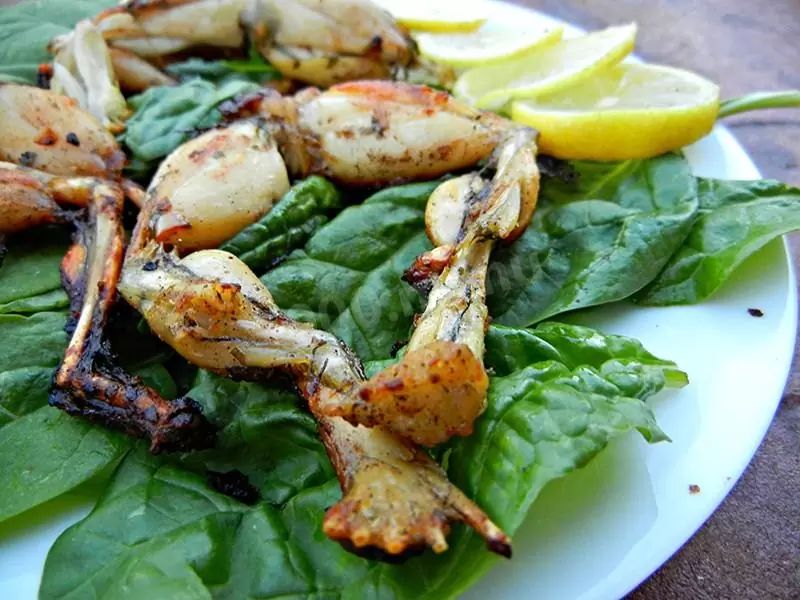
One can find many explanations for why a particular delicacy has become prevalent in a national tradition. But, as they say, until you taste it yourself, you won’t understand why people love fried grasshoppers or frog legs. Almost all the delights of national cuisines come from the depths of centuries, astonishing and surprising contemporaries with the wild imagination of cooks and the steadfast habits of lovers of “spicy” food.
That is why the world is beautiful, and with it, our food, which exists independently of clever critics and grumpy skeptics. It has long been known that independence always evokes an influx of far from the worst human feelings, such as healthy curiosity and respectful attention. Approaching the “diets” of near and far peoples in this way, we offer some curious culinary facts.
Exotic Menu: Flowers, Ants, and “Hundred-Year” Eggs
As for Tibetan delicacies, the first place for originality and refinement should be given to rhododendron flower jam. The buds of the giant flower are soaked in a glass filled with water and honey. For several weeks, the vessel is kept in the sun. The flower slowly grows, absorbing the juice of the honey solution. Then it is kept in the air for several more days so that it is covered with a crispy crust, but without losing its appearance and aroma. Before consumption, the petals are sprinkled with powdered sugar.
Inhabitants of many Indian settlements in South America, who are still isolated from the influence of modern civilization, enjoy eating fried ants and literally get sick from eating a chicken egg or fried chicken. In Korea, as in pre-Columbian America, one of the most popular delicacies is dog meat. But a Korean will never eat frogs, which the French love so much.
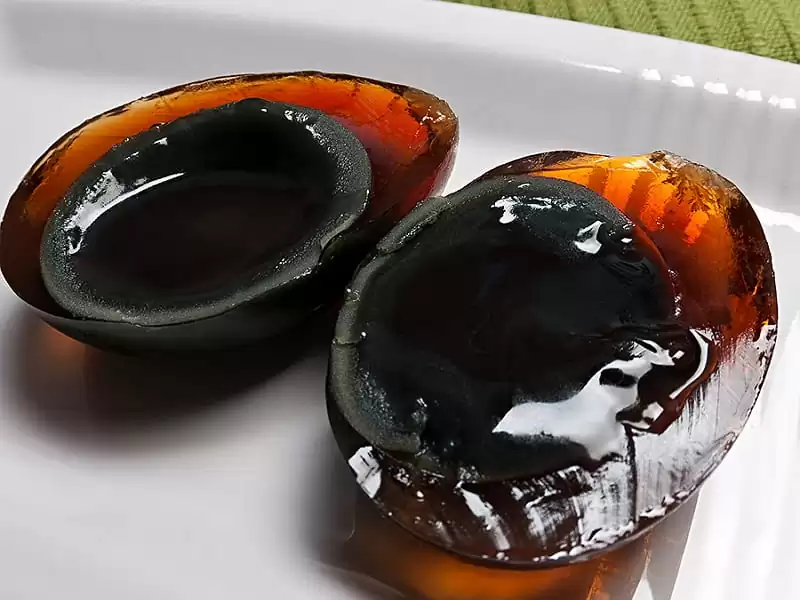
In some regions of Vietnam, it is customary to eat a chicken egg smeared with clay, aged in the ground for a hundred days. As a result of fermentation, the white and yolk turn into a shiny jelly with peculiar taste properties.
The Phenomenon of the Toubou Tribe: Endurance Without Meat
In the heart of the Sahara, where there is not even sand, live the Toubou, a nomadic tribe considered one of the oldest tribes in Africa. In the early 90s, an international expedition worked in these places, which occupy the northwestern part of the Republic of Chad. None of the scientists could have lived here for even a few days without special tents, refrigerators, air conditioners, and stocks of varied food.
And the Toubou covered up to 90 km per day in forty-five degree heat. Their diet is practically the same all year round: thick tea infused with desert herbs; a few dates; a handful of millet seasoned with palm oil, crushed roots. The Toubou live long and retain their teeth into old age. Infant mortality is also low here. The Toubou are unfamiliar with the taste of meat. Soup made from canned meat, offered by scientists, caused them disgust.
Traditions and Rituals: From the Mediterranean to Japan
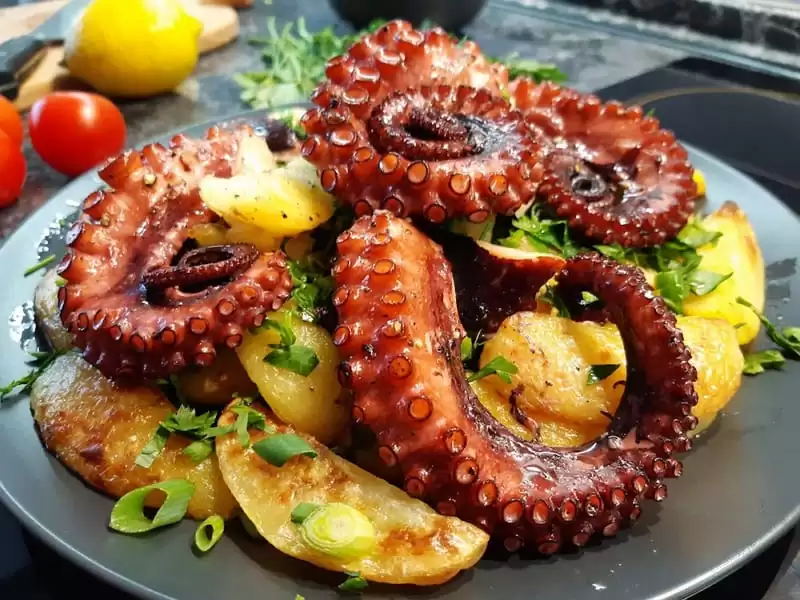
In a number of countries in the Mediterranean basin, stewed octopus with young potatoes, garlic, and cloves is still one of the favorite dishes.
As you know, rice is the most important of the products in the diet of the Japanese. It is called “gohan” – the main food. The worship of rice sometimes takes on an almost mystical religious meaning. In rural temples, the primitive rite of eating rice is still preserved. Before the venerable elders, the priests place large bowls in which boiled rice rises in a high, almost half-meter-high hill.
Taking chopsticks, the elders begin to leisurely but steadily consume the dish, washing it down with soy sauce or green tea. Under the excited encouragement of the fans, the elders cope with the food surprisingly quickly, as if symbolizing future abundance and a good harvest.
Fried and raw grasshoppers are perhaps the most exquisite dish for a significant part of the population of Uganda. At the same time, their close neighbors, the Tuareg, do not eat anything that “crawls, swims, or flies.”

Tsampa – The Tibetan Secret to Energy
The basis of the Tibetan diet is tsampa. It is prepared from barley, which is roasted until it becomes golden brown. Then the barley is ground into flour, roasted again, poured into a bowl, and poured over with hot tea with melted butter. The contents are thoroughly kneaded and shaped into a galette. Salt, borax, and yak butter are added to taste.
The prepared tsampa is rolled up, cut into pieces, and served in the form of donuts or cookies. If there is nothing to add to the tsampa, then it is nutritious enough on its own. Some monks live on tsampa and tea all their lives, from the first meal to the last. There is no strict recipe for tsampa. Its constituent parts – flour, fat, liquid – can be any.
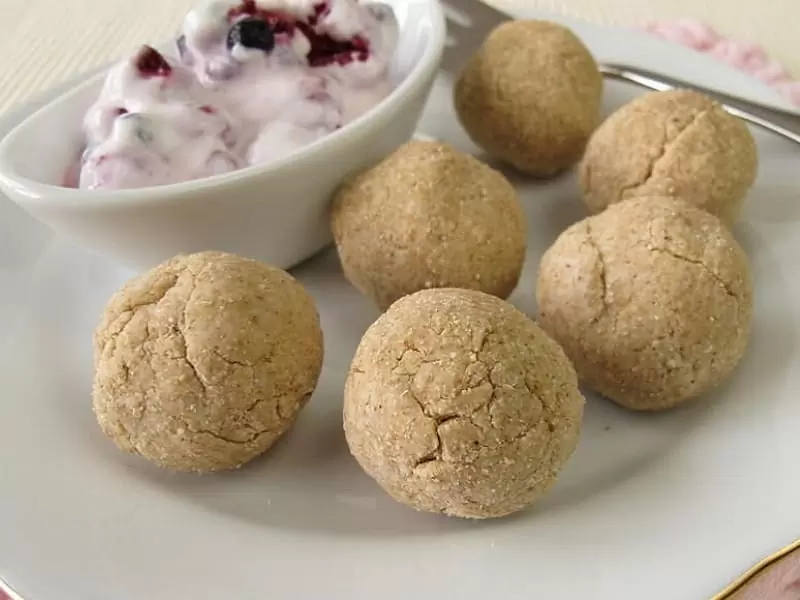
Tibetan milk tea is replaced with ordinary black tea, with honey or jam added. Tsampa is most interesting when made from rye or oat flour. Buckwheat, corn, and wheat flour may be present as additives. An important element is high-quality oil. No low-calorie compromises are appropriate in tsampa. A little oil is needed for the absorption of fat-soluble vitamins.
Tsampa can be made salty or sweet, in the form of a thick dough or liquid porridge. In any case, after such an energetic breakfast, there are no thoughts of food until lunch.
Recipe: 1 tablespoon of flour or mixture (per serving), butter, salt, sugar, tea to taste. Mix the roasted flour with salt and sugar, add finely chopped butter, add a little hot freshly brewed tea and stir until a homogeneous dough is obtained. Leave the tsampa to swell for a few minutes, then add more tea to the desired consistency.