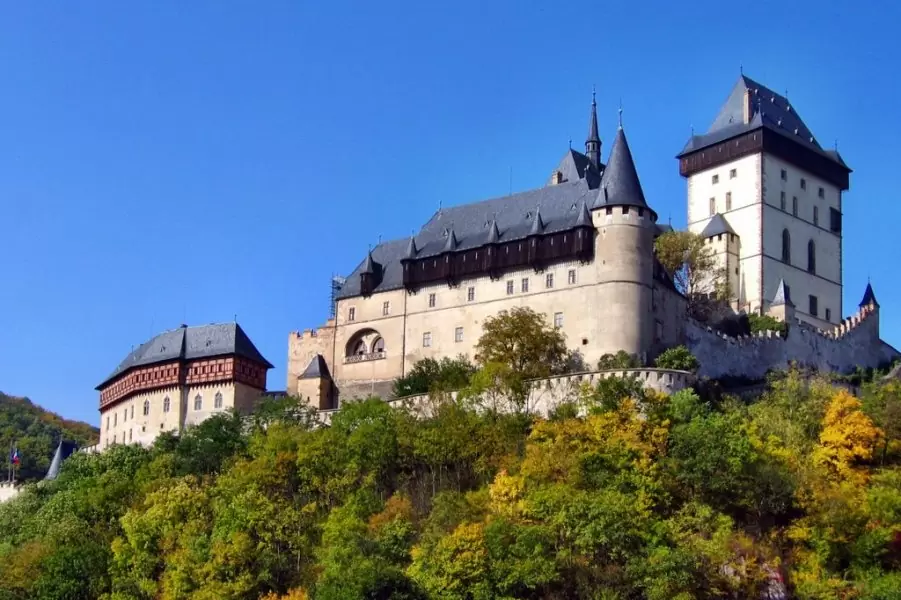
Numerous silent witnesses to the grandeur of medieval rulers still adorn the landscapes of modern countries. From strategically important objects, they have transformed into monuments of a bygone era, when most problems of national importance were resolved with the language of steel. Castles and fortresses served not only as symbols of status, but also as guardians, protecting the borders of lands from enemy encroachments. “Charles’ Stone” – that is what they called the castle founded by the Holy Roman Emperor Charles IV. It was destined to become a repository of relics of national importance.
Charles IV’s Idea: Imperial Treasury, Defense, and Loyalty
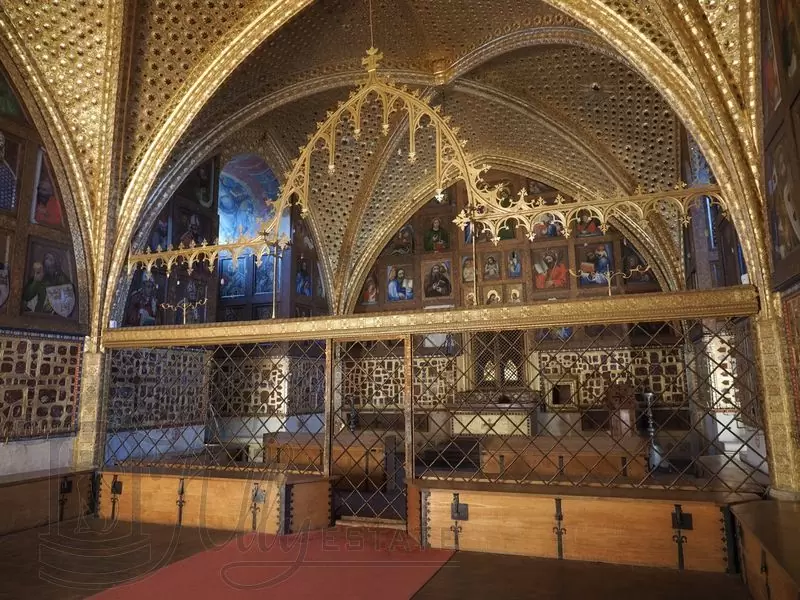
For Charles, the castle was a treasury containing all the most notable valuables of the imperial crown. Charles himself tried to refrain from publicizing the contents of the castle, as he foresaw possible discontent from the German nobility. After all, thanks to Charles, Prague had become the center of the empire, and the castle itself was located on the territory of the Czech state, and the removal of royal regalia from Germany could cause serious unrest among the German dignitaries. Despite this, Charles, without much embarrassment, annually took the coronation regalia to Prague, where they were displayed to the honest folk in Charles Square.
In Charles’ time, the defense of this priceless place was entrusted to local vassals, who settled around the castle and vigilantly watched over the safety of its contents. These were mainly knights whose estates were located in close proximity to the fortress walls. If the castle was in danger, they were obliged to arrive at its shelter at the first call and defend the proud fortress to the last drop of blood. The castle itself was also not left without protection: inside it, fortress vassals served, who ensured order in it and stood guard duty at the gates.
Trial by Fire: Hussite Wars, Invasions, and Changes
On the eve of the Hussite wars, when unrest, like a plague, swept through the Czech lands, Czech coronation regalia were brought to the castle, as well as many other valuable objects from various monasteries. Thanks to this, the castle’s treasury was significantly replenished.
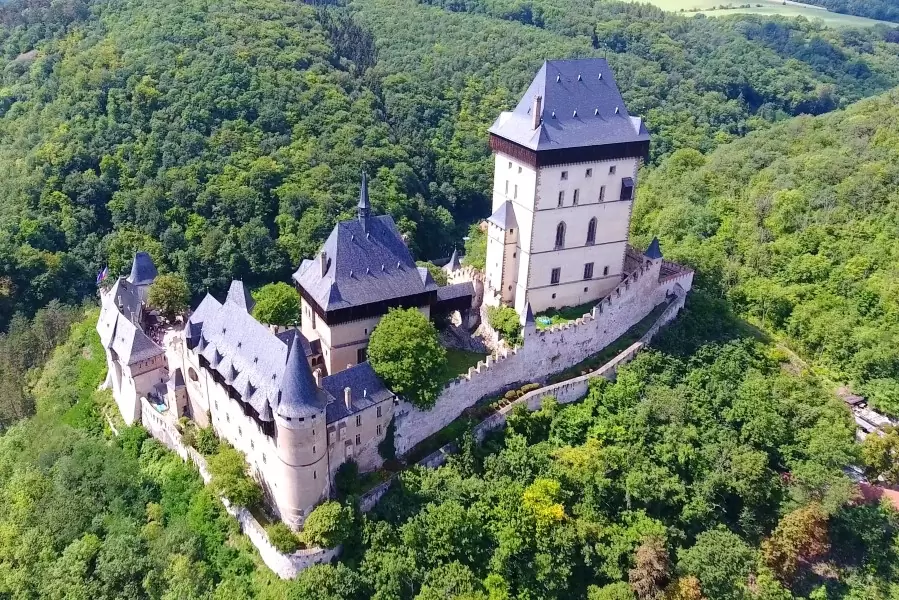
In 1427, the Hussites attempted to take the castle by storm, but after a long siege lasting more than half a year, they failed to break even into the inner courtyard. The shelling was almost around the clock: on the hills surrounding the castle, the Hussites installed siege weapons that showered the castle with stones and burning tow. Despite such active activity of the “artillery,” the castle stood firm and proved its impregnability.
At the very beginning of the Thirty Years’ War, the treasures left the castle, moving to Prague Castle. This was done out of precautionary considerations, as the conflict swept through the country with a ruthless flame of rebellion. The Czech nobility revolted against Emperor Ferdinand, which threatened serious consequences.
In 1620, the Swedes encroached on a tasty piece of the Czech crown and achieved greater success than the Hussites. All thanks to significantly improved artillery, which allowed them to break through the outer ring to the Great Tower, but the mercenaries of Frederick of the Palatinate did not allow them to break through further.
Throughout its history, the castle has endlessly changed its owners, passed from one noble family to another, and even served for some time as the administrative center of the Prague Institute for Noble Maidens. But it was never captured by attrition, storm, or other military tricks.
Enemy armies did not inflict such significant damage on it as the garrisons located in it. Since the castle is still considered one of the main symbols of the Czech Republic, many of the “servicemen” gradually dismantled it stone by stone, taking home a memory of service in this castle.
Karlštejn Today: Rebirth and a Journey into the Middle Ages
At the end of the nineteenth century, a grandiose reconstruction of the castle was started. Paying close attention to detail, the architect Josef Mocker tried to transform the castle, ridding it of the “patina of time” and the intervention of other architects. He, if I may say so, cleaned the castle, giving it its original, almost pristine appearance. After the reconstruction, visitors can observe the castle as its first owner – Charles IV – saw it.
The castle itself is located 35 kilometers from Prague and welcomes guests daily, except on Mondays. A significant break in its work is February – visiting the castle is closed in this month. Every year, many different events take place within the walls of the castle, but the most colorful is the grape harvest festival. The celebration unfolds at the end of September and is accompanied by very colorful performances.
Excellent wine and the clashes of fighters clad in armor heat the visitor’s blood, allowing them to feel part of the medieval era. Winemakers compete in their craft, delighting guests with their products and turning the process of making wine products into a show. The festival itself lasts three days – from Friday to Sunday, and in addition to the presented games, it is accompanied by a fairly rich cultural program.