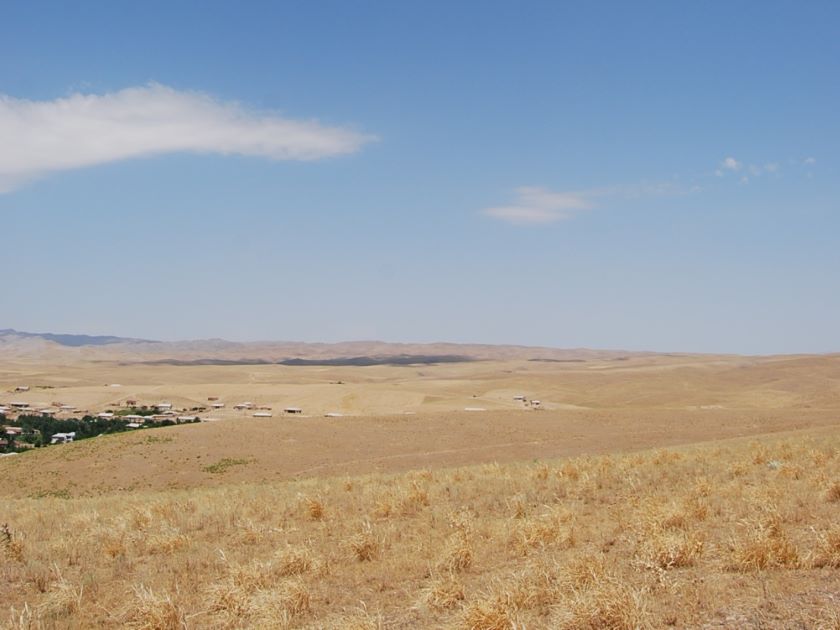
In the midst of the boundless expanses of the Kyzylkum Desert, scorched by the merciless sun, a city rises like a mirage from the tales of “One Thousand and One Nights,” seemingly untouched by time itself. Khiva is not just a point on the map of Central Asia. It’s a monumental symphony of clay and turquoise majolica, frozen music of the ancient East, which today sounds as piercingly as it did centuries ago.
In an era of globalization, when the metropolises of Europe, America, and Asia strive upwards with glass and concrete, Khiva offers modern man something completely different: the opportunity to touch genuine, pristine eternity.
Through the Sands of Time: the Living Breath of Itchan Kala
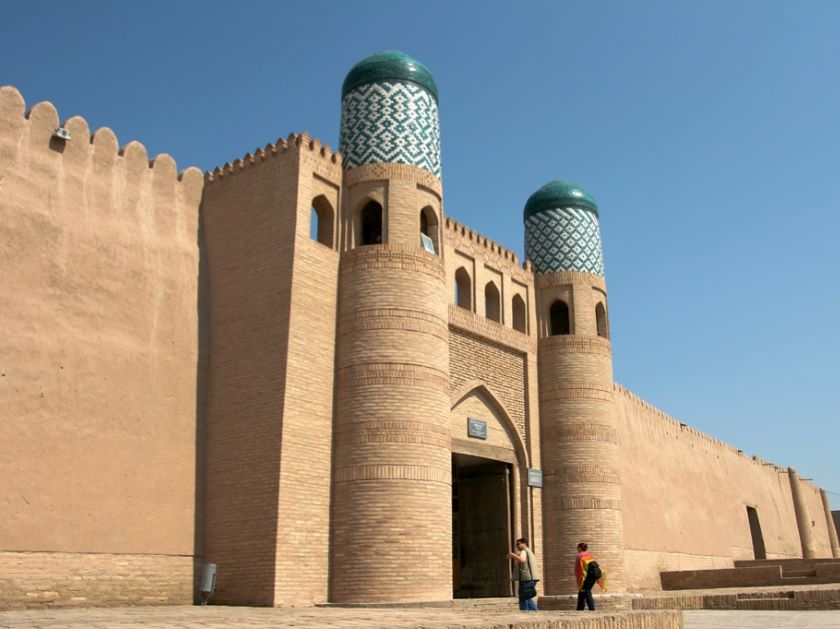
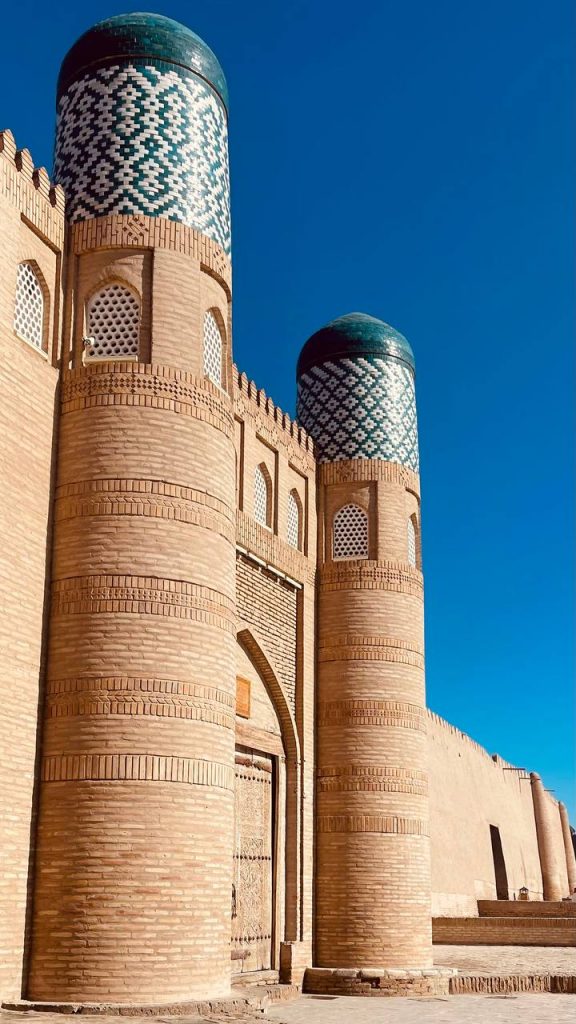
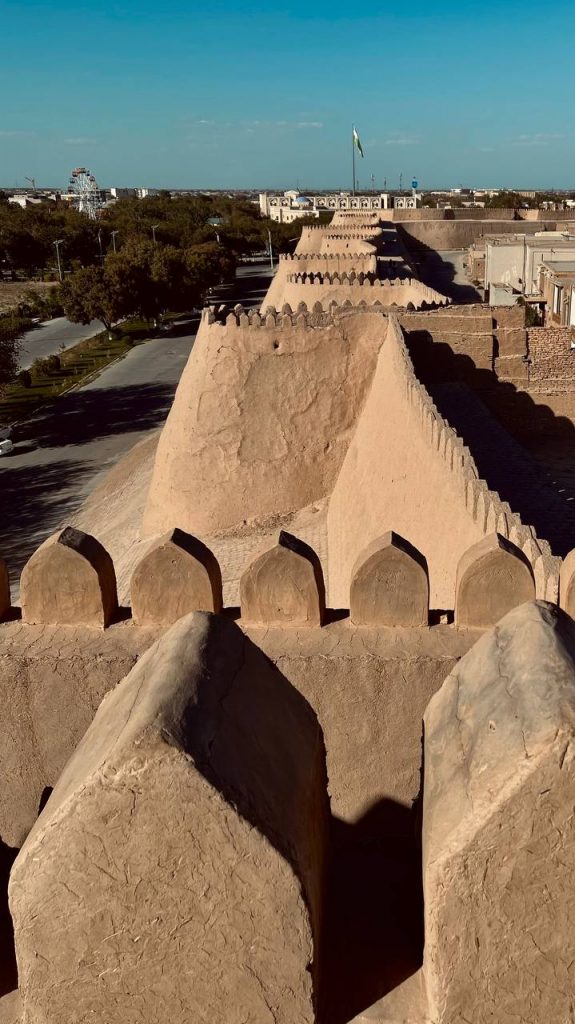
The heart of Khiva is Itchan Kala, the inner city, surrounded by mighty fortress walls. Unlike many historical centers of the world that have turned into lifeless backdrops for tourists, Itchan Kala breathes. It is one of the few open-air museum cities in the world where everyday life continues.
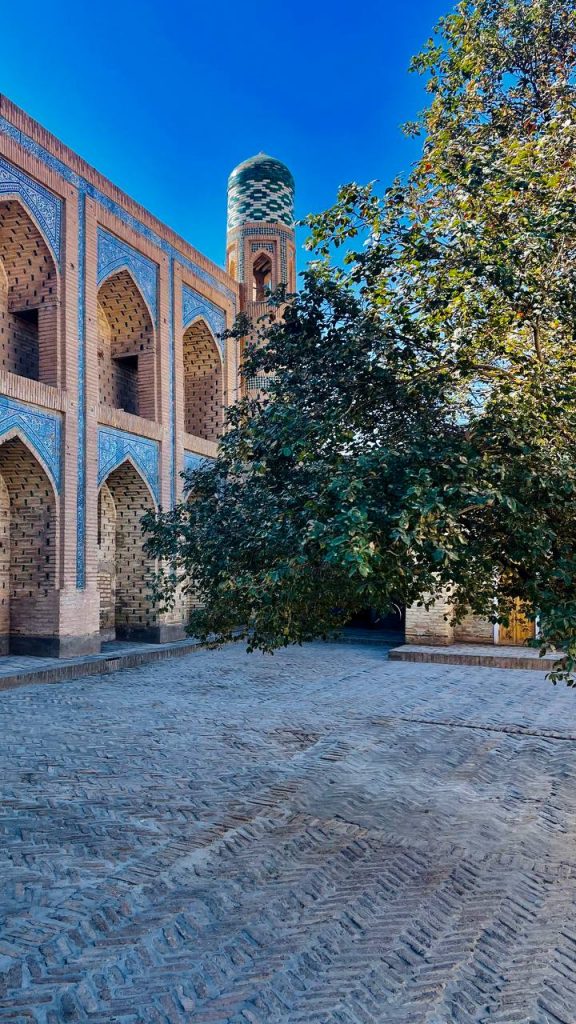
Walking along the cobblestone streets, a traveler from Paris, Berlin, or New York inevitably experiences culture shock. There are no neon signs or the usual advertising bustle here. Instead, there are deaf adobe walls, carved wooden doors made of elm, whose age is counted in centuries, and the intoxicating aroma of freshly baked flatbreads emanating from hot tandoors. The architecture of Itchan Kala is a triumph of geometry and harmony: madrasahs, mosques, and palaces are located so closely and organically that they form a single, unbroken labyrinth of history.
Crossroads of Worlds: Legacy of the Great Silk Road
Khiva owes its greatness to the Great Silk Road. In the Middle Ages, this oasis was an important transit point for caravans traveling from China and India to Europe and the Middle East. In the bustling bazaars of Khiva, merchants from the Venetian and Genoese republics, Arab scholars, Indian spice traders, and Persian poets met.
Today, we talk a lot about globalization, but it was here, in the shadow of Khiva’s minarets, that globalization existed hundreds of years before the advent of the Internet and transatlantic flights. Khiva was a place of exchange not only for silk, spices, and jewelry, but also for advanced ideas, philosophical concepts, and technologies that subsequently had a huge impact on the Renaissance in Europe.
Symbols Pointing to the Sky: from Kalta Minor to Islam Khoja
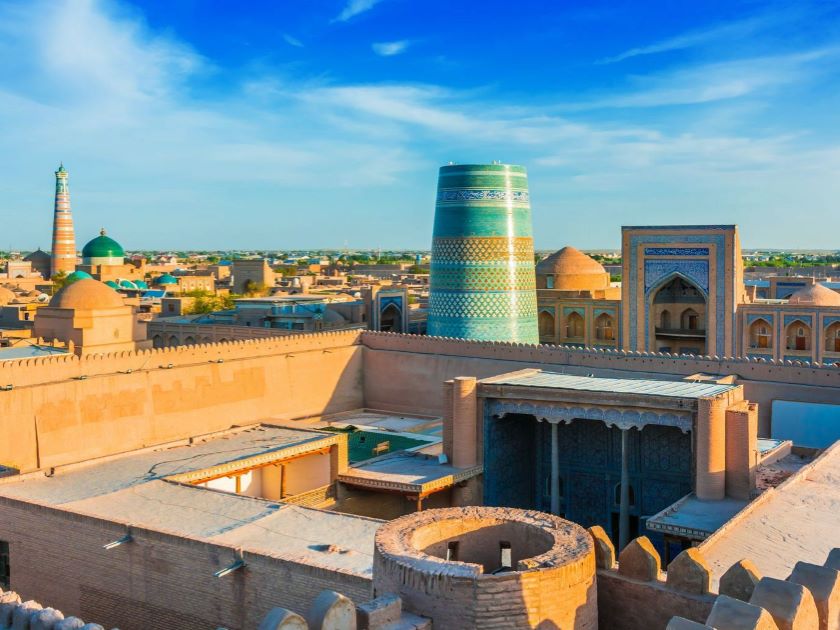
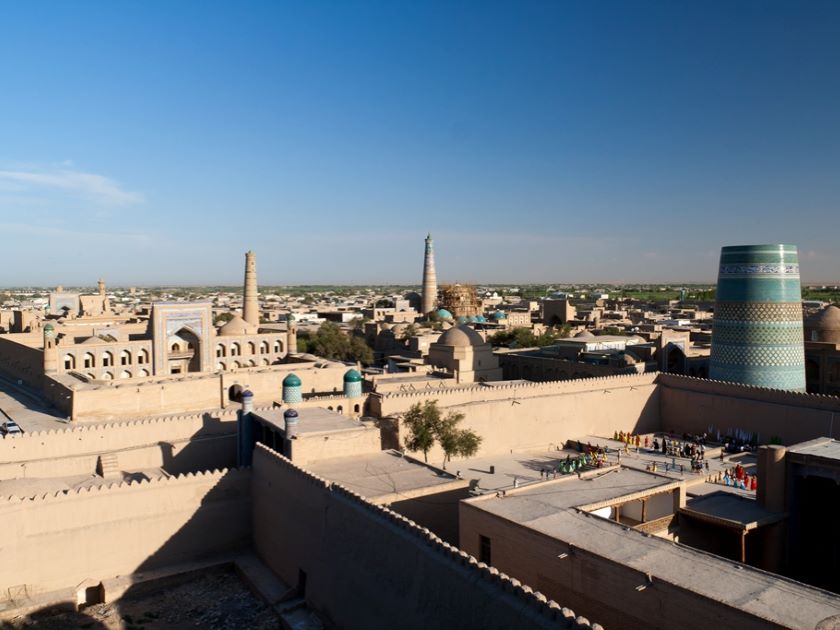
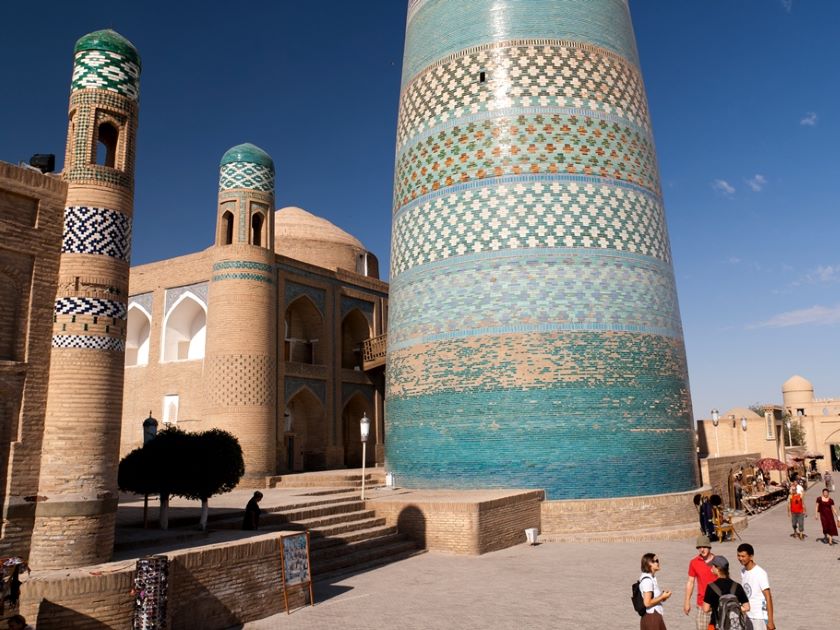
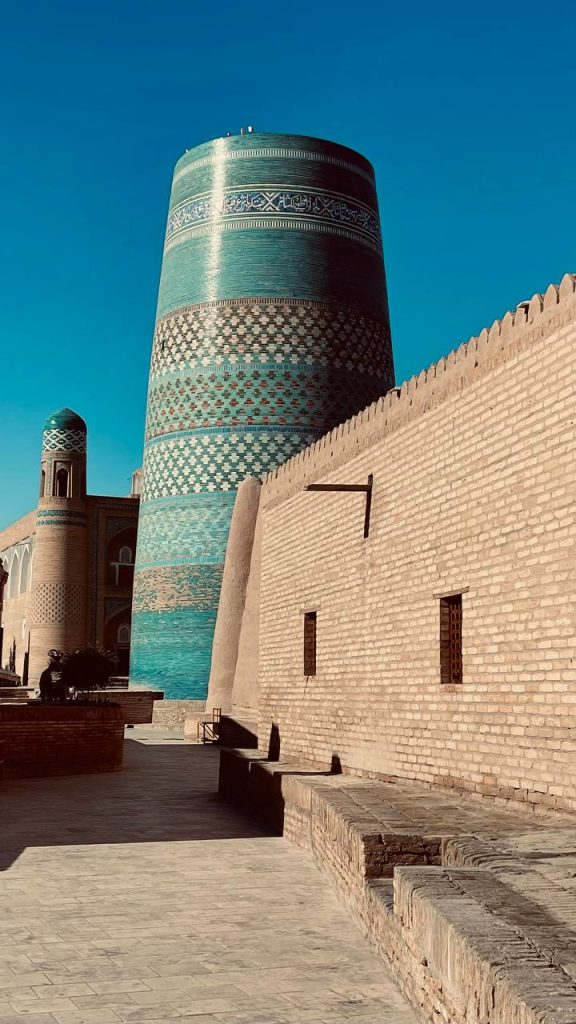
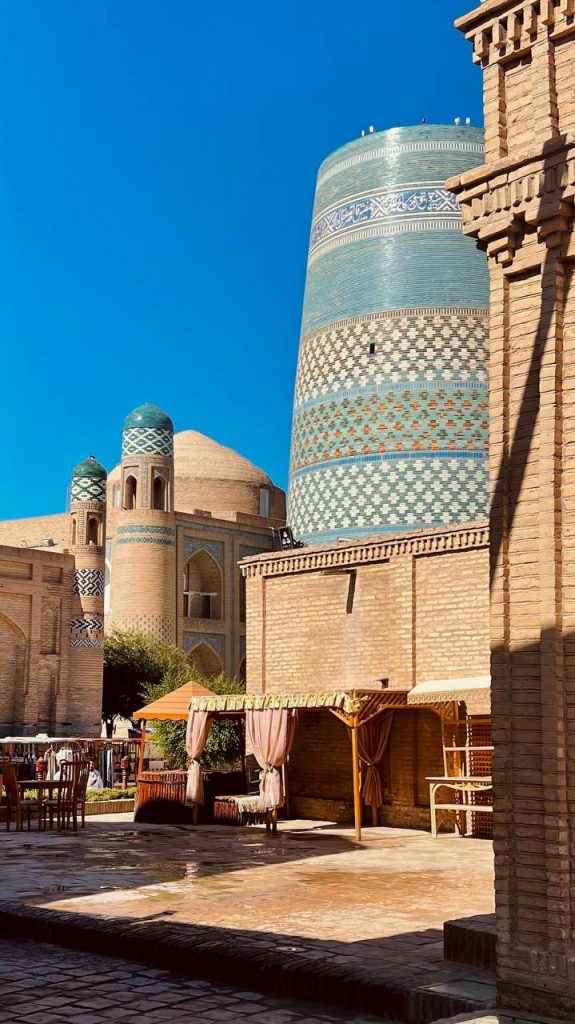
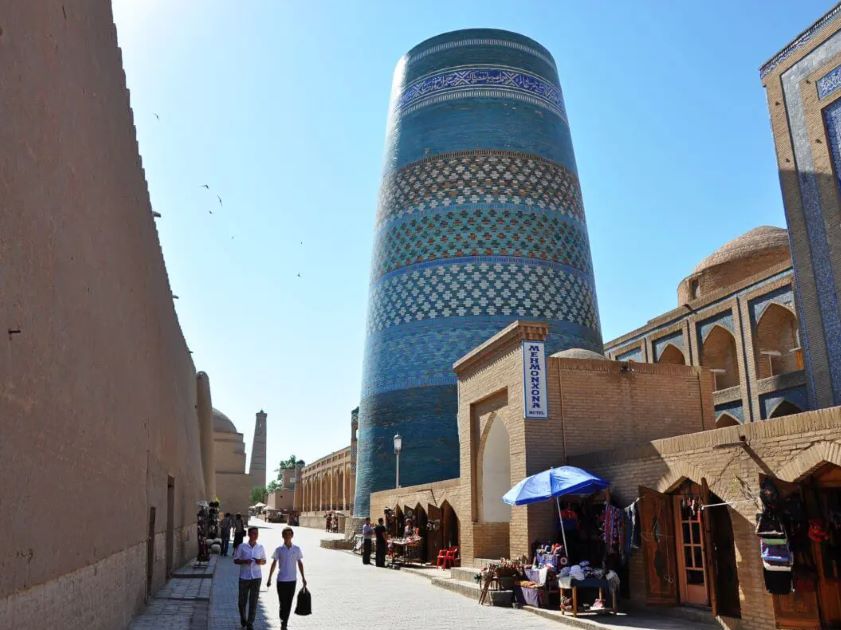
The architectural silhouette of Khiva cannot be confused with any other city in the world. The first thing that catches the eye of the traveler is the grandiose, but never completed, minaret of Kalta Minor. Completely covered with glazed tiles of incredible shades of blue, light blue, and green, it was supposed to become the tallest in the entire Muslim East, so that, according to legend, from its top one could see distant Bukhara. Today, this “short minaret” is paradoxically the most recognizable symbol of the city.
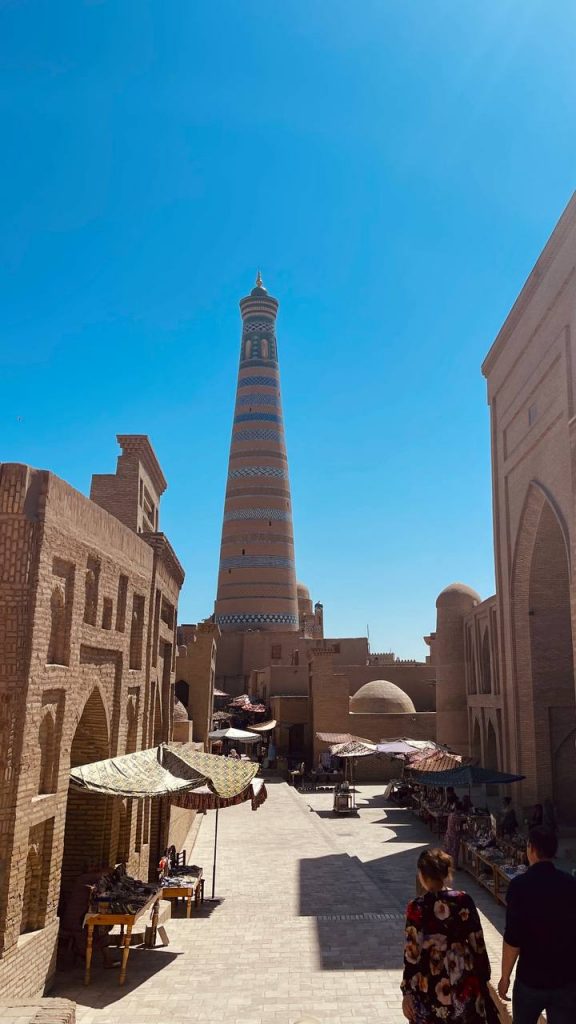
In contrast to it is the elegant minaret of Islam Khoja, piercing the azure Uzbek sky like an arrow. Having overcome the narrow spiral staircase and climbed to its observation deck, modern guests of the city can take a look at the panorama that has hardly changed over the past centuries: a sea of flat roofs, flashes of turquoise domes, and the endless yellow desert embracing the oasis from all sides.
Geniuses of the Sands: Birthplace of Mathematics and Astronomy
The beauty of Khiva is not only in its stones, but also in its intellectual heritage. In the 9th century, the great scientist Al-Khwarizmi was born and worked in this region. It was his name, Latinized by European scientists as Algorithmi, that gave the modern world the word “algorithm” – a fundamental concept of computer science, on which today the entire silicon civilization is built, from the operation of search engines to artificial intelligence.
In addition, the word “algebra” came from the name of his main work “Kitab al-jabr wa-l-muqabala”. Al-Khwarizmi’s works, translated in Spain and Italy in the Middle Ages, forever changed European science. Standing today in the squares of Khiva with a modern smartphone in hand, it is difficult not to feel awe at the realization that the mathematical logic that makes this device work was born here, under the scorching desert sun.
Khiva Today: a Global Renaissance of an Oasis
In the realities of today, Khiva is experiencing a real renaissance. Included in the UNESCO World Heritage List, it has become a place of attraction for sophisticated travelers from all over the globe. Today, you can hear Italian, French, Japanese, and English on the streets of Itchan Kala.
Modern infrastructure is carefully integrated into the ancient fabric of the city. Travelers arrive here on high-speed trains or airplanes, spend the night in boutique hotels converted from old merchant houses, where high-speed Wi-Fi and modern climate control systems are hidden under authentic wooden ceilings. Khiva has become an ideal place for “digital detox” and cultural retreat, offering residents of overloaded metropolises of the West and East a chance to slow down.

The city is actively developing ecological tourism, supporting local artisans who are reviving ancient techniques of carpet weaving, wood carving, and ceramics creation. Foreign tourists take away from here not just souvenirs, but works of art that store the warmth of human hands.
Khiva is a convincing proof that true greatness does not need constant updating of facades. Its strength is in its roots. Towering among the sands, this ancient city continues to be a reliable beacon, whose light breaks through the ages, reminding the modern, ever-hustling world of the enduring value of beauty, wisdom, and harmony.