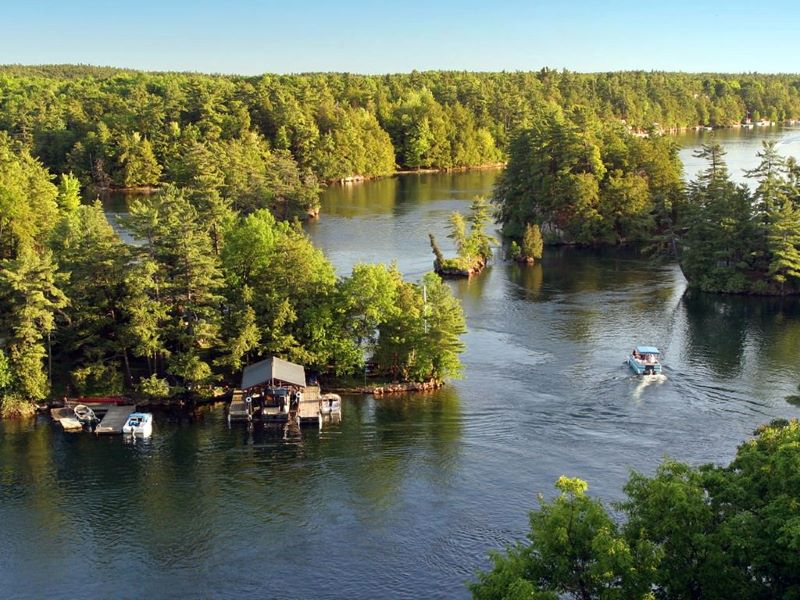
When we talk about owning islands, we usually think of oligarchs buying huge, palm-covered plots of land somewhere in the South Seas. But in one area of Canada, you don’t need millions to become an island owner. And although the harsh local climate is far from tropical, the owners of these amazing plots wouldn’t trade them for anything. And it’s no wonder: in 2002, UNESCO even recognized the Thousand Islands Park as a natural landmark of world importance.
The Origin of the Islands: Legends and Reality
If you believe the legends about the origin of the Thousand Islands, there were once several warring tribes living in this place. The people were constantly arguing and, immersed in military actions, forgot to worship their god. Wishing to reconcile them, he created a beautiful garden and gave it as a gift to the people. They admired the garden and immediately began a war for the right to own it. Upset, the god gathered the garden into a bag and began to ascend back to heaven, but on the way over the St. Lawrence River, his bag burst, and the garden fell out, but not entirely, but in parts. Its pieces, which fell into the water, became islands of fabulous beauty.
Those who aren’t satisfied with legends can turn to archaeologists and historians for a more realistic version – according to it, the islands were formed during the melting of the glacier, several thousand years ago.
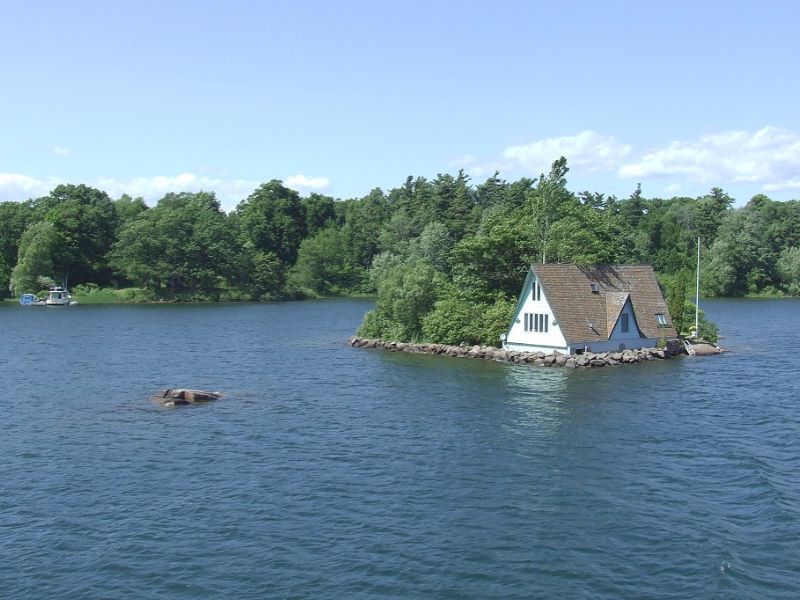
In reality, there are not a thousand islands here at all, but almost two (from 1793 to 1884 according to various sources), but you shouldn’t be surprised. The fact is that any piece of land in this stretch of the St. Lawrence River with an area of more than 1 square foot (31 square centimeters) that rises above the water all year round is considered an island. That is, even if only one tree grows on a patch of land or a person can fit, it is already considered a full-fledged island, on a par with those on which hotels and castles are built.
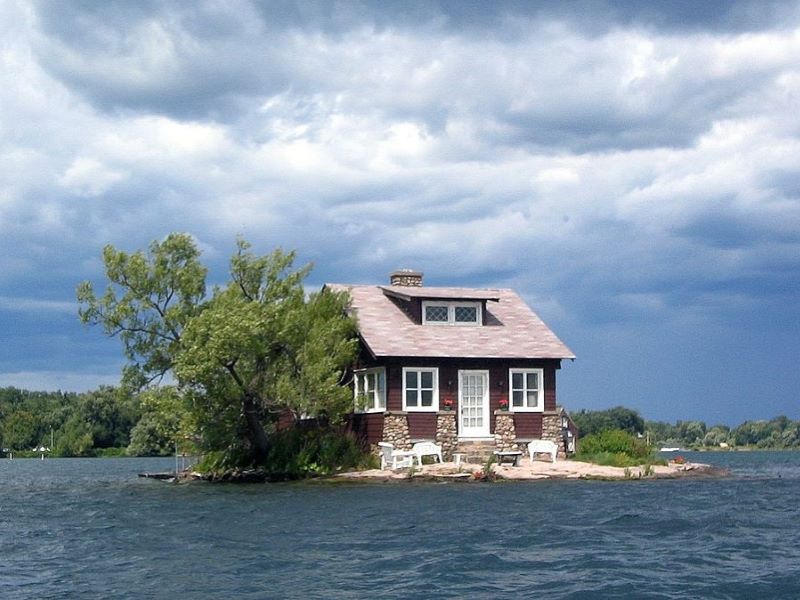
The islands, sold at ridiculously low prices in the late 19th century (the largest was offered for about $200), now cost huge sums of money, although not every owner will agree to sell their “floating ancestral nest.” On some islands, the walls of the house come right up to the water, leaving room only for a couple of chairs. Others have entire hotels with roads, golf courses, and parks. By the way, most of the hotels were built here at the beginning of the last century and still bring in excellent income.
And one more interesting fact: it was in one of these hotels that the eponymous sauce was invented, so beloved all over the world and, strangely enough, called “Russian dressing” here.
Exploring the Islands: How and How Expensive
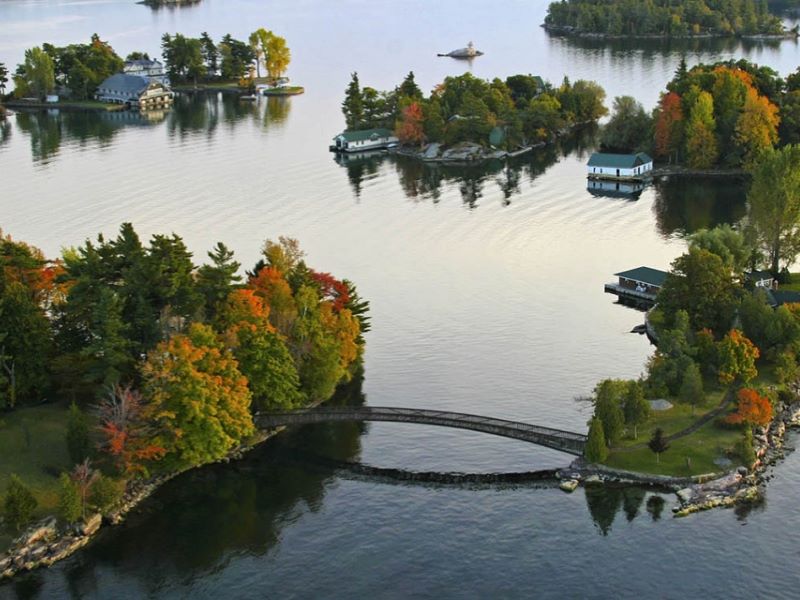
You can admire the islands fleetingly while driving along the bridge connecting the USA and Canada. But believe me, once you see them, you will want to come back here again and examine this miracle in all details. To do this, you can rent a helicopter with a pilot, or you can choose a more modest option and buy tickets for a boat tour. In a few hours, the boat will go around the most beautiful points of the park, and the guide will tell you numerous legends of these islands and quite truthful stories of their inhabitants. The cost of the trip starts from $30.
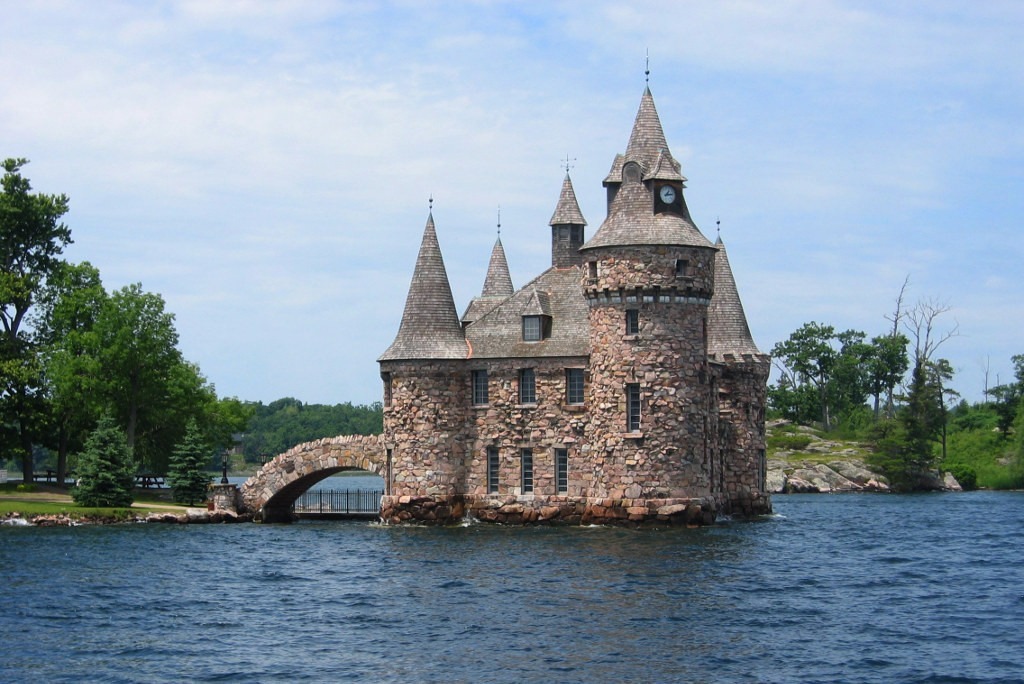
One of the mandatory stops on any excursion is the castle on Heart Island. Its history is very tragic: at the beginning of the 20th century, a wealthy German bought the island; he dreamed of building a beautiful castle here for his beloved wife. When the construction was almost complete, the woman suddenly died, and her grief-stricken husband, sending a telegram to the island about the completion of construction, never appeared here again.
Until 1970, the unfinished and decaying walls of the castle spoiled the island’s landscape, but then the American government bought it along with the land. The project was completed, and now there is a museum here.
The amazing water border separating the USA and Canada is also interesting because, traveling along the water surface, you do not notice how you overcome it. They say that one island house is on Canadian territory, but the gazebo belonging to the same owner is already on American territory. Maybe this is another legend, but it’s still worth seeing for yourself.