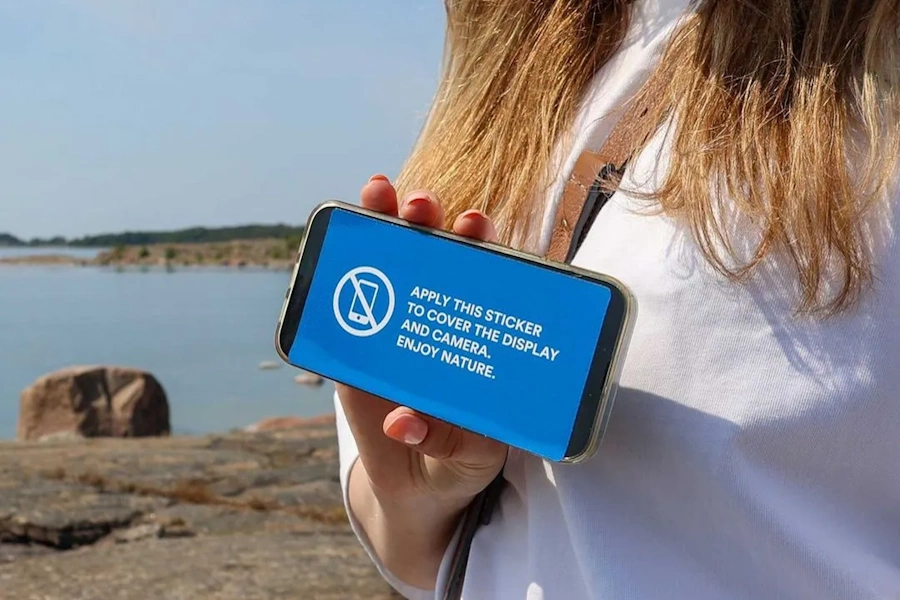
I’ll confess: I’m addicted. My phone is an extension of my hand, and the internet is my oxygen. And most of us live like this, right? We wake up and the first thing we do is check our feed, we fall asleep under the flickering screen, and in between we are constantly scrolling, liking, and commenting. And this race for a digital presence, for constant connection, for an endless stream of information – it’s damn exhausting. You constantly feel on edge, you miss something important, you’re afraid of missing a call, a message, a new meme. It’s not life, it’s an endless marathon where the prize is even more marathon.
And then comes a moment when you realize: stop. Something needs to change. You need to disconnect. Disconnect for real, and not just put your phone in “do not disturb” mode and check it every five minutes. And then he comes on stage – the digital detox. Sounds scary, right? As if they’re suggesting you give up an arm or a leg. But in reality, it’s not about giving up, it’s about rebooting. And, as it turned out, a very, very active reboot.
Why “movement” is key to detox?
At first, I confess, the idea of a “digital detox” was tantamount to torture for me. How is that, without Instagram for a week? Without news? Without the ability to google where the nearest ATM is, or what day of the week it is? It’s life taken out of context! But then I started digging deeper and realized one simple truth: our brain is designed in such a way that when it’s busy with physical activity, it’s much harder to fixate on digital habits.
Think for yourself: if you’re going up a mountain, and every muscle in your body is screaming “help!”, you’re unlikely to be thinking about how many likes your latest photo has collected. If you’re standing in a tree pose, balancing on one leg, your brain is focused on balance, on breathing, on inner peace, and not on notifications from social networks. Movement is a powerful distraction. But not just a distracting one, but a healing one. It brings us back to our body, to our sensations, to reality here and now. It’s a kind of “offline therapy” where the main tool is nature and your own body.
And so, after looking at all these “Instagrammable” pictures of people meditating against the backdrop of snow-capped mountains, and reading a bunch of articles about the benefits of hiking for mental health, I decided. My first digital detox was to be in motion.
Multi-day hiking trips away from civilization: When “connection” is not about the phone
My first experience with active digital detox happened in the mountains. I chose a multi-day hike, where it was known in advance: there would be no connection. At all. None. At first it seemed wild. How am I going to live? How will I navigate? What if something urgent happens? All these anxious thoughts swarmed in my head like bees in a hive.
But already on the first day, when we went deeper into the forest, and the landscapes around became so majestic that it took my breath away, I began to notice changes. At first, I mechanically reached into my pocket for my phone to photograph another stunning gorge. Then I remembered that there was no connection, and even if there was, the battery would run out in a couple of hours. And then something amazing happened: I started to just look. Not through the camera of my phone, but with my own eyes. To notice the shades of green, how the wind rustles the leaves, how the sun’s rays break through the crowns of the trees.
My senses became sharper. I began to hear the murmur of a stream, the singing of birds, the rustling of leaves under my feet. The smells became brighter: the aroma of pine needles, damp earth, the freshness after the rain. Food cooked over a campfire seemed like the most exquisite dish in the world. Water from a mountain stream was tastier than any bottled drink.
And most importantly: my thoughts became clearer. Without a constant flow of information from the outside, my brain began to work differently. I started thinking about things I had been putting off for a long time. Remembering forgotten ideas. Analyzing situations that I simply didn’t have the time or mental resources for before. Communication with people in the group became deep and sincere. We shared stories, laughed, supported each other. There was no need to fill the pauses with scrolling, because the pauses were valuable in themselves.
When I returned from the hike, I felt completely refreshed. My body was tired, but my mind was fresh and rested. I realized that true “connection” is not Wi-Fi, but a connection with nature, with other people, and, most importantly, with yourself.
Yoga retreats in nature: When asanas connect you to the earth
After the mountain hike, I decided to go further and try a yoga retreat. The idea: nature, silence, and no phones. It was a little different. If you’re constantly moving on a hike, then on a retreat there’s time for statics, for deep work on yourself.
Yoga in the fresh air is not the same as in a stuffy room. You feel the wind on your skin, hear the birds singing during savasana, feel the warmth of the earth under your palms in downward-facing dog pose. Every movement becomes more conscious, more connected to the world around you. The instructor, instead of simply giving commands, talked about the connection with nature, about how asanas help us ground ourselves and feel our energy.
The morning began with meditation at dawn, when the sun was just barely peeking out from behind the horizon. These moments were magical. You sit, watch the world awaken, and feel like you are part of this great process. In the afternoon – yoga classes, walks in the forest, swimming in the lake. In the evening – joint dinners and conversations around the campfire, or quiet meditations under the starry sky.
During the retreat, the phone was handed in for safekeeping. At first it was unusual. I caught myself thinking: “Oh, I need to photograph this!” And then I realized: “Why? This is my experience, I am living it right now, and not for someone else’s likes.” Gradually, this feeling of freedom from the need to share everything and everyone became incredibly liberating. I stopped being an observer of my life through the screen and became a full participant.
By the end of the retreat, I felt that my energy had returned. The distraction disappeared, my sleep improved. I began to relate differently to my body, to my breathing, to my inner state. Nature became my teacher, and yoga became a bridge connecting me with this wisdom.
Meditative practices combined with active pursuits: When “here and now” is both mountains and silence
The most interesting thing started when I tried to combine active recreation with meditative practices. This is exactly what the tour organizers were talking about, calling it “Digital Detox in Motion.” You don’t just hike in the mountains, you hike in the mountains consciously. You don’t just do yoga, you meditate during yoga.
We started practicing “walking meditation.” This is when you walk, but your attention is completely focused on sensations: on each step, on breathing, on the contact of your feet with the ground, on the movement of air around you. At first it was difficult. The brain was constantly distracted by thoughts of the past, the future, the grocery list. But over time, with practice, I began to notice how all these extraneous thoughts recede into the background, and only here and now remains.
The same goes for other activities. Swimming in a mountain lake turned into a meditation on the water, when you feel the temperature, the current, immerse yourself in a feeling of weightlessness. Rock climbing – into a meditation on balance and strength, where every grip and every step requires complete concentration.
It was in this combination – active movement and conscious meditation – that I found the deepest detox. It’s not just about turning off gadgets, it’s about switching to yourself, to your feelings, to the world around you. You don’t just not use your phone, you immerse yourself so deeply in the process that you just don’t need your phone. Your brain is busy with something far more important and interesting than endless scrolling.
Returning to reality: How not to lose balance again?
Of course, after such trips, returning to everyday life is always a little sad. Again, these endless notifications, information noise, the temptation to spend half a day on social networks. But I realized a few important things:
- Digital detox is not a one-time event, but a way of life. It is constant work on yourself. It is important not just to “disconnect” for a week, but to learn to use technology more consciously.
- Nature is my best therapist. Regular walks in the park, weekend hikes, even just sitting on a bench and watching the clouds – all this helps to maintain a connection with the “offline world”.
- Movement is freedom. Physical activity helps relieve stress, improves mood and keeps in tone not only the body, but also the mind.
- Time for yourself is not a luxury, but a necessity. Setting aside time for meditation, reading books, communicating with loved ones without gadgets is an investment in your own mental health.
My phone is in another room right now while I write these lines. I haven’t checked it in several hours. And it’s not because I don’t want to check it, but because I’m busy with something more important. And this is the most important discovery that I made thanks to digital detox in motion: the world around is so beautiful and amazing that it simply doesn’t need a filter. It needs your full, genuine attention. And this attention, as it turned out, is very easy to find when you move. In the mountains, in the forest, on the yoga mat. The main thing is to start moving. And then, perhaps, you will stop fearing your phone and fall in love with the mountains (or something else that will call you on your way).