You know, friends, there’s a certain kind of person who, upon hearing the phrase “bus tour of Europe,” starts to giggle and imagine a rickety Ikarus bus filled with grandmas and plaid suitcases. Or, conversely, they immediately conjure up romantic images in their head: castles flashing by the window, serene fields, cities changing like slides in a kaleidoscope. Well, both groups are… a little bit right, but only a little!
In 2025, a European bus tour isn’t just a “trip” anymore; it’s, I would say, a whole adventure. It’s a chance to absorb so many impressions in a short time that you sometimes don’t manage to get in a year. But, like any adventure, it requires preparation. And here, as they say, “forewarned is forearmed.” So, buckle up, grab your popcorn (or muesli, if you’re into healthy living), we’re going on a virtual tour of the realities of bus travel in 2025!
Why do we even need it? (Or why the bus isn’t just about saving money)
Let’s be honest: a bus tour is, most often, a budget-friendly way to see a lot at once. You don’t have to bother with train tickets, planes, local buses. You just sit down, and you’re taken from one beauty to another. The guide will tell you everything you need to know (and even more), and you won’t get lost in an unfamiliar city (well, unless you really try). In 2025, when the world is a little tired of chaotic flights, and eco-consciousness is growing, bus tours take on a new meaning.
It’s a way to see the world “from the ground,” to feel the distances, to see how landscapes and architecture change from country to country. It’s a slow but rich journey. Of course, it’s not suitable for those who like to lounge in one hotel for a week, sipping cocktails by the pool. But for those who want “everything at once,” who value rhythm and a change of scenery, this is just what the doctor ordered.
The dream bus (or how not to turn your trip into torture)
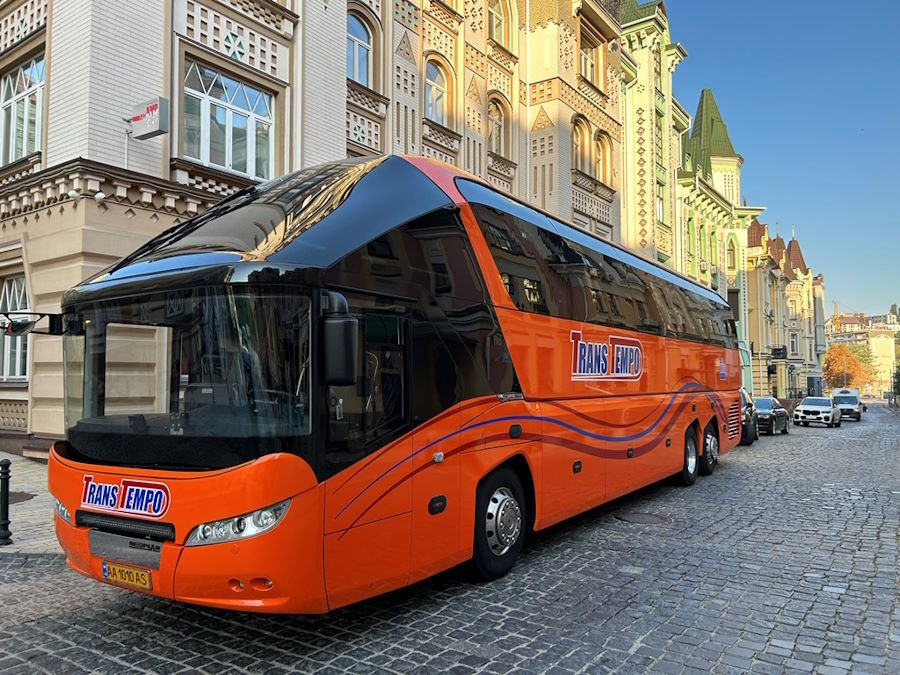
Remember those old jokes about buses without air conditioning in the heat or with a broken toilet? Forget about them! In 2025, European tour operators who value their reputation use buses that are not just Euro-class, but practically lounges on wheels. It’s not just transportation; it’s your temporary home, office, movie theater, and even bedroom.
What’s in such a bus?
- Air conditioning? Of course! And most often, individual airflow, so you don’t freeze while someone next to you is sweating buckets.
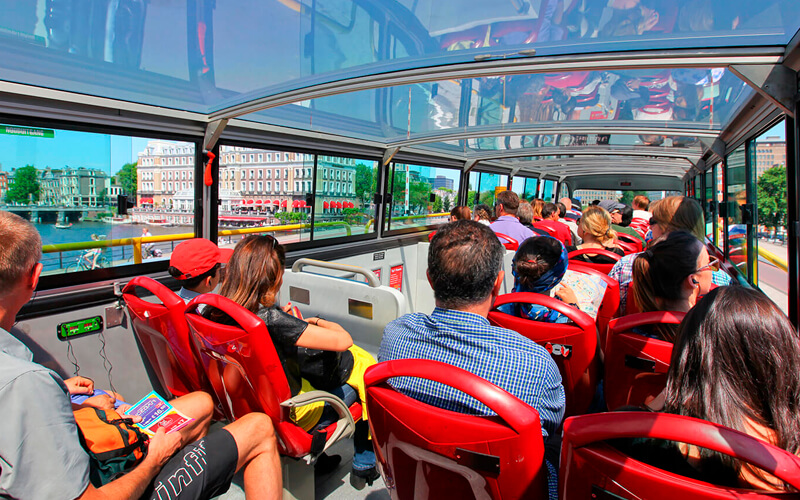
- Multimedia? Oh yes! Large screens throughout the cabin and, increasingly, individual touchscreens with access to movies, music, audio guides, and even route maps. Forget about boredom on the road – choose what you like.
- Internet? Of course! In 2025, you can’t go anywhere without Wi-Fi. It may not always be lightning fast and sometimes it’s paid, but it’s there. It’s a lifesaver for those who can’t imagine life without social media or remote work (although, if I were you, I’d rather admire the scenery).
- Outlets and USB? Absolutely! At each seat or at least every other row. And not just USB-A anymore, but also USB-C, and sometimes even wireless charging. So your smartphone, tablet, and power bank will always be ready.
- Toilet? Equipped and, as a rule, kept clean (as much as possible on the road). But remember that this is not a five-star hotel, and it’s better to use the stops for serious business.
- Comfortable seats? As comfortable as possible for a bus. Ergonomic, with reclining backs (sometimes very decent), armrests, and footrests. And yet, it’s not a bed, remember that.
When choosing a tour, be sure to check the class of the bus and its equipment. Comfort on the road is 80% of the success of the entire trip. No beautiful views will compensate for a battered back and wild irritation.
Documents, money, and gadgets: Digital detox or total dependence?
In 2025, the question of “what to bring” becomes even more interesting.
Documents
Photocopies? Well, almost! Of course, paper copies haven’t been canceled, they can come in handy. But first and foremost, it’s digital copies. Scan your passport, visa (if needed), insurance, tickets, hotel bookings, and save them in the cloud (Google Drive, Dropbox) and/or send them to your e-mail. In case of loss of the original, access to copies from any device is a lifesaver. And don’t forget about ETIAS! From 2025, citizens of many countries who previously entered the Schengen area without a visa will need this electronic authorization. Check in advance if this applies to you!
Money
The classic 300-500 euros in cash per person is still a good recommendation, but not as strict. Why? Because Europe in 2025 is the kingdom of cashless payments. Apple Pay, Google Pay, Revolut, Wise, as well as regular bank cards are accepted almost everywhere. Small bills (10, 20 euros) and coins will come in handy for tips, small souvenirs, paying for toilets (yes, in Europe it’s often paid!), coffee in small cafes. Have some cash for force majeure situations or in places where the internet connection is poor. But don’t carry stacks of money with you; it’s unsafe and inefficient.
Gadgets
Your smartphone is now not just a phone, but your personal guide, translator, navigator, wallet, and camera. Be sure to take care of mobile internet. Either buy a local eSIM (virtual SIM card, super convenient!), or check with your operator for roaming rates. A power bank is a number one must-have. Better yet, several. You never know when you’ll need to recharge. Adapters, converters – if you’re not traveling from the European Union. Headphones (preferably noise-canceling) will save you from neighbors and road noise.
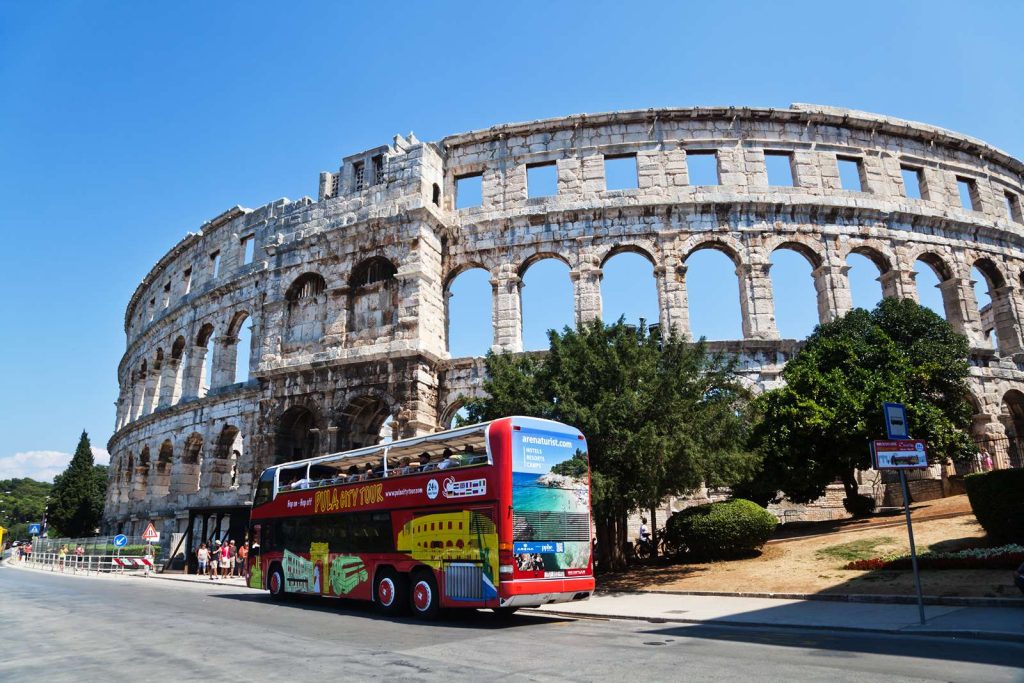
Routes: Classics and new horizons
The standard tour operator routes, like “Germany-Austria-Hungary” or “Sweden-Norway-Denmark,” haven’t disappeared. They are time-tested, logistically verified, and in demand. There are also longer, but tiring tours, like “Portugal-Spain,” which can take up to two weeks. And, believe me, spending so much time on the bus is a real test for your behind and nerves.
In 2025, the trend is not only the number of countries, but also the quality of impressions. More niche tours are appearing: for example, through wine regions, to filming locations of popular movies, to the castles of Bavaria, or to Christmas markets. Many tour operators are starting to offer “green” tours with an emphasis on ecology and getting to know nature.
When choosing a route, pay attention not only to the countries, but also to the pace of the tour. If every day is a new city, then it turns into a gallop, and you risk seeing only the bus, the hotel, and a couple of sights “from the window.” Ideally, some cities are given a whole day or two so that you can walk around without rushing.
Overnight stays: Falling asleep to the hum of the engine or the snoring of a neighbor?
This is perhaps the most sensitive aspect of a bus tour. The tour operator is always faced with a choice:
- Cheap and cheerful: Many overnight journeys on the bus. This reduces the cost of the tour, as you don’t have to pay for hotels. But it’s terribly tiring! Sleeping sitting up, trying to find a comfortable position, to the measured hum of the engine and the snoring of a neighbor is a challenge for everyone.
- Expensive but comfortable: The maximum number of overnight stays in hotels and hostels. This is, of course, more expensive, but incomparably more comfortable. You arrive in the city, check in, take a shower, sleep in a normal bed, and in the morning, you go on an excursion refreshed.
My advice: look for the golden mean. Ideally, there should be no more than two or three overnight journeys for the entire tour. Three nights on the bus is already on the verge of survival for the average person. If there are more overnight journeys, think very carefully about whether you are ready for such a feat. A healthy sleep is the key to a good mood and vivid impressions. Without it, any Europe will seem like a gray spot.
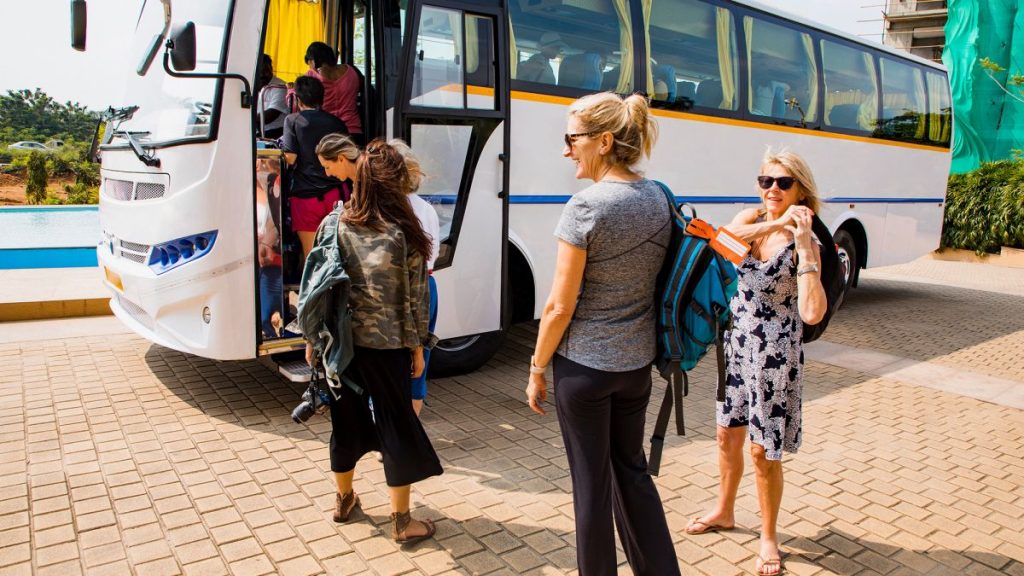
Who’s the boss on the bus (and who is it definitely not for)?
A bus tour is not for everyone. Really.
- Endurance: Physical endurance is important. You will walk a lot, go up, down, sit, stand. It’s constant movement. If you have problems with your joints, back, or you’re just not used to an active lifestyle, think carefully.
- Motion sickness: Shaking and swaying in the bus are inevitable. If you get carsick, then without special pills (or miracle bracelets) don’t even try. It will be torture for you and your neighbors.
- Children: This is a definite. It is better not to take children under seven on a bus tour. They are restless, they need to run, jump, they quickly get tired of the monotony of the road. Otherwise, your tour will turn into an attempt to calm a crying or bored child, and the other passengers will give you dirty looks. Teenagers are another matter; they may be interested if they are “into it.”
- Patience and sociability: You will spend a lot of time with the same people. A willingness to compromise, patience, and goodwill are your best friends. It can be difficult for closed introverts or those who are used to absolute silence and solitude.
First-aid kit and snack: I carry everything with me
This item is our everything. Well, almost.
First-aid kit
Your personal mini-first-aid kit is like a life raft. Be sure to have: plasters, hydrogen peroxide/antiseptic (spray is more convenient), wet wipes, antibacterial hand gel (in 2025 this is just a habit), headache pills (spazgan, ibuprofen), anti-diarrheal (loperamide), heartburn medication, allergy medication (if you suffer from allergies). If you have chronic diseases, take the necessary medications with a supply and instructions from your doctor (preferably in English).
Snack
A hungry tourist is an angry tourist. Take something that doesn’t spoil and is easy to eat: cookies, crackers, granola bars, dried fruit, nuts. For those who like it hotter: sachets of instant noodles, pureed soups, cereals. There is usually boiling water on the bus, or you can ask for it at stops.
Clothing and footwear
Depending on the season, warm clothes, an umbrella, and a raincoat are obvious. But what is critically important is comfortable shoes. One pair of fancy shoes for going to a restaurant and three pairs of worn, comfortable sneakers/boots for many hours of walking around cities. Your feet will thank you. Layering in clothing is our everything: took it off-put it on, didn’t freeze-didn’t sweat.
Nice little things
A neck pillow, a sleep mask, and earplugs will save your sleep on the bus. A reusable water bottle (it’s convenient to fill it in Europe) and a thermos mug for coffee/tea are not only economical, but also a contribution to the environment.
Border crossing
The staff of the travel agency must advise you on this issue. The rules may change, and what you can bring to Poland (for example, two packs of cigarettes) is completely impossible to bring to Finland, or new restrictions may appear in 2025. Always check the latest information.
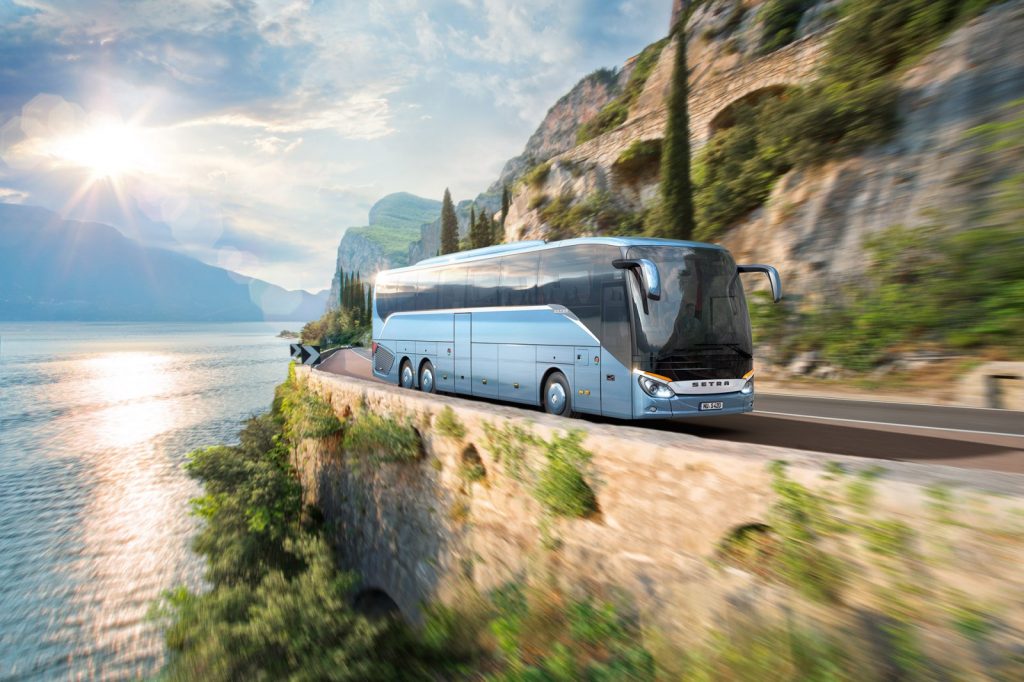
European Bus Tour 2025: Verdict or adventure?
So, is a European bus tour a verdict or an adventure? I would say that it’s a special kind of adventure. It requires a willingness to accept some deprivation of comfort, close proximity, and a busy schedule. But in return, it gives you a unique opportunity to see a lot, hear a lot, learn a lot, and do it without a headache about logistics.
If you are young at heart (regardless of the age in your passport), curious, ready for dynamics, and not afraid of a little shaking, then this is your chance. In 2025, bus tours have become smarter, more comfortable, and more technologically advanced than ever before. They still remain an excellent way not just to visit, but to feel Europe, its cities, its roads, and its amazing atmosphere. The main thing is to choose the right tour, prepare properly, and, of course, bring with you an excellent mood and a thirst for discovery. Have a good trip!