The phrase “hot air balloon” immediately conjures up childhood memories of the adventures of Dunno for most of us. But today, hot air ballooning has become a popular sport, recreation, and tourism activity.
Humans have always aspired to the sky. Hot air balloons (scientifically known as aerostats) were invented back in the 18th century. And although humanity has invented many aircraft since then, the principle of the aerostat has remained practically unchanged: a balloon filled with hot air (or gas) and a basket with people and a fuel supply. Only the materials from which they are made have improved.
A Huge Balloon Inflated with Steam
A balloon the size of a five-story building can hover 30 cm above the ground, or it can soar up to 4-5 km, obeying the skillful actions of a person. “A hot air balloon is not an airplane. You fly where the wind blows. And the pilot’s skill lies in correctly determining the direction and strength of the wind and controlling the balloon by changing the air temperature inside the envelope.” This is what experienced balloonists say.
It is worth emphasizing that ballooning is the safest of aviation sports. In essence, a balloon filled with air is a huge parachute. Therefore, even if the envelope is punctured by aggressive birds or pierced by a stray bullet, it will land safely. In addition, during passenger flights, experienced and first-class specialists are in the basket, and flights are carried out only with a wind of up to 5 m per second in ideal weather conditions.
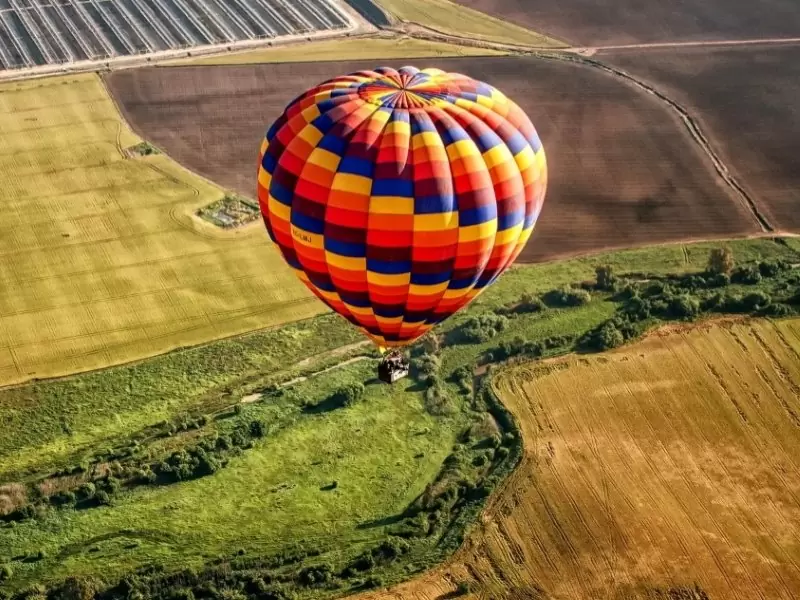
The difficulties of today’s ballooning lie in another, organizational, plane. Hot air balloon flights are an expensive sport, an organized activity that requires teamwork, and flights are also sanctioned and monitored by various authorized bodies. And no hotheads will force pilots to take to the air during a spring thunderstorm or a winter blizzard.
Rose into the Air, Far From Free
Ballooning is by definition a sport for wealthy people; it is an expensive pleasure. An aerostat, depending on the parameters of the balloon and the capacity of the basket, costs from 22 to 62 thousand euros. The cost of one hot air balloon flight is around 70-100 euros. This includes the support vehicle, the gas, and the team’s wages. Naturally, not everyone can afford the luxury of ballooning. Accordingly, the price for commercial flights and the tuition fees for future pilots are determined.
Hot air balloon flights are becoming very popular, despite the considerable prices. Special offers, of course, cost even more. After all, a hot air balloon ride can be a gift, an element of a romantic date, a birthday, or a wedding.
But despite its capital intensity, ballooning also generates income. Hot air balloons are widely used as an advertising medium. Many companies purchase aerostats to accompany corporate events and public events, thus advertising brands and decorating the environment. For example, the German beer producer Warsteiner has a fleet of 300 hot air balloons. The largest international ballooning tournaments are closely associated with the trademarks sponsoring the competition.

Brand names are embedded in the names of tournaments, the most prestigious of which are the BP Trophy and the Honda Cup. Of course, the sponsor’s name is emblazoned on almost every participating balloon.
In some countries, hot air balloons operate as a means of transport – for the transport of passengers and goods. For example, in Turkey, aerostats are used to transfer tourists – practical and beautiful.
INTERESTING
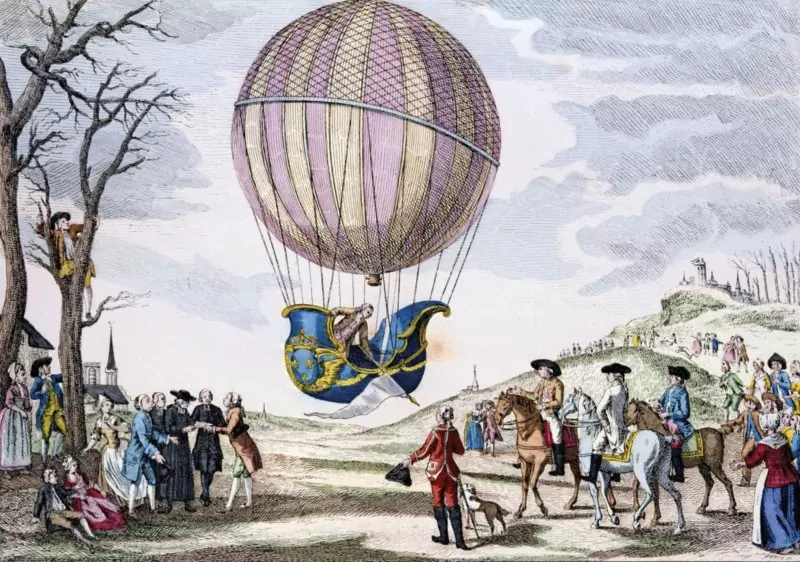
The very first aerostat in world history took to the air in 1783 in France. It was invented by the brothers Joseph-Michel and Jacques-Étienne Montgolfier, who filled a 35 m diameter bag with smoke from straw and wool burning in a brazier. The very first passengers of the balloon were a sheep, a rooster, and a duck; they stayed in the air for only 8 minutes. And just a few weeks later, Frenchman Jean-François Pilâtre became the first person to ascend in a balloon, reaching a height of 24 m.
Simultaneously with the Montgolfier brothers, the French physicist Jacques Charles invented a hot air balloon. Unlike the brothers, he filled the balloon not with hot air, but with a gas lighter than air (hydrogen). Over time, hydrogen was replaced by helium.
For a long time, Charlières supplanted Montgolfières. But in the early 1970s, a boom in “affordable ballooning” erupted in the world, associated with the appearance of new durable fabrics and the invention of a modern gas burner. Then the cost of the aerostat and the cost of operation decreased, and hot air balloons conquered the market.
Gas balloons are much more expensive than hot air balloons.
RECORDS
- The world record for altitude in an open-basket aerostat belongs to Briton David Hempleman-Adams, who managed to raise his balloon to 9906 m in Alberta, Canada.
- Americans Malcolm Ross and Victor Prather ascended the greatest distance from the earth in a closed basket. In 1961, they managed to reach a height of 34,668 m.
- The record for the duration of a non-stop solo flight on a gas balloon was set on the sixth attempt in 2002 by Steve Fossett. Having flown around the world, he spent 13 days, 16 hours, and 12 minutes in the closed basket of the aerostat. During the flight, the traveler covered 34 thousand km.
- For hot air aerostats, the flight duration record was set in 1993 by William Bussey – 29 hours 14 minutes 35 seconds. And the distance record in 2005 belongs to the American Andy Cayton, who covered a distance of 1715.9 km.