Imagine this: you’re sitting comfortably by the window, a flight attendant offers you juice or something stronger, and beyond the porthole, rays of the setting sun pierce through fluffy, cotton candy-like clouds. Below, cities and fields unfold like a tiny map. In a few hours, you’ll land in Rome to eat that real, authentic pasta. Or maybe in Lisbon to breathe in the salty air of the Atlantic? Or perhaps it’s a business trip to Warsaw that will open new horizons for your career. Sounds like a dream, right?
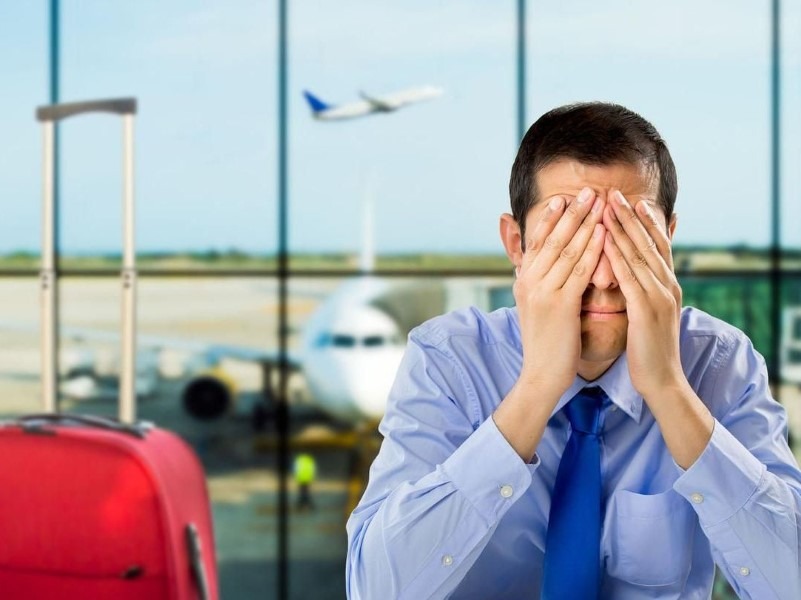
But for millions of people around the world, this idyllic picture is shattered by a cold, clammy fear. Their heart starts pounding like crazy, their palms sweat, and only one thought spins in their head: “What if…?” What if the plane crashes? What if something goes wrong? Welcome to the club of aviophobes. It’s not just a “slight anxiety” like before an exam. It’s an all-consuming feeling of panic that can ruin any vacation plans, meetings with relatives, and career opportunities.
Today, when the world has become so “small” and accessible, and Ukrainians are increasingly integrating into the European and global community, the ability to fly is almost like knowing how to use a smartphone. It’s not a luxury, but a necessity. And while some easily book tickets on low-cost airlines to fly to Vienna for the weekend, others look at the flight map with horror, realizing how much of life is passing them by. So what kind of beast is aviophobia, and can it be tamed?
Where does this fear come from?
Aviophobia is not just a whim or a caprice. It is a serious anxiety disorder that, like any complex phenomenon, has its roots. And they are different for everyone.
- A greeting from childhood (and beyond). Perhaps as a child you were frightened by a disaster movie where a plane heroically (or not so heroically) crashed. Or you heard a story from a friend who experienced terrible turbulence. Our consciousness is a tricky thing. It clings to negative images and then slips them in at the most inopportune moment. Sometimes the cause may be personal negative experience: a bad landing, strong shaking, panic from a neighbor in the seat.
- A thirst for control that is absent. Many of us like to control everything. We drive the car ourselves, we decide when to turn, when to brake. On an airplane, however, we completely entrust our lives to two strangers in the cockpit and a complex machine, the principles of which are a mystery to us. This loss of control causes subconscious panic for many. “I don’t decide anything, I’m just a passenger!” – cries the inner control freak, and it becomes scary.
- Information noise 24/7. Turn on the news, open social networks – and an avalanche of information will fall on you. Unfortunately, good news sells poorly. Headlines scream about disasters, incidents, rare breakdowns. No one writes an article with the headline: “Today, 100,000 flights around the world landed completely normally.” Our brain focuses on the negative, creating a distorted picture of reality in which flying seems like a deadly dangerous occupation. Although, according to statistics, the chance of getting into an accident on the way to the airport in a taxi is hundreds of times higher.
My brain is my enemy: what happens to us in the air?
Let’s figure out exactly how fear takes control over us. It all starts with a single anxious thought: “The engine is making a strange sound…” This thought, like a spark, sets off a chain reaction.
- Adrenaline rush. The body perceives the thought as a real threat and prepares to “fight or flight.” Adrenaline and cortisol, stress hormones, are released into the blood.
- Physical symptoms. The heart begins to beat faster to pump more blood to the muscles (suddenly you have to run?). Breathing becomes more frequent, becoming shallow. Dizziness, nausea, trembling in the hands, and a feeling of shortness of breath may occur.
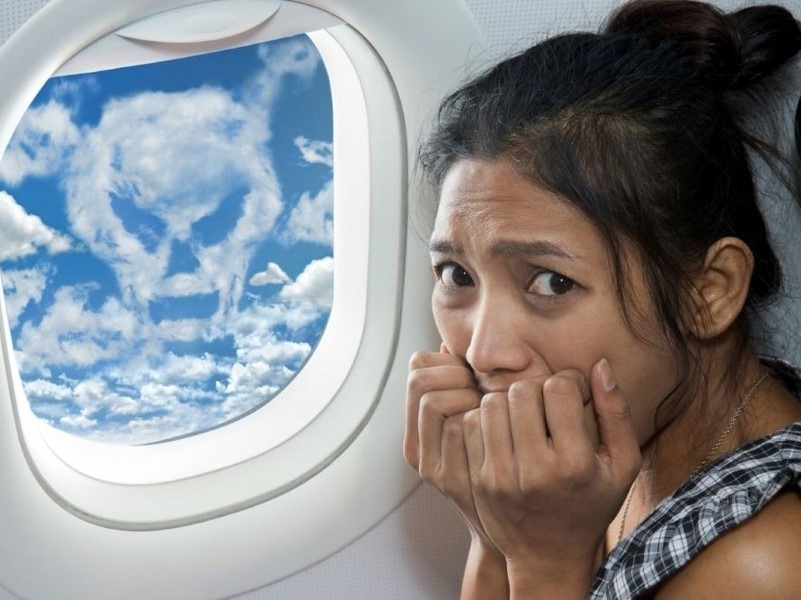
- Panic attack. The brain, receiving signals from the body (“heart is pounding, can’t breathe!”), concludes: “I’m in mortal danger!”. Anxiety increases, turning into a full-blown panic attack. A person feels like they are dying, going crazy, or about to lose control. It turns out to be a vicious circle: the thought causes a bodily reaction, and the bodily reaction intensifies the panic thought.
And here you are, strapped in at 10,000 meters, and there is absolutely nowhere for you to run. This trap is the perfect environment for the flowering of panic.
Every day, more than three million people fly on airplanes. Every 2 seconds, a plane takes off somewhere in the world.
How to get your wings back: practical steps to a calm flight
The good news is that aviophobia is not a death sentence. It’s a problem that has a solution. And no, you don’t have to become an aviation enthusiast. It’s enough just to learn how to deal with your fear so that it doesn’t control your life.
Step 1. Educate yourself and destroy myths
Knowledge is power. The more you know about how an airplane works and how safe modern flights are, the less room there is for irrational fears.
- Airplanes don’t crash from turbulence. Remember this like a mantra. Turbulence is like bumps in the road for a car. Unpleasant, yes. But not dangerous. Airplane wings are designed to withstand colossal overloads, and they are very flexible.
- Two (or even more) is better than one. All key systems in the airplane are duplicated, and sometimes even triplicated. If one engine fails (which in itself is an extremely rare event), the plane can safely fly and land on the remaining ones.
- Pilots are super professionals. To sit at the controls of a passenger airliner, pilots undergo the strictest selection and thousands of hours of training on simulators, where absolutely all emergency situations that can be imagined are practiced. They are ready for anything.
Watch documentaries about the work of aviation (just not about disasters!), read blogs of pilots or flight attendants. Understanding how everything works is a great grounding.
Step 2. Train your body and mind
Your main task is to learn how to break that vicious circle of panic. Breathing techniques and mindfulness will help with this.
- “Box” breathing. This is the simplest and most effective technique. When you feel anxiety building, start breathing: inhale for 4 counts – hold your breath for 4 counts – exhale for 4 counts – hold your breath for 4 counts. Concentrate on the count and on the breathing process itself. This helps to switch attention and physiologically calm the nervous system.
- Grounding technique. Look around. Name to yourself 5 things you see (chair, porthole, magazine). Listen and name 4 sounds you hear (engine hum, neighbor’s conversation). Feel 3 things you are touching (texture of the chair upholstery, coolness of the glass). This returns your brain from panic fantasies to the reality of “here and now.”
Step 3. Create a comfort zone in the sky
Prepare for the flight in advance to minimize stress.
- Choose a seat. If you are afraid of turbulence, take seats by the wing – there is less shaking there. If you suffer from claustrophobia – it is better to choose a seat by the aisle so that you have the opportunity to get up and stretch.
- Download entertainment. Your favorite series, several albums of calming music, an interesting audiobook or podcast – anything that can distract your brain from listening to every sound and creak.
- Comfort above all. Wear comfortable clothes, take a neck pillow, warm socks and your favorite snack. The more comfortable your body is, the calmer your soul will be.
Step 4. When you need help from the outside
Sometimes you can’t cope on your own, and that’s perfectly normal. Don’t be shy about asking for help.
- Psychotherapy. Cognitive behavioral therapy (CBT) is considered the gold standard in the treatment of phobias. A specialist will help you identify irrational thoughts that trigger fear and replace them with more realistic and healthy ones.
- Courses for aviophobes. In many large cities and even online there are special courses where pilots and psychologists work together with groups, explaining the technical side of flights and teaching techniques to combat fear. Often such courses end with a short graduation flight.
- Support from loved ones. Don’t hide your fear. Tell the person you’re flying with about it. The simple presence of a calm and understanding person who can hold your hand or distract you with a conversation in a difficult moment is already a huge support.

Life is too short and amazing to spend it looking at the world only through a monitor screen. Yes, fighting the fear of flying is work. It may take time and effort. But imagine the reward that awaits you at the end of this path. Freedom. Freedom to choose where to go next. Freedom to hug relatives living thousands of kilometers away. Freedom to say “yes” to new opportunities, new cultures and new experiences.
The sky is not an enemy. It’s just a road. A road to the new and unknown. And you absolutely deserve to travel along it.